Tamil Nadu higher education reforms: Manickam Tagore backs CM Vijay's push
Synopsis
Tamil Nadu Congress chief Manickam Tagore has publicly backed CM Vijay's higher education push, calling the government's budget proposals potentially historic — with over 2,150 institutions and 60 universities in scope, and an ambitious target to push the state's Gross Enrolment Ratio past 50 per cent. The rare cross-party alignment signals political consensus around a sector under serious structural and financial stress.
Key Takeaways
Manickam Tagore , Tamil Nadu Congress Committee president, publicly thanked Chief Minister Vijay for supporting higher education reforms on 24 August .
The government's financial proposals aim to revive more than 2,150 higher education institutions and over 60 universities in Tamil Nadu.
Tamil Nadu's Gross Enrolment Ratio (GER) in higher education is being targeted to cross the 50 per cent milestone.
Universities face acute pressure from UGC fund freezes , distance education revenue losses, and depleted reserves.
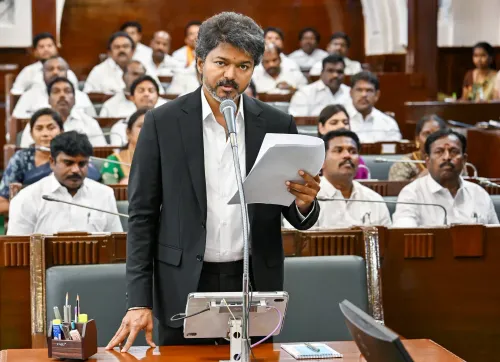
Higher Education Minister Viswanathan presented the department's demand for grants in the Tamil Nadu Legislative Assembly on Monday .
Tagore invoked the legacy of former CM K.
Kamaraj , calling education reform a fulfilment of his foundational vision.
Tamil Nadu Congress Committee president Manickam Tagore has publicly thanked Chief Minister Vijay for his support in efforts to revitalise the state's higher education sector, saying the government's financial proposals could mark a turning point for more than 2,150 institutions and over 60 universities across Tamil Nadu. Tagore made the remarks in a post on X on 24 August, coinciding with Higher Education Minister Viswanathan's presentation of the department's demand for grants in the Tamil Nadu Legislative Assembly.
The Vision Behind the Push
Tagore invoked the legacy of former Chief Minister K. Kamaraj, popularly known as Perunthalaivar, who regarded education as the bedrock of social progress. He argued that restoring the strength and reputation of higher education in Tamil Nadu has become an urgent necessity, describing the current moment as an opportunity to fulfil Kamaraj's founding vision.
Structural and Financial Challenges Facing Universities
The Congress leader outlined several systemic pressures weighing on institutions. A large portion of available funds, he noted, was being consumed by administrative and recurring expenses, leaving universities with limited resources for academic development, research, and infrastructure. He also pointed to revenue losses from distance education programmes, the freezing of funds by the University Grants Commission (UGC), and the depletion of university reserves as compounding factors placing institutions under severe financial strain.
What Reforms Must Address
Tagore argued that meaningful reform would require action on multiple fronts simultaneously. Corruption within the system must be eliminated, he said, while attempts by right-wing and RSS-linked forces to gain influence inside universities should be actively resisted. At the same time, universities must be rejuvenated, faculty empowered, and students equipped with education that meets international standards.
The Gross Enrolment Target and What's at Stake
Tagore set an ambitious benchmark for the government: pushing Tamil Nadu's Gross Enrolment Ratio (GER) in higher education beyond the 50 per cent milestone. Achieving that threshold, he said, would meaningfully widen access to colleges and universities and help Tamil Nadu consolidate its standing as a leading higher education hub in the country. He described the financial statement being tabled as potentially historic in scope, given the scale of institutions it seeks to revive.
Tagore conveyed his 'heartfelt gratitude' to Chief Minister Vijay for extending full support and offering direction for what he described as constructive initiatives in the sector. Whether the budget proposals translate into structural change will depend on implementation — a challenge Tamil Nadu's higher education system has faced across successive administrations.
Point of View
Tagore's statement is heavy on aspiration and light on accountability: calling for corruption elimination and resisting RSS influence in universities are political signals as much as policy prescriptions. The harder question — why Tamil Nadu's GER has not crossed 50 per cent despite years of investment — goes unaddressed. Budget proposals described as 'historic' have a poor track record of surviving contact with implementation in Indian higher education; the UGC fund freeze alone points to a Centre-state dynamic that no state budget can resolve unilaterally.
NationPress
8 Oct 2026
Frequently Asked Questions
Why did Manickam Tagore thank CM Vijay for higher education reforms?
Manickam Tagore, president of the Tamil Nadu Congress Committee, thanked Chief Minister Vijay for extending full support and direction toward revitalising the state's higher education sector. He made the remarks on 24 August in a post on X, coinciding with the tabling of the Higher Education department's demand for grants in the Tamil Nadu Legislative Assembly.
How many institutions are covered under Tamil Nadu's higher education reform proposals?
The government's financial proposals seek to revive more than 2,150 higher education institutions and over 60 universities across Tamil Nadu. Tagore described the financial statement as potentially historic in scope given the scale of institutions it targets.
What is the Gross Enrolment Ratio target for Tamil Nadu higher education?
The Tamil Nadu government is being urged to push the state's Gross Enrolment Ratio in higher education beyond the 50 per cent milestone. Achieving this, according to Tagore, would widen access and strengthen Tamil Nadu's position as a leading higher education centre in India.
What financial challenges are Tamil Nadu universities currently facing?
Universities in Tamil Nadu are under pressure from multiple fronts: a large share of funds is absorbed by administrative and recurring expenses, the University Grants Commission has frozen certain funds, revenue from distance education programmes has declined, and university reserves have been depleted.
Who is K. Kamaraj and why was he invoked in this context?
K. Kamaraj, popularly known as Perunthalaivar, was a former Chief Minister of Tamil Nadu widely credited with expanding access to education in the state. Tagore invoked his legacy to argue that the current higher education reform push is a continuation of Kamaraj's foundational belief that education is the basis of social progress.