Taliban Tells 1,100 Afghans in Qatar: Return Home Safely
Synopsis
Over 1,100 Afghans — former US allies — are stranded in Qatar as America reportedly eyes relocating them to Congo. The Taliban says return home safely. The UN warns of international law violations. A crisis of broken promises is unfolding in real time.
Key Takeaways
Over 1,100 Afghans , including former US military allies, remain stranded at Camp As Sayliyah, Qatar , awaiting US visa decisions for more than a year.
The US administration is reportedly considering relocating these evacuees to the Democratic Republic of Congo , drawing backlash from senators and rights groups.
Taliban spokesperson Abdul Qahar Balkhi urged all Afghans abroad to return home, claiming there are no security threats in Afghanistan .
UN Special Rapporteur Richard Bennett warned that EU plans to host Taliban officials for deportation talks could violate the international legal principle of non-refoulement .
EU officials are reportedly considering talks with a Taliban delegation in Brussels on deporting Afghan migrants, a move criticised by European lawmakers.
Many of the Qatar-based evacuees have already completed US resettlement vetting but remain in limbo without clarity on their future.
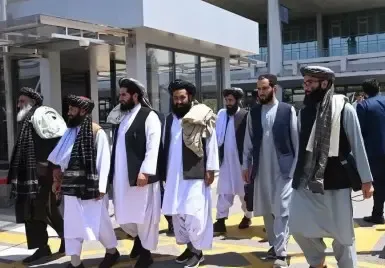
Kabul, April 25: The Taliban-led Afghan government on Saturday, April 25, declared that Afghanistan poses no security threats to its citizens and urged over 1,100 Afghans currently stranded at a military camp in Qatar — awaiting US visa processing — to return home with full confidence. The statement came in direct response to reports that the United States administration is considering relocating these evacuees to the Democratic Republic of Congo, a move that has drawn sharp criticism from US lawmakers, human rights advocates, and international legal experts.
Who Are the Afghans Stranded in Qatar?
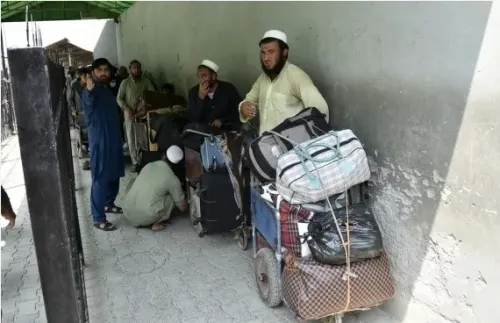
According to Afghan media outlet Amu TV, more than 1,100 Afghan nationals remain in a state of uncertainty at Camp As Sayliyah (CAS) in Qatar. Many of them are former US allies — including interpreters, members of Afghan special operations forces, and their families — who were evacuated following the Taliban's return to power in August 2021.
Several of these individuals have already completed vetting procedures for resettlement in the United States but have been left without clarity about their future for over a year. Their limbo status has become a flashpoint in the broader debate over US obligations to foreign nationals who risked their lives supporting American military operations.
Taliban's Official Position: Come Back Without Fear
Abdul Qahar Balkhi, spokesperson for Afghanistan's Ministry of Foreign Affairs (IEA-MoFA), issued a formal statement asserting that Afghanistan is the shared homeland of all Afghans and invited all those in similar situations to return.
"IEA-MoFA stands ready to engage with all countries, within the ambit of bilateral consular relations and an organised mechanism to safeguard the rights of its citizens and underscores to all sides that there exist no security threats in Afghanistan and none is compelled to leave the country on account of security considerations," the statement read.
Balkhi further noted that Afghans who wish to travel to a third country may do so through legal and dignified channels at an appropriate time — a caveat that many observers say rings hollow given the Taliban's documented record of persecution against former government employees, women, and minority communities.
US Congo Relocation Plan Sparks Controversy
The reported plan to relocate Afghan evacuees from Qatar to the Democratic Republic of Congo has triggered a wave of opposition. Several US Senators and lawmakers have publicly criticised the proposal, warning it could expose vulnerable individuals — including former US military partners — to entirely new and unpredictable dangers in a country that itself faces ongoing armed conflict and instability.
Critics argue the move represents a significant breach of America's moral and strategic obligations to those who served alongside its forces. The DRC, which has been experiencing a protracted humanitarian crisis in its eastern regions, is widely considered an unsuitable destination for Afghan refugees already traumatised by years of displacement.
UN Special Rapporteur Warns of International Law Violations
Adding another dimension to the crisis, Richard Bennett, the UN Special Rapporteur for Afghanistan, raised urgent concerns this week over reports that European Union officials are planning to host Taliban representatives in Brussels to discuss the deportation of Afghan migrants.
"Reports of EU hosting Taliban officials to discuss deporting Afghans are seriously concerning. Any returns risk breaching the principle of non-refoulement due to widespread human rights violations including against women, human rights defenders and former public servants," Bennett posted on X (formerly Twitter).
The principle of non-refoulement — a cornerstone of international refugee law — prohibits the return of individuals to countries where they face serious threats to their life or freedom. Bennett's warning underscores the legal minefield that both the US and EU are navigating as they seek to reduce the number of Afghan nationals on their soil or in transit facilities.
According to Amu TV, the proposed Brussels talks — not yet formally confirmed — are expected to focus on logistics including flight arrangements and conditions upon arrival in Kabul. The plans have already attracted criticism from European parliamentarians who argue such engagement lends legitimacy to a regime that has systematically dismantled women's rights and civil liberties.
Broader Implications: A Crisis of Credibility and Commitment
This situation exposes a deepening contradiction at the heart of Western foreign policy: the same governments that championed the rights of Afghan women and allies during two decades of military presence are now exploring arrangements with the very regime they opposed — to send those allies back. For the 1,100 Afghans at Camp As Sayliyah, the stakes could not be higher.
Notably, this comes amid a broader global tightening of immigration and refugee policies, with both the US under the Trump administration and several EU member states under pressure to reduce migrant populations. The Afghan evacuees — many of whom hold approved vetting status — are caught in the crossfire of geopolitical recalibration.
As international scrutiny intensifies, the coming weeks will be critical. Whether the US proceeds with the Congo relocation plan, whether EU-Taliban talks materialise in Brussels, and whether any legal challenges are mounted by human rights organisations will determine the fate of thousands of Afghans who once staked their lives on Western promises of protection.
Point of View
If true, is not just logistically absurd — it is a strategic and ethical abdication. Meanwhile, the Taliban's reassurances of safety are contradicted by every credible human rights report on the ground. NationPress sees this for what it is: vulnerable people being sacrificed at the altar of domestic political convenience on both sides of the Atlantic.
NationPress
1 Oct 2026
Frequently Asked Questions
Why are over 1,100 Afghans stranded in Qatar?
More than 1,100 Afghan nationals, including former US military interpreters and special forces members, have been living at Camp As Sayliyah in Qatar since being evacuated after the Taliban retook Afghanistan in 2021. They are awaiting US visa processing and resettlement decisions that have been delayed for over a year.
Why is the US considering relocating Afghan evacuees to Congo?
Reports suggest the US administration is exploring relocation of Afghan evacuees from Qatar to the Democratic Republic of Congo as an alternative to resettlement in the United States. The move is reportedly driven by immigration policy pressures, though it has been widely criticised by US lawmakers and human rights groups.
What did the Taliban say about Afghans returning from Qatar?
Taliban spokesperson Abdul Qahar Balkhi stated that Afghanistan poses no security threats and urged all Afghans abroad to return home with 'full confidence' and 'peace of mind.' The Ministry of Foreign Affairs said it is ready to engage with countries to protect Afghan citizens' rights.
What is non-refoulement and why does it matter here?
Non-refoulement is a fundamental principle of international refugee law that prohibits returning people to countries where they face serious threats to their life or freedom. UN Special Rapporteur Richard Bennett warned that deporting Afghans back to Taliban-ruled Afghanistan could violate this principle given widespread human rights abuses.
Are EU countries planning to deport Afghan migrants with Taliban cooperation?
Reports indicate EU officials are considering hosting Taliban representatives in Brussels to discuss the logistics of deporting Afghan nationals without legal status in Europe. The talks have not been formally confirmed, but they have already drawn criticism from European lawmakers and international human rights experts.