Will Tamil Nadu Achieve Approval for Metro Projects in Coimbatore and Madurai?
Synopsis
Tamil Nadu ramps up efforts for metro approvals in Coimbatore and Madurai after a fresh appeal from CM M.K. Stalin to PM Modi. With updated data addressing previous concerns, the state hopes for a favorable review despite earlier rejections. Discover the implications for these rapidly growing cities!
Key Takeaways
Tamil Nadu is actively pursuing metro rail systems for Coimbatore and Madurai .
Stalin has appealed to Prime Minister Modi for reconsideration of the projects.
The state is resubmitting its case with additional data to address the Centre's concerns.
Concerns about ridership and feasibility were highlighted by the Centre in previous evaluations.
The Tamil Nadu government argues these metro systems are vital for future urban mobility.
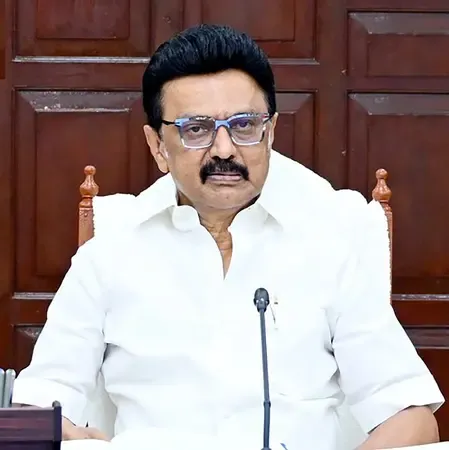
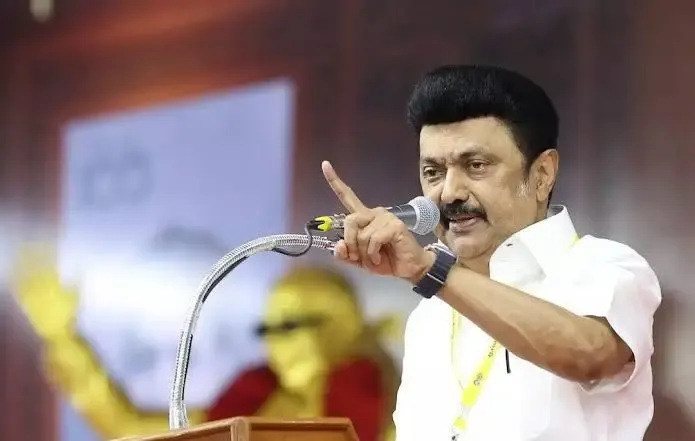
Chennai, Jan 12 (NationPress) Tamil Nadu has intensified its campaign to obtain approval for the proposed metro rail networks in Coimbatore and Madurai, prompted by a renewed request from Chief Minister M.K. Stalin to Prime Minister Narendra Modi to revisit the Centre’s previous dismissal of these projects.
According to senior state officials, the government is in the process of resubmitting its proposal, incorporating additional information to alleviate concerns highlighted by the Centre.
Following the Chief Minister’s engagement, the state has modified its rationale for both metro initiatives and is sending the revised documents through the state administration. These will soon be presented to the Union Ministry of Housing and Urban Affairs for reevaluation, as stated by K. Gopal, Secretary for Special Projects, and M.A. Siddique, Managing Director of Chennai Metro Rail Limited (CMRL).
Officials pointed out that the Centre’s main objection was the perceived insufficiency of projected ridership in both municipalities. “The evaluation indicated that demand does not support metro rail systems,” Gopal remarked. “However, both Coimbatore and Madurai are swiftly evolving industrial cities with increasing populations and economic activities. We have now supplied comprehensive data to illustrate why metro rail is vital for their long-term transport requirements.”
This renewed outreach follows the Union ministry's return of Tamil Nadu's detailed project reports (DPRs), citing non-adherence to the 2017 Metro Rail Policy. In its prior communication, the ministry claimed that the proposals exaggerated ridership, underestimated engineering challenges, and failed to meet population thresholds required for metro projects under a 50:50 equity-sharing model with the Centre.
In the case of Coimbatore, the ministry questioned the forecast of approximately 5.9 lakh daily passengers for a proposed 34-km metro network, noting this estimate surpassed the ridership recorded on Chennai Metro’s 55-km Phase I corridor as recently as February 2025. It also referenced relatively short average trip lengths of 6-8 km and road traffic speeds that are comparable to the proposed metro, suggesting limited potential for a significant modal shift. The evaluation further flagged narrow road widths of 7-12 metres along key corridors, raising concerns about the practicality of elevated structures and expansive stations without extensive demolitions.
A similar assessment was conducted for Madurai, where the Union ministry indicated that the city’s comprehensive mobility plan favored a bus rapid transit system over a metro. Furthermore, with Madurai also not meeting the prescribed population threshold, the Centre contended that more economical, scalable alternatives like bus network expansion would provide better value.
Despite these concerns, the Tamil Nadu government maintains that metro systems are essential for addressing future transportation demands in both cities and anticipates that the revised submissions will lead to a positive review.
Point of View
It's crucial to recognize the persistent efforts by Tamil Nadu to secure metro systems for Coimbatore and Madurai. These projects could significantly enhance urban mobility and economic growth. While the Centre's concerns are valid, the state’s proactive approach in providing additional data reflects a commitment to addressing urban transport challenges facing these burgeoning cities.
NationPress
16 Sept 2026
Frequently Asked Questions
What prompted Tamil Nadu to renew its metro rail proposals?
The renewed efforts were prompted by Chief Minister M.K. Stalin's appeal to Prime Minister Modi to reconsider the Centre's earlier rejection of the metro rail projects in Coimbatore and Madurai.
What concerns did the Centre have regarding the metro proposals?
The Centre raised concerns about the projected ridership levels and the feasibility of the projects, citing inadequate demand to justify metro systems in both cities.
What are the next steps for Tamil Nadu regarding the metro projects?
The Tamil Nadu government plans to resubmit updated documentation that addresses the Centre's concerns to the Union Ministry of Housing and Urban Affairs for further consideration.
How do Coimbatore and Madurai's growth trends affect the metro rail proposals?
Both cities are experiencing rapid growth in population and economic activity, which the state argues necessitates the development of metro rail systems to meet future transport demands.
What alternatives did the Union ministry suggest for Madurai?
The Union ministry suggested that a bus rapid transit system would be a more suitable and cost-effective alternative for Madurai, given its current population and mobility needs.