Is Tiger Movement in Telangana a Threat to Humans?

Synopsis
As tigers navigate human habitats in Telangana, the State Forest Department assures that these magnificent animals are avoiding human contact and do not present a danger to public safety. Discover the proactive measures being taken to monitor their movements and ensure community safety.
Key Takeaways
Tigers are avoiding human contact in Telangana.
Proactive measures are in place for monitoring movements.
Collaboration with local authorities ensures public safety.
Villagers are being informed about tiger activities.
Tiger trap cages are ready for deployment if necessary.
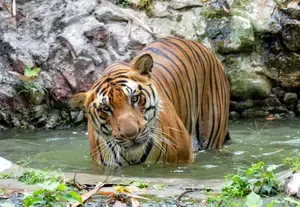
Hyderabad, Jan 27 (NationPress) Despite the recent presence of tigers in areas close to human settlements, the Telangana State Forest Department reassured that these majestic creatures are deliberately steering clear of human interactions and do not pose any danger to human safety.
The department has been vigilant since tigers began appearing in regions such as Peddapally, Karimnagar, Jagityal, Kamareddy, Siddipet, and Yadadri.
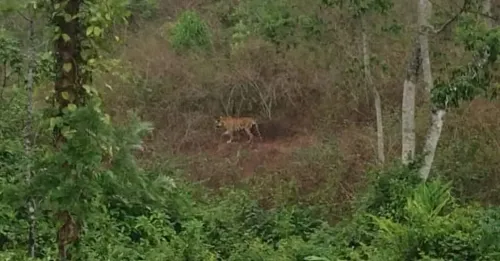
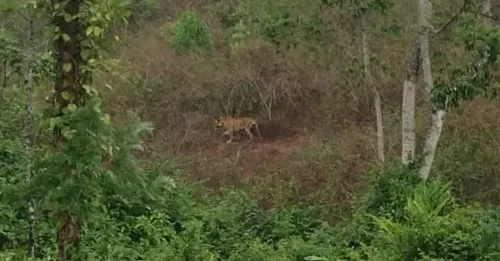
Recently, tigers have been sighted in agricultural settings near villages across several districts in Telangana. The Forest Department is actively monitoring their movements in these human-influenced habitats.
Although tigers have traversed through agricultural fields and residential areas, there have been no direct sightings reported by villagers. These tigers are intentionally avoiding contact with humans, ensuring public safety, according to Principal Chief Conservator of Forests (HoFF) and Chief Wildlife Warden (FAC) Kshitija.
She elaborated on the various measures taken by the Forest Department to track tiger movements.
The District Forest Officers (DFOs) are responsible for continuous surveillance of the tigers under a 24/7 monitoring system in line with the Standard Operating Procedures (SOP) set by the National Tiger Conservation Authority (NTCA).
Forest staff teams have been deployed for ongoing observation and tracking to identify potential movement patterns and to keep villagers informed about tiger activity.
DFOs are collaborating with local District Collectors and Superintendents of Police to manage crowds at cattle kill sites and maintain order for public safety in affected areas.
Local Panchayat Officers have been advised to inform villagers to limit unnecessary movements in sensitive regions and to communicate any tiger sightings to nearby Forest officials.
The Forest Department has also engaged the Superintending Engineer TGSPDCL to investigate illegal electric lines in agricultural areas to prevent electrocution incidents, thus safeguarding both the tigers and local livestock.
In accordance with NTCA's SOP, a dedicated committee has been established to oversee tiger movements in human-dominated landscapes, led by a Conservator of Forests and comprising veterinary professionals, NGOs, wildlife specialists, and Forest officials.
A wildlife expert and veterinarian from the Tadoba Andhari Tiger Reserve in Maharashtra has been consulted to provide recommendations, which are now being implemented.
Tiger trap cages from Nehru Zoological Park in Hyderabad are prepared for relocation to areas with observed tiger movements if necessary.
Veterinary teams from zoological parks and tiger reserves, equipped with tranquilizing tools, are on standby for rapid deployment if needed.
Additionally, tiger trackers from Kawal and Amrabad Tiger Reserves remain on alert to monitor tiger movements in affected districts, and assistance from experts, volunteers, and NGOs is being solicited as required.
The Forest Department head also announced plans to utilize thermal drones for nighttime monitoring of tiger movements.
A state-level technical committee incorporating experts from the Wildlife Institute of India (WII), Dehradun, and the National Tiger Conservation Authority (NTCA) is being assembled for prompt guidance on issues related to tiger straying and other wildlife matters.
Point of View
It is essential to recognize the balance between wildlife conservation and human safety. The proactive measures taken by the Telangana State Forest Department exemplify a commitment to both protecting these endangered species and ensuring the well-being of the local populace. This approach not only fosters coexistence but also underscores the importance of responsible wildlife management.
NationPress
19 Sept 2026
Frequently Asked Questions
Are tigers posing a threat to human life in Telangana?
No, the Telangana State Forest Department has confirmed that tigers are avoiding human contact and are not a threat to human life.
What measures are being taken to monitor tiger movements?
The Forest Department has implemented continuous monitoring through District Forest Officers, forest staff teams, and collaboration with local authorities.
How are local communities being informed about tiger movements?
Local Panchayat Officers are advising villagers to limit movements in sensitive areas and communicate any tiger sightings to Forest officials.
What actions are being taken to ensure public safety?
The Forest Department is coordinating with police to manage crowds and maintain order at cattle kill sites.
Are there any plans to capture the tigers if necessary?
Yes, tiger trap cages are on standby for relocation to areas with observed tiger movements if needed.