Is the Textile Mill Shutdown a Threat to RMG Exports in Bangladesh?
Synopsis
The indefinite shutdown of textile mills in Bangladesh is raising serious concerns over the stability of Readymade Garments (RMG) exports, which play a crucial role in the nation's economy. With over 1 million workers at risk and the national elections looming, the implications are dire. What does this mean for the future of this vital sector?
Key Takeaways
Indefinite shutdown of textile mills announced by BTMA.
Dispute over duty-free yarn imports affecting RMG exports.
Approximately 1 million workers at risk of job loss.
RMG sector contributes 85% to Bangladesh's exports.
Government exploring solutions to the crisis.
New Delhi, Jan 24 (NationPress) The Bangladesh Textile Mills Association (BTMA) has declared an indefinite halt of operations at mills, amidst a conflict regarding duty-free yarn imports that has arisen between textile mill operators and garment exporters. This situation has sent shockwaves through the Readymade Garments (RMG) export sector in Bangladesh, especially with the national election approaching on February 12, as per a recent report.
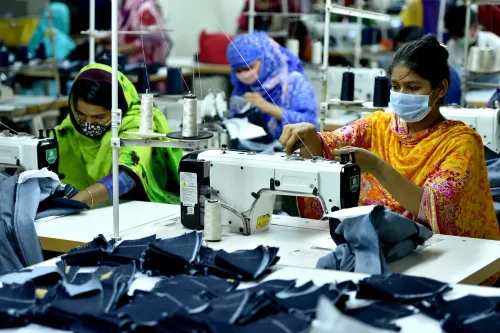
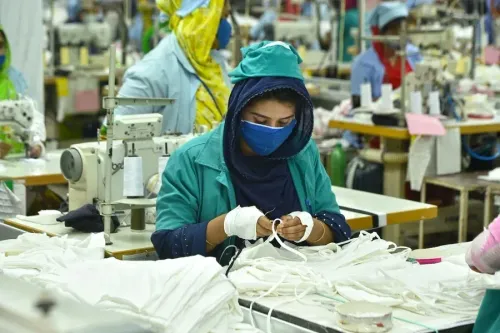
RMG exports contribute to nearly 85% of Bangladesh's overall export revenues. The livelihoods of over 1 million workers in this industry are now hanging in the balance, leading to potential instability concerning wages and benefits, which could incite labor unrest.
Reports indicate that the Bangladesh Ministry of Commerce's recent decision to levy duties on cotton yarn imports from India and other nations has added to the turbulence within the RMG sector.
Experts caution that widespread closures in textile manufacturing could further exacerbate the economic challenges already facing the country.
Commerce Secretary Mahbubur Rahman informed Dhaka's The Business Standard that the government acknowledges the gravity of the situation and is considering various solutions. 'The textile industry is indeed in distress. Action is required. We are contemplating alternative measures,' he stated.
Textile mill proprietors have warned of factory shutdowns beginning February 1, attributing their decision to the government’s inaction in safeguarding the $23 billion textile sector.
This announcement arises at a particularly critical moment, just under two weeks before the national elections set for February 12.
BTMA President Showkat Aziz Russell commented, 'This is not merely a threat. The sector will inevitably cease operations. We are facing a national crisis.' He criticized the slow policymaking, remarking, 'While India can make decisions in hours, our government struggles for months.'
Russell further noted that any increase in production costs under the open costing method ultimately impacts buyers.
'Should local textile mills fail, garment producers will have no option but to import yarn from India at inflated prices in the future, undermining competitiveness,' he cautioned.
'A cessation of yarn production would disrupt the garment supply chain, while complications in repaying bank loans could lead to a rise in non-performing loans (NPLs), which are already estimated at around 35% during a period when banks are under significant pressure,' the report mentioned.
Point of View
The current turmoil in the textile sector highlights the urgent need for decisive action by the government. The RMG industry is a backbone of Bangladesh's economy, and any disruption could have far-reaching effects on employment and national revenue. It is vital for authorities to address these challenges promptly to ensure stability and growth.
NationPress
30 Sept 2026
Frequently Asked Questions
What is causing the shutdown of textile mills in Bangladesh?
The shutdown is primarily due to a dispute over duty-free yarn imports between textile millers and garment exporters, compounded by government inaction on supporting the textile industry.
How many workers are affected by this crisis?
Over 1 million workers in the RMG sector may face uncertainty regarding their wages and job security due to the shutdown.
What percentage of Bangladesh's exports come from RMG?
RMG exports account for approximately 85% of Bangladesh's total export earnings.
What are the potential economic impacts of the mill shutdown?
The shutdown could lead to increased labor unrest, disruptions in the supply chain, and higher costs for garment manufacturers, impacting the overall economy.
When is the national election in Bangladesh?
The national election in Bangladesh is scheduled for February 12.