Will the Thackeray Cousins' Emotional Appeal Triumph Over BJP's Organisational Strength in BMC Elections?
Synopsis
The upcoming BMC elections in Mumbai see a pivotal alliance between the Thackeray cousins aiming to counter the BJP's electoral dominance. Amid emotional narratives and political strategies, can the Thackeray magic withstand the BJP's organisational might? This election could redefine the political landscape in Maharashtra.
Key Takeaways
The alliance between Shiv Sena (UBT) and MNS is pivotal for Marathi vote consolidation.
Emotional narratives play a significant role in mobilizing support.
Organisational strength of the BJP poses a considerable challenge.
The Congress's independent run could disrupt opposition unity.
Ideological differences within the Thackeray alliance may affect voter perception.
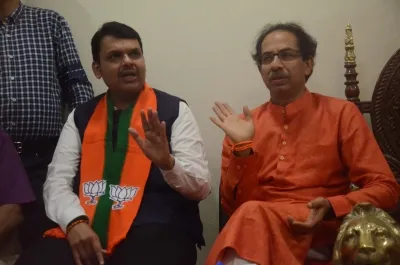
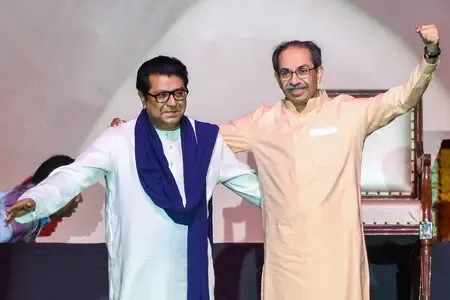
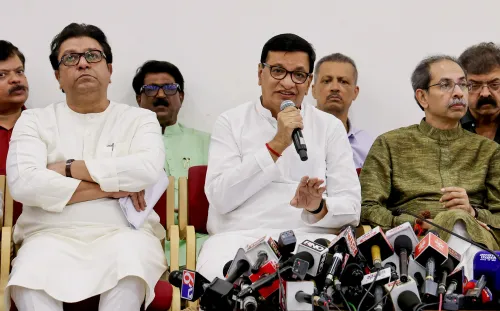
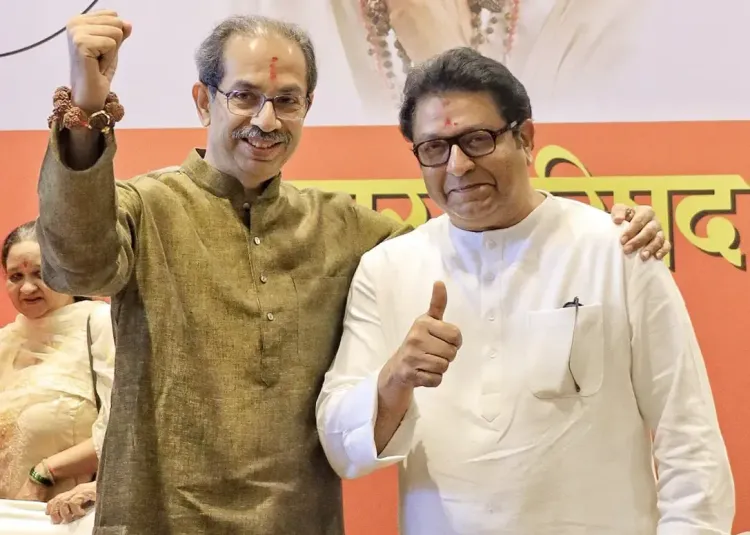
Mumbai, Dec 24 (NationPress) The partnership between Shiv Sena (UBT) and the Maharashtra Navnirman Sena has transformed the Brihanmumbai Municipal Corporation (BMC) elections into a fiercely competitive arena. However, Uddhav Thackeray and Raj Thackeray face a daunting challenge against the dynamic BJP-led Mahayuti, creating a scenario where emotional resonance will be contrasted with organisational prowess.
Political analysts view the upcoming BMC elections as a crucial test to determine if the much-discussed “Thackeray magic” can effectively counter the BJP's significant electoral framework. This political reunion is pivotal for both cousins, as their previous division had historically weakened the Marathi vote, often benefiting the BJP in closely contested elections.
A consolidated Sena (UBT)-MNS alliance is anticipated to mitigate vote-splitting, particularly in areas of central Mumbai and historical Marathi strongholds such as Dadar, Parel, and Girgaon. Furthermore, Uddhav Thackeray has successfully maintained a substantial portion of the Muslim vote, as evidenced by the 2024 Lok Sabha outcomes. When paired with Raj Thackeray’s proactive approach towards the Marathi community, this coalition could forge a distinctive voting bloc aimed at challenging both the BJP and the Shinde-led Shiv Sena faction.
Insiders from both parties believe that the emotional allure of the “Brand Thackeray” will be a crucial element. For many supporters, the public reconciliation of the cousins symbolizes a struggle to “protect Mumbai” from what they perceive as Delhi-centric political domination—an emotional narrative regarded as their strongest counterbalance to the BJP's financial and organisational advantages.
Nevertheless, senior party figures privately recognize that mere emotion may fall short against the BJP-led Mahayuti’s robust grassroots apparatus. This apprehension is highlighted by the coalition's commanding performance in the recent civic elections, wherein the Mahayuti clinched 207 out of 288 president posts across 246 nagar parishads and 42 nagar panchayats, with the BJP alone winning 117 posts, while Sena (UBT) found itself in single digits.
The scenario is further complicated by the Congress’s choice to compete independently in the BMC elections, effectively turning the contest into a triangular—if not quadrilateral—affair. In this context, the BJP is poised to take advantage of a fragmented anti-incumbency and opposition vote.
Potential ideological disparities within the Thackeray alliance also pose a challenge. Raj Thackeray’s previous anti-migrant sentiments and his recent closeness to Hindutva politics may conflict with Uddhav Thackeray’s inclusive and secular stance, especially in Mumbai’s diverse wards.
Further complicating matters is Deputy Chief Minister and Shiv Sena leader Eknath Shinde, who holds the official party name and the ‘bow and arrow’ symbol. In civic elections where local corporator networks are crucial, Shinde’s ability to draw former UBT corporators represents a significant threat.
Given this backdrop, analysts suggest that the Thackeray cousins are likely to concentrate on countering the BJP in Marathi-dominated regions, while the BJP will depend on its strong organisational presence in Gujarati, Rajasthani, and North Indian areas—alongside the Congress contesting separately—to sustain its advantage in the BMC race.
(Sanjay Jog can be reached at sanjay.j@ians.in)
Point of View
The evolving political dynamics in Mumbai underscore the significance of regional alliances and emotional narratives in countering established political forces. The alliance between the Thackeray cousins could reshape voter sentiments and influence future electoral outcomes, making this a critical moment in Maharashtra's political landscape.
NationPress
27 Sept 2026
Frequently Asked Questions
What is the significance of the Shiv Sena (UBT) and MNS alliance?
The alliance aims to consolidate the Marathi vote and prevent fragmentation in key areas, enhancing their competitiveness against the BJP-led Mahayuti.
How did the BJP perform in recent elections?
In the recent civic elections, the BJP won 207 out of 288 president posts, showcasing its strong grassroots network and organisational strength.
What challenges does the Thackeray alliance face?
The alliance must navigate potential ideological differences and the strong influence of Eknath Shinde, who controls the official party identity.
What role does emotional appeal play in this election?
Emotional narratives, particularly the 'Brand Thackeray', are seen as crucial in mobilizing voters against the BJP's financial and organisational resources.
What impact could the Congress's independent run have?
The Congress's decision to contest independently could fragment anti-BJP votes, potentially benefiting the BJP in the elections.