Thiruvananthapuram Corporation signs twin-city MoU with Ahmedabad for urban overhaul

Synopsis
The BJP-led Thiruvananthapuram Corporation has signed a twin-city MoU with Ahmedabad, the centrepiece of which is importing Gujarat's urban playbook — municipal bonds, waste-to-energy plants, and riverfront-style water body rejuvenation — into Kerala's capital, just over a year after the BJP's historic first takeover of the civic body.
Key Takeaways
The BJP-led Thiruvananthapuram Corporation signed a twin-city MoU with Ahmedabad on 12 November 2026 .
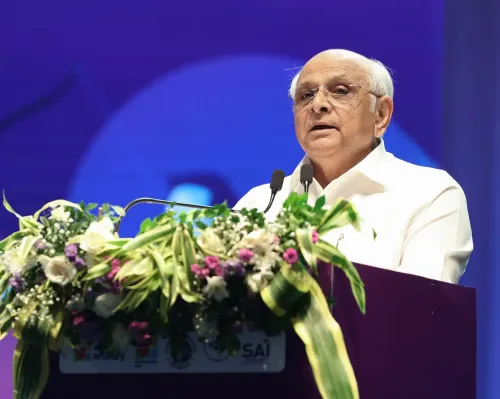
Rajesh led an eight-member delegation to Ahmedabad and held talks with Mayor Hitesh Barot .
The BJP ended 45 years of CPI(M)-led LDF rule in the Corporation when Rajesh became Mayor in December last year .
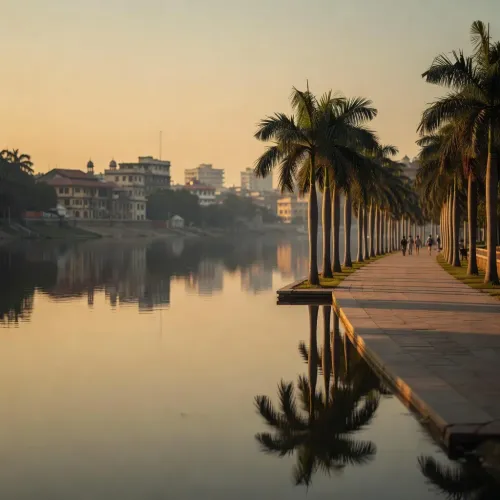
Immediate focus includes cleaning five water bodies : Parvathy Puthanar, Karamana River, Amayizhanchan Thodu, Killiyar, and Akkulam Lake.
The proposal includes exploring municipal bonds — a financing model pioneered by Ahmedabad — to fund infrastructure projects.
The Kerala state government has approved the framework; Corporation Council approval is pending.
The BJP-led Thiruvananthapuram Corporation has formally turned to Ahmedabad in Gujarat as a development partner, signing a twin-city memorandum of understanding and seeking to replicate the Gujarat model of urban governance in Kerala's state capital. The initiative, announced on 12 November 2026, marks one of the most consequential moves by the Corporation since the Bharatiya Janata Party (BJP) wrested control of the civic body from the CPI(M)-led Left Democratic Front (LDF) after nearly 45 years.
Background: A Historic Political Shift
V.V. Rajesh was sworn in as Mayor in December last year, making the BJP's takeover of the Thiruvananthapuram Corporation its first major breakthrough in urban governance in Kerala. The twin-city framework with Ahmedabad is widely seen as a deliberate effort to showcase BJP's development credentials in a politically significant city. The Kerala state government has given its approval for the cooperation framework, and the Corporation is now seeking the Council's formal nod to proceed.
What the Partnership Covers
The two civic bodies will cooperate across a broad range of urban functions — waste management, road development, technology transfer, traffic management, e-governance, and administrative practices. Officials from both cities are expected to exchange technical expertise and participate in training programmes. One of the most significant aspects of the proposal is the exploration of municipal bonds as a financing instrument — a model Ahmedabad has successfully used to fund large-scale urban development.
Water Bodies and Waste Processing in Focus
The immediate operational priority will be the cleaning and rejuvenation of five major water bodies in the capital: Parvathy Puthanar, Karamana River, Amayizhanchan Thodu, Killiyar, and Akkulam Lake. The Corporation also intends to draw on Ahmedabad's expertise in scientific waste processing, including the establishment of treatment plants and waste-to-energy facilities. These are areas where Thiruvananthapuram has historically struggled, making the partnership operationally relevant beyond its political symbolism.
Delegation Visit and MoU Signing
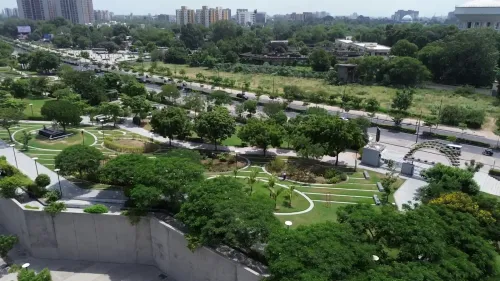
The partnership follows a study visit to Ahmedabad led by Mayor Rajesh, during which the delegation examined the city's Sabarmati riverfront project, waste management infrastructure, and broader urban development initiatives. An eight-member delegation held discussions with Ahmedabad Mayor Hitesh Barot and senior civic officials before the twin-city MoU was signed.
What Comes Next
Experts and civic observers note that the success of the initiative will hinge on three factors: securing adequate funding, ensuring smooth implementation, and building cooperation among all stakeholders — including, potentially, state government departments and opposition-controlled bodies. Ahmedabad's urban transformation, including the Sabarmati riverfront and its waste-to-energy ecosystem, took well over a decade and substantial central and state financing. Whether those conditions can be replicated in Thiruvananthapuram remains the central question as the Corporation moves toward Council approval.
Point of View
Knowing that any visible improvement will carry electoral weight in a state where it remains a distant third force. The challenge is that Ahmedabad's transformation was underwritten by decades of consistent state support and central grants that Kerala's fiscal position may not easily replicate. Municipal bonds, while innovative for the city, require investment-grade credit ratings and investor appetite that most Indian tier-2 civic bodies have struggled to build. Without resolving those structural gaps, the risk is that the partnership produces impressive study tours and signed MOUs but limited on-ground change — which is precisely the criticism the BJP levelled at the LDF for 45 years.
NationPress
12 Nov 2026
Frequently Asked Questions
Why has the Thiruvananthapuram Corporation partnered with Ahmedabad?
The BJP-led Corporation signed a twin-city MoU with Ahmedabad to adopt Gujarat's urban governance model, drawing on Ahmedabad's experience in waste management, infrastructure finance, and water body development. The initiative comes after the BJP's historic first takeover of the civic body, and is aimed at showcasing its development credentials in Kerala's capital.
What is the Gujarat model of urban governance?
The Gujarat model broadly refers to Ahmedabad's approach to urban transformation, which includes large-scale infrastructure projects like the Sabarmati riverfront, scientific waste processing, waste-to-energy facilities, and the use of municipal bonds to raise funds independently of state budgets. Thiruvananthapuram seeks to adapt these elements to its own civic challenges.
What are municipal bonds and why do they matter here?
Municipal bonds are debt instruments issued by city corporations to raise funds directly from capital markets, reducing dependence on government grants. Ahmedabad is one of India's few cities to have successfully used this model for urban projects. Thiruvananthapuram's proposal to explore municipal bonds is significant because it could open a new financing channel for major infrastructure work.
Which water bodies will be cleaned under this initiative?
The immediate focus is on five water bodies: Parvathy Puthanar, Karamana River, Amayizhanchan Thodu, Killiyar, and Akkulam Lake. These are considered priority areas for rejuvenation under the Thiruvananthapuram-Ahmedabad cooperation framework.
What approvals are still needed for the initiative to proceed?
The Kerala state government has already approved the cooperation framework. The Thiruvananthapuram Corporation is now seeking formal approval from its Council to take the initiative forward. Once cleared, officials from both cities are expected to begin exchanging technical expertise and participating in training programmes.