Is Ahmedabad Making Strides in Air Quality Management Ahead of the 2030 Commonwealth Games?
Synopsis
Ahmedabad is making significant strides in improving air quality as it prepares for the 2030 Commonwealth Games. With a focus on sustainable urban development, the city is implementing effective pollution control measures, enhancing public transport, and expanding urban green spaces, showcasing a commitment to cleaner air and environmental responsibility.
Key Takeaways
Ahmedabad is advancing its air quality management strategies significantly.
Pollution hotspots are being actively monitored and addressed.
Strict regulations are in place for the construction sector.
Public transport has transitioned to cleaner energy sources.
Urban greening initiatives are expanding rapidly.
Ahmedabad, Feb 2 (NationPress) The city has achieved significant advancements in air quality management as it implements an extensive clean air and green infrastructure strategy ahead of the Commonwealth Games set for 2030. Civic authorities have documented tangible progress in areas like monitoring, transportation, waste management, and urban greening efforts.
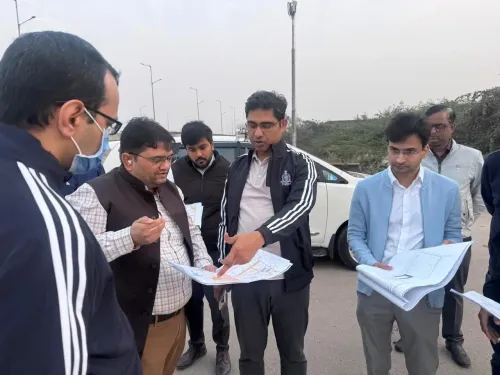
The Ahmedabad Municipal Corporation (AMC) has adopted a systematic and data-driven methodology to tackle pollution at its source while ensuring sustainable urban development.
“We are concentrating on pinpointing local pollution sources and taking decisive action through monitoring, enforcement, and mitigation,” stated an AMC official, noting that the preparations for the international sporting event have intensified environmental planning to meet global standards.
Nine identified pollution hotspots, including Pirana, Rakhiyal, Raikhad, Bopal, Vatva, Sardar Patel Stadium, Chandkheda, Maninagar, and 16 construction and demolition (C&D) waste collection centers, have been systematically identified.
Special action plans with enhanced monitoring are underway in these areas to bolster pollution control and enhance ambient air quality.
As part of the National Clean Air Programme and funding from the 15th Finance Commission, the city has deployed 16 truck-mounted mist machines.
Six of these are consistently operational at the Pirana dumpsite and surrounding areas, while 10 are allocated to designated high-pollution road corridors.
Furthermore, 62 mechanical road sweepers are actively working to mitigate particulate matter. “These initiatives have contributed to decreased road dust and improved conditions on major traffic routes,” the official commented.
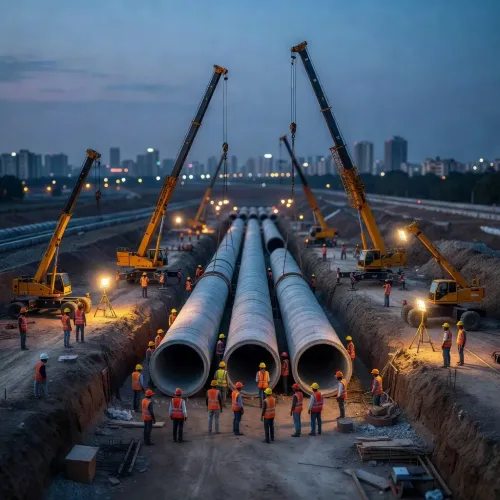
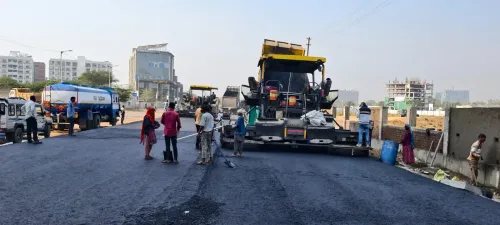
The construction industry is now facing tighter regulations through the enforcement of the Good Construction Practices Policy.
Sites with built-up areas over 20,000 square meters are obligated to install dust sensors, air quality display boards, and CCTV systems.
This policy also requires misting, complete covering of excavated materials, green netting, paved internal roads, and tire-washing systems at entry and exit points.
Currently, about 140 construction sites have implemented dust sensors, with ongoing monitoring. Fines totaling Rs 1.71 crore were imposed for violations in 2024–25, with Rs 1.16 crore collected thus far in 2025–26.
In the realm of C&D waste management, 25 collection centers have been established, and a processing plant capable of handling 1,000 tonnes per day is operational at Gyaspur.
A second facility of similar capacity is expected to commence operations by December 2026, further curtailing dust emissions from unmanaged construction waste.
Ahmedabad's public transportation has transitioned towards cleaner energy, with all 1,250 AMTS and BRTS buses running on clean fuel, including 1,052 CNG and 207 electric buses. The city also boasts 128 electric vehicle charging stations, enhanced by solar energy.
“Cleaner mobility is a fundamental element of our emission reduction strategy,” stated the official.
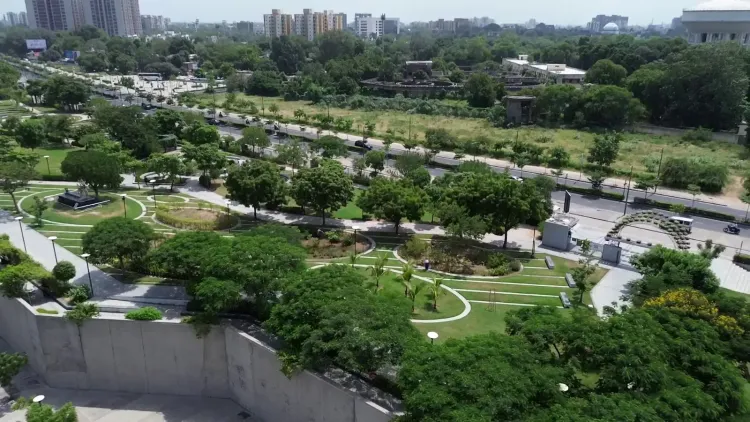
Urban greening initiatives have flourished with the creation of 303 gardens and 118 urban forests, boosting the city’s green cover to approximately 12.5 percent.
Over four million saplings were planted in 2024–25 as part of a city-wide plantation campaign.
AMC officials indicated that 95.69 percent of the Rs 652.22 crore allocated under the National Clean Air Programme has already been utilized, showcasing a strong coordination between planning and execution as Ahmedabad strives for cleaner air and sustainable urban development.
Point of View
I believe Ahmedabad's proactive measures in air quality management reflect a necessary commitment to urban sustainability. The city's approach not only addresses immediate pollution challenges but also paves the way for future generations to thrive in a cleaner, greener environment.
NationPress
29 Sept 2026
Frequently Asked Questions
What are the main focuses of Ahmedabad's air quality management?
Ahmedabad's air quality management focuses on monitoring pollution sources, enhancing public transport with cleaner energy, and expanding urban greening initiatives.
How is the construction sector being regulated for pollution control?
The construction sector is regulated through the Good Construction Practices Policy, which requires dust sensors, air quality display boards, and other measures at large sites.
What initiatives have been implemented for public transport?
All AMTS and BRTS buses in Ahmedabad now operate on clean fuel, including CNG and electric options, along with the establishment of electric vehicle charging stations.
What is the current status of Ahmedabad's green cover?
Ahmedabad's green cover has expanded to about 12.5 percent, with the development of numerous gardens and urban forests.
How much funding has been utilized from the National Clean Air Programme?
95.69 percent of the Rs 652.22 crore allocated under the National Clean Air Programme has been utilized.