TMC rebel faction ousts Mamata and Abhishek Banerjee, forms new committee
Synopsis
The TMC rebellion has crossed a defining threshold: rebel MLAs did not just break away — they formally ejected Mamata Banerjee and Abhishek Banerjee from the party's own constitutional structure, citing a lapsed national working committee. With 60 MLAs, 70 former KMC councillors, and now even Firhad Hakim in the rebel tent, this is no longer a fringe revolt — it is a structural takeover bid.
Key Takeaways
The TMC rebel faction led by Ritabrata Banerjee formally removed Mamata Banerjee and Abhishek Banerjee on 22 June at a special session in Kolkata .
Arup Roy , MLA from Howrah Madhya , was named chairman of the newly constituted national working committee.
Around 60 rebel MLAs and 70 former KMC councillors attended the hotel session after the budget session in the state Assembly.
Rebels cited Article 20 of the TMC constitution, arguing the national working committee lapsed after no meeting was held since 2022 .
20 TMC MPs in the Lok Sabha have reportedly left the party and joined the Nationalist Citizens Party of India .
TMC loyalist Kunal Ghosh rejected Monday's proceedings, calling Mamata Banerjee and Trinamool inseparable.
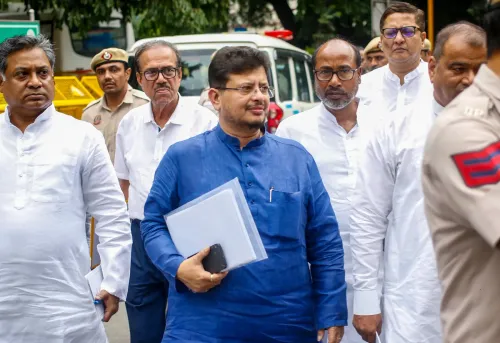
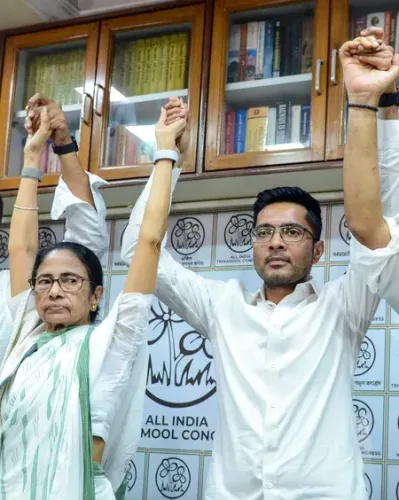
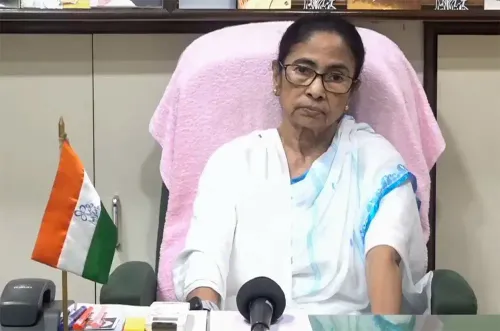
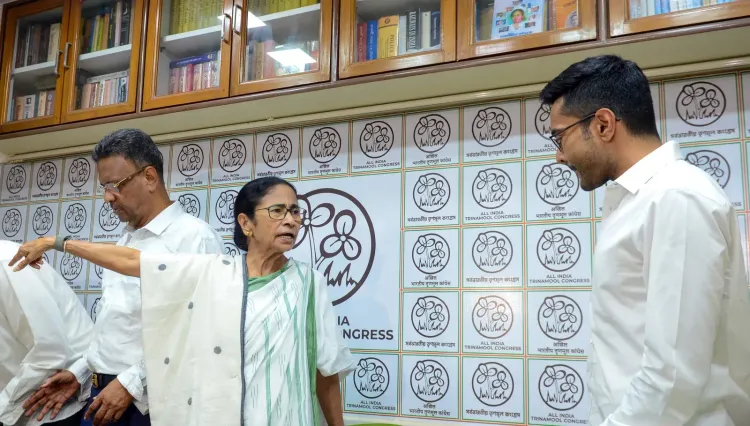
The rebel faction of the All India Trinamool Congress (TMC) led by Ritabrata Banerjee, Leader of the Opposition in the West Bengal Legislative Assembly, formally removed party supremo Mamata Banerjee and TMC general secretary Abhishek Banerjee from the rebel grouping on Monday, 22 June, in a dramatic escalation of the party's internal crisis. The move came at a special session convened at a five-star hotel in Kolkata, where approximately 60 rebel MLAs and around 70 former councillors of the Kolkata Municipal Corporation (KMC) were present.
New Committee Formed, Arup Roy Named Chairman
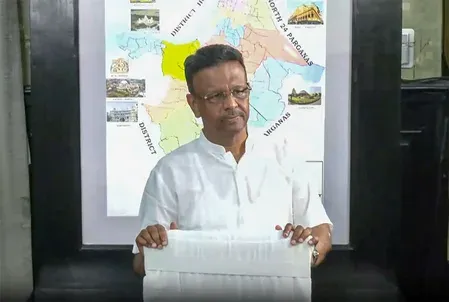
The rebel camp constituted a new national working committee at the session, with Howrah Madhya Assembly MLA Arup Roy elected as its chairman. Former state minister Aroop Biswas was named vice-chairman, alongside MLAs Firhad Hakim and Rathin Ghosh, who were also elevated to vice-chairman positions. Ritabrata Banerjee, Javed Khan, Sandipan Saha, and Sabina Yasmin were appointed general secretaries, while Akhruzzaman was named treasurer.
A committee of 30 Trinamool members was announced, marking the most organised structural assertion by the rebel bloc since the split began. Notably, the banner displayed at the meeting carried photographs of Mahatma Gandhi, B.R. Ambedkar, Rabindranath Tagore, and Kazi Nazrul Islam — conspicuously omitting any image of Mamata Banerjee.
Constitutional Grounds Cited for the Purge
The rebel faction invoked Article 20 of the Trinamool Party constitution, which mandates a national working committee meeting every three years. Since no such meeting was held after 2022, the rebels argued the existing national working committee had lapsed, and passed a proposal to dissolve it before constituting the new body. This procedural framing is significant: it gives the faction a party-rules basis for its actions, rather than presenting the move as a straightforward revolt.
How the Rebellion Unfolded
The crisis traces back to a signature mismatch case that surfaced after the state Assembly election debacle, raising questions about the legitimacy of letters sent to Assembly Speaker Rathindra Bose regarding the appointment of the Leader of the Opposition, Deputy Leader, and Chief Whip. Allegations emerged that a letter bearing the signatures of Trinamool MLAs — reportedly sent by Abhishek Banerjee — contained forged signatures. Ritabrata Banerjee and Entally MLA Sandipan Saha were the first to publicly raise the allegations.
The dispute snowballed over several weeks. In the first phase, Ritabrata Banerjee was installed as Leader of the Opposition with the backing of 58 MLAs — a number that signalled a majority of the Legislative Party had broken away. The defection subsequently extended to senior figures, including Firhad Hakim, a long-time confidant of Mamata Banerjee, who joined the rebel camp. The split also spread to the Parliamentary party in the Lok Sabha, where 20 TMC MPs reportedly left the party and aligned with the Nationalist Citizens Party of India.
Loyalists Push Back
TMC MLA Kunal Ghosh of Beleghata dismissed Monday's proceedings after visiting Mamata Banerjee at her Kalighat residence. He maintained that Trinamool and Mamata Banerjee were inseparable, and argued that the party's organisational structure did not grant the rebels the authority to take such steps. The loyalist camp has yet to formally respond with counter-measures, but the confrontation is expected to intensify as both sides seek legal and constitutional validation of their respective positions.
What Comes Next
The formation of a parallel national working committee sets up a direct organisational contest within TMC. Both factions will likely approach the Election Commission of India (ECI) to claim the party's name and symbol — a process that could take months and will hinge on which side can demonstrate majority support among elected members. The rebellion, once a legislative dispute, has now assumed a full party-structure dimension that could reshape West Bengal's political landscape ahead of the next electoral cycle.
Point of View
Not just political theatre — it shifts the battle from the Assembly floor to party law and, ultimately, to the Election Commission. What is striking is the breadth of the defection: Firhad Hakim's crossing is not the act of a backbencher but of a cabinet-level insider, suggesting the disillusionment runs deeper than a signature dispute. Mamata Banerjee has survived internal challenges before, but those were factional skirmishes; this is a parallel power structure with a constitutional fig leaf. The real test will be whether the ECI recognises the rebel committee — and that verdict, not Monday's hotel session, will determine who inherits the Trinamool name.
NationPress
21 Sept 2026
Frequently Asked Questions
What did the TMC rebel faction do on 22 June in Kolkata?
The rebel faction led by Ritabrata Banerjee formally removed Mamata Banerjee and Abhishek Banerjee from the party's rebel grouping and constituted a new national working committee at a special session held at a five-star hotel in Kolkata. About 60 MLAs and 70 former KMC councillors attended the meeting.
Who is leading the TMC rebel faction?
Ritabrata Banerjee, the Leader of the Opposition in the West Bengal Legislative Assembly, is heading the rebel camp. He was among the first MLAs to publicly raise the signature mismatch allegations against Abhishek Banerjee.
What is the constitutional basis the rebels cited for removing Mamata Banerjee?
The rebels invoked Article 20 of the Trinamool Party constitution, which requires a national working committee meeting every three years. Since no such meeting was held after 2022, they argued the existing committee had lapsed and passed a proposal to dissolve it before forming a new one.
How large is the TMC split, and does it extend beyond the state Assembly?
The split is substantial: approximately 60 MLAs backed the rebel session, and 20 TMC MPs in the Lok Sabha have reportedly left the party to join the Nationalist Citizens Party of India. Senior figures including former minister Firhad Hakim have also joined the rebel camp.
What happens next in the TMC factional dispute?
Both the rebel faction and the Mamata Banerjee loyalists are expected to approach the Election Commission of India to claim the party's name and symbol. The ECI's ruling on which group represents the legitimate Trinamool Congress will be the decisive moment in this political contest.