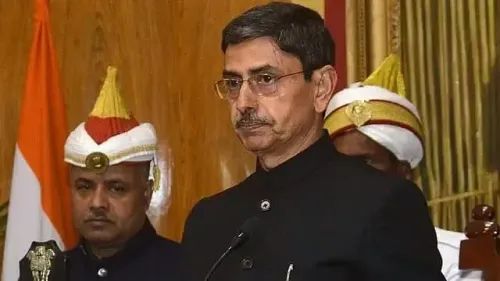
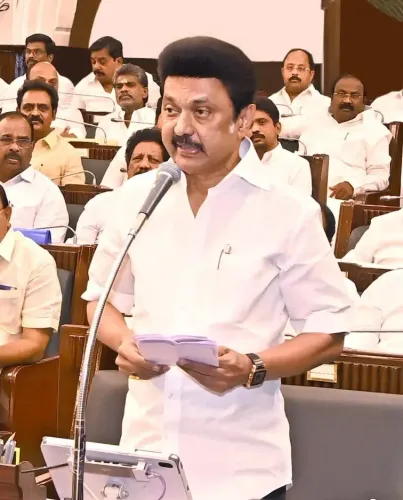
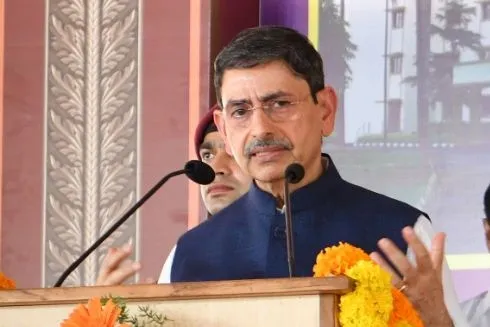
Why Did TN Governor Walk Out of Assembly Skipping Key Speech?
Synopsis
In a surprising turn of events, Governor R. N. Ravi exited the Tamil Nadu Legislative Assembly without delivering his address. Lok Bhavan claims he was denied the chance to speak, escalating tensions with the DMK government. This incident raises critical questions about political transparency and accountability.
Key Takeaways
Ravi faced microphone issues during the Assembly.
Lok Bhavan claims the address contained inaccuracies and unverified claims.
Serious public concerns were allegedly overlooked in the Governor's Address.
The incident raises questions about political accountability in Tamil Nadu.
Public safety issues, including drug abuse and women's safety, were not addressed.
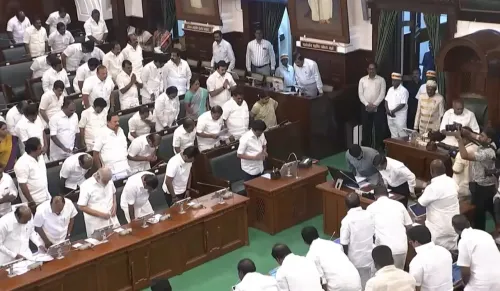
Chennai, Jan 20 (NationPress) Shortly after Governor R. N. Ravi exited the Tamil Nadu Legislative Assembly without delivering the traditional Governor’s Address on Tuesday, Lok Bhavan released a comprehensive statement, contending that the Governor was not given a chance to speak.
This clarification surfaced amid rising tensions between the Governor and the DMK administration, culminating in a stark confrontation on the Assembly's opening day.
As per Lok Bhavan's statement, the Governor chose not to deliver the address due to his microphone being “repeatedly switched off,” which prevented him from expressing his views in the House.
Characterizing the event as unprecedented, Lok Bhavan emphasized that the Governor, as the constitutional head of the state, was compelled to leave after being denied the right to voice his opinions. The statement indicated that the Governor intended to address significant omissions and inaccuracies in the prepared speech but was barred from doing so.
Lok Bhavan claimed that the address included numerous unverified and misleading assertions while neglecting crucial public issues. It specifically challenged the government’s claim that Tamil Nadu attracted investments exceeding ₹12 lakh crore.
According to the statement, many memorandums of understanding cited were merely theoretical, with actual investments representing only a fraction of the reported figure. It also indicated that recent data shows Tamil Nadu’s position among the leading recipients of foreign direct investment has declined.
The statement brought attention to the complete disregard for women’s safety issues, especially given the concerning rise in POCSO cases and incidents of sexual violence. Lok Bhavan noted the alarming issue of narcotic and substance abuse among young individuals, including school students, highlighting that over 2,000 suicides annually are linked to drug addiction.
Other critical issues mentioned that were overlooked in the address included increasing atrocities against Dalits, a high suicide rate in the state, ongoing vacancies and alleged mismanagement in educational institutions, and the failure to conduct village panchayat elections for several years, which deprived citizens of their constitutional right to grassroots democracy.
Furthermore, Lok Bhavan expressed concerns about ongoing government control over numerous temples without properly established trustee boards, escalating stress in the MSME sector, dissatisfaction among lower-level government employees, and what it termed as repeated neglect of constitutional responsibilities, including the respect for the National Anthem.
The statement concluded by emphasizing that these issues reflect ground realities and should not have been overlooked in a significant address intended to outline the government's priorities.
Point of View
The incident highlights a critical junction in Tamil Nadu's political landscape. The tensions between the Governor and the ruling party raise essential questions regarding democratic processes and governance. It is imperative for all stakeholders to engage in a dialogue that respects constitutional roles and addresses pressing public concerns.
NationPress
25 Sept 2026
Frequently Asked Questions
What happened with the TN Governor during the Assembly session?
Governor R. N. Ravi walked out of the Tamil Nadu Legislative Assembly without delivering his address, claiming he was denied the opportunity to speak.
What did Lok Bhavan say about the incident?
Lok Bhavan stated that the Governor's microphone was repeatedly switched off, preventing him from expressing his views during the Assembly session.
What issues did Lok Bhavan raise regarding the Governor's Address?
Lok Bhavan pointed out significant omissions in the address, including women's safety, rising drug abuse, and issues affecting Dalits and the MSME sector.