1975 Emergency a dark chapter in Indian democracy: Tripura CM Manik Saha
Synopsis
Fifty years after the Emergency, Tripura CM Manik Saha is drawing on personal memory — stranded at Allahabad station for three days in 1975 — to make the case that India's youngest citizens must understand what democratic breakdown looks like. The BJP's annual Samvidhaan Hatya Diwas observance is now officially backed by the Centre, giving this year's commemoration fresh political weight.
Key Takeaways
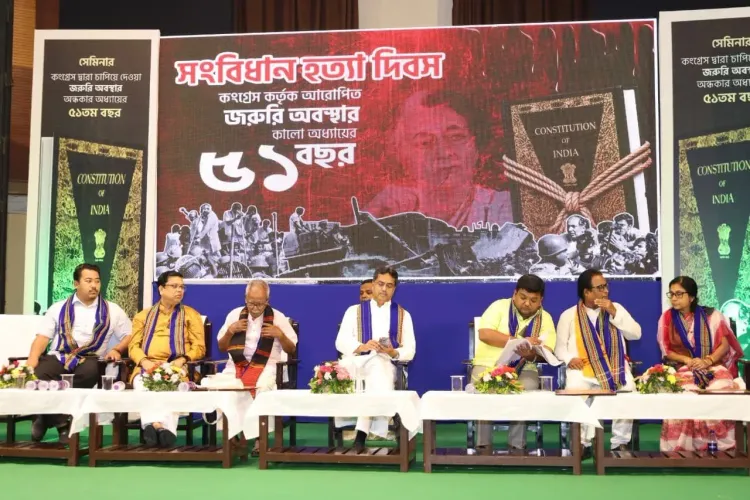
Tripura CM Manik Saha addressed a BJP event in Agartala on 25 June marking Samvidhaan Hatya Diwas .
Saha recalled being stranded at Allahabad Railway Station for three days during the 1975 Emergency .
He alleged the Emergency was imposed to protect the political position of then PM Indira Gandhi and that Article 356 was repeatedly misused to dismiss elected state governments.
Union Home Minister Amit Shah officially designated 25 June as Samvidhaan Hatya Diwas in 2024 .
Saha called on BJP workers to spread awareness about the Emergency among future generations and the youth.
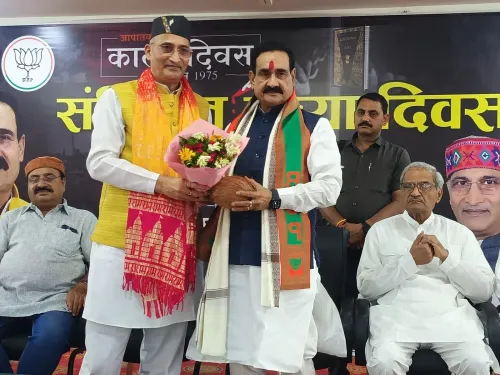
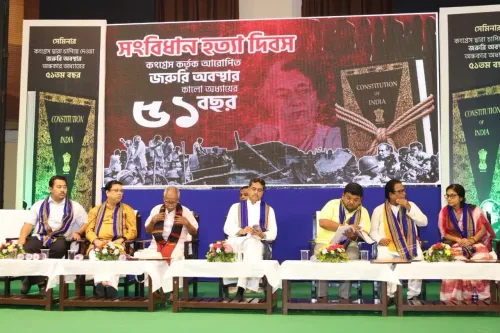
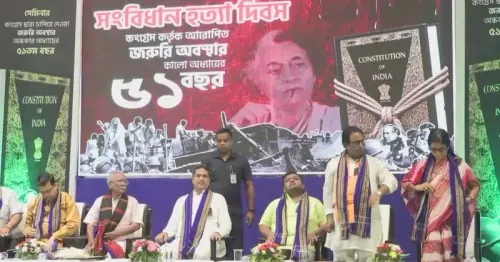
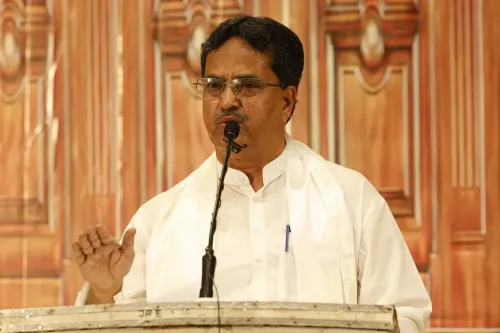
Tripura Chief Minister Manik Saha on Thursday, 25 June declared that the Emergency imposed in 1975 remains one of the darkest chapters in the history of Indian democracy, and called for sustained efforts to ensure such a period never recurs. Speaking at a Bharatiya Janata Party (BJP) event in Agartala marking Samvidhaan Hatya Diwas, Saha urged the youth and future generations to understand the full gravity of that period.
Saha's Personal Account of the Emergency
The Chief Minister drew on his own memories to underscore the atmosphere of fear that gripped the country during the Emergency. He recalled that in 1975, while travelling to Howrah from Tripura, he and a few others were stranded at Allahabad Railway Station for three days, before spending additional days in Kolkata and eventually returning to Agartala. He said only those who lived through those days could truly grasp what the Emergency meant for ordinary citizens.
Saha also recalled that Sukhomoy Sengupta was the Chief Minister of Tripura during that period, and that a pervasive climate of panic meant no one knew when they might be arrested or imprisoned. 'There was such a climate of panic that nobody knew when they might be arrested or sent to jail,' he said, adding that he still vividly remembers the events of that era.
Constitutional Provisions and Alleged Misuse
Saha outlined the three forms of Emergency provided under the Constitution — National Emergency, Constitutional Emergency, and Financial Emergency. He noted that under Article 352, an Emergency may be declared in situations involving war, external aggression, armed rebellion, or threats to national security, provisions that were legitimately invoked during conflicts with Pakistan and China.
However, he alleged that during the 1975 Emergency, Article 356 was repeatedly misused to dismiss elected state governments and impose President's Rule across several states. He further alleged that the Emergency was imposed primarily to protect the political position of the then Prime Minister Indira Gandhi, rather than for any genuine national security reason.
BJP's Observance and the Role of the Centre
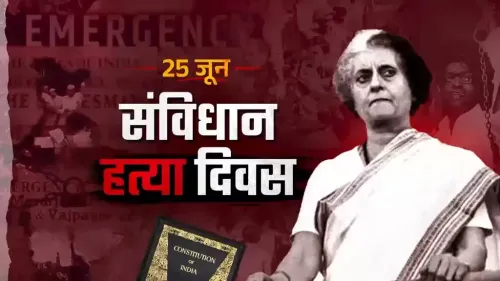
Saha noted that the BJP has been marking 25 June as a black day — referred to as Kala Diwas or Samvidhaan Hatya Diwas — every year across the country. He said that after Prime Minister Narendra Modi assumed office in 2014, efforts were initiated to ensure the events of the Emergency are not forgotten. In 2024, Union Home Minister Amit Shah officially announced that 25 June would be observed as Samvidhaan Hatya Diwas.
The Chief Minister said he would direct party workers to spread awareness about this chapter of history among as many people as possible, asserting that it is 'inappropriate for the Congress to speak about democracy' given what he described as the party's role in dismantling democratic institutions during that period.
Voices at the Event
The programme in Agartala was attended by BJP state president Abhishek Debroy, party vice-presidents Tapas Bhattacharya and Papiya Dutta, RSS Pracharak Piyush Kanti Bhattacharya, Social Welfare and Social Education Minister Tinku Roy, BJP state General Secretary Bipin Debbarma, Sadar Urban district president Asim Bhattacharya, along with other public representatives and party workers.
What Comes Next
Saha reaffirmed that 25 June must be observed every year as a reminder of the Emergency's impact on democratic institutions. He stressed that India's democratic system rests on four pillars and that preserving those pillars demands both institutional vigilance and public awareness — particularly among younger citizens who did not live through 1975.
Point of View
Now backed by a formal government designation. What is notable is how the event conflates legitimate constitutional critique — the misuse of Article 356 is well-documented — with partisan framing that positions the Congress as permanently disqualified from speaking on democracy. The historical record on the Emergency is damning enough to stand on its own; the political overlay risks reducing a genuine constitutional lesson to electoral ammunition. With the 50th anniversary of the Emergency falling this year, the intensity of this commemoration is unlikely to diminish ahead of upcoming state election cycles.
NationPress
24 Sept 2026
Frequently Asked Questions
What is Samvidhaan Hatya Diwas and why is it observed on 25 June?
Samvidhaan Hatya Diwas, also called Kala Diwas, is observed on 25 June to mark the anniversary of the Emergency declared in India in 1975 by the then Congress government. Union Home Minister Amit Shah officially designated 25 June as Samvidhaan Hatya Diwas in 2024, and the BJP has been marking the date as a black day in Indian democratic history every year.
What did Tripura CM Manik Saha say about the 1975 Emergency?
Manik Saha called the 1975 Emergency one of the darkest chapters in Indian democratic history and recalled personal experiences of fear and uncertainty during that period, including being stranded at Allahabad Railway Station for three days. He alleged the Emergency was imposed to protect the political position of then Prime Minister Indira Gandhi rather than for genuine national security reasons.
How did Manik Saha allege the Emergency was misused constitutionally?
Saha alleged that Article 356 of the Constitution was repeatedly used during the Emergency to dismiss elected state governments and impose President's Rule across several states. He distinguished this from legitimate Emergency provisions under Article 352, which he noted were validly invoked during wars with Pakistan and China.
Who attended the Samvidhaan Hatya Diwas event in Agartala?
The event was attended by BJP state president Abhishek Debroy, party vice-presidents Tapas Bhattacharya and Papiya Dutta, RSS Pracharak Piyush Kanti Bhattacharya, Social Welfare Minister Tinku Roy, BJP state General Secretary Bipin Debbarma, and other party leaders and workers.
Why does the BJP mark 25 June every year?
The BJP marks 25 June annually as Samvidhaan Hatya Diwas to commemorate what it describes as the destruction of constitutional democracy during the 1975 Emergency. The party says the observance is intended to ensure that future generations remain aware of the Emergency's impact on democratic institutions and that such a situation never recurs.