BJP's Trivedi hits Congress over Nov 1 protest, invokes 1984 anti-Sikh violence
Synopsis
BJP MP Sudhanshu Trivedi has accused Congress of deliberately fixing its 1 November Delhi protest on the anniversary of the 1984 anti-Sikh violence — a pointed political charge that reaches back four decades while targeting Rahul Gandhi's leadership in the present. The broadside ties historical grievances to a live opposition mobilisation, sharpening the BJP-Congress battle.
Key Takeaways
BJP MP Sudhanshu Trivedi on 23 October 2026 accused Congress of scheduling its Delhi protest on 1 November to evoke memories of the 1984 anti-Sikh violence .
Trivedi alleged that Jawaharlal Nehru became Prime Minister of the Interim Government on 2 September 1946 by sidelining Sardar Vallabhbhai Patel .
He claimed Indira Gandhi consolidated power by splitting Congress during the 1969 presidential election involving Neelam Sanjiva Reddy .
The BJP leader alleged that Rajiv Gandhi came to power amid the massacre of Sikhs in Delhi in 1984 .
Trivedi alleged Rahul Gandhi 's repeated political failures have reduced the 140-year-old Congress to its lowest point.
Congress has not publicly responded to Trivedi's remarks as of the time of this report.
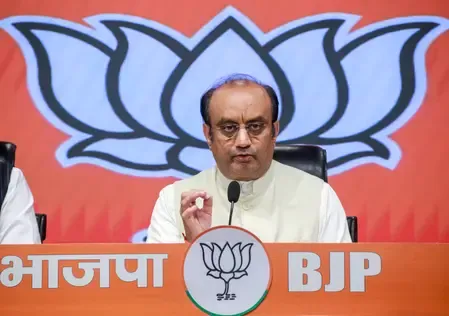
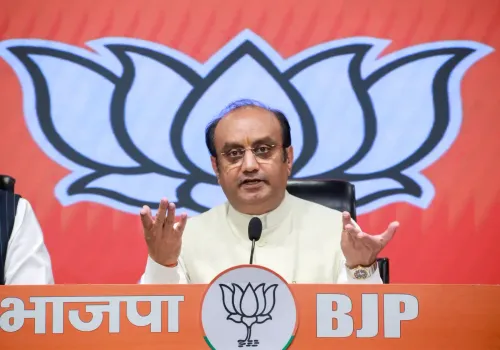
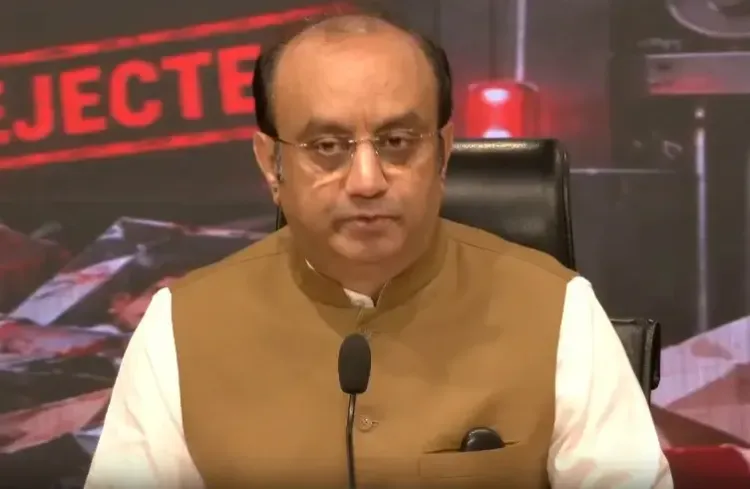
Bharatiya Janata Party (BJP) MP Sudhanshu Trivedi on Friday, 23 October launched a sharp attack on the Indian National Congress, accusing the opposition party of deliberately scheduling its planned Delhi protest on 1 November to evoke memories of the 1984 anti-Sikh violence — a charge Congress has not publicly addressed.
The 1984 Link
Trivedi drew a direct line between the chosen protest date and a dark chapter in India's history. 'The anti-Sikh violence began on November 1, 1984. The Congress is now planning a protest in Delhi on the same date, and I believe it wants to remind the city of the anarchy it witnessed in 1984,' he said at a press conference.
The 1984 anti-Sikh violence, which erupted in the wake of then Prime Minister Indira Gandhi's assassination on 31 October 1984, left thousands dead across Delhi and other parts of the country. Multiple courts and commissions have since examined the violence, and several Congress-linked figures have faced legal proceedings over it.
Historical Allegations Against Congress Leadership
Trivedi extended his attack to the legacy of former Prime Ministers, alleging that Jawaharlal Nehru had built political power by sidelining Sardar Vallabhbhai Patel, despite Patel's outsised contribution to the freedom struggle and the integration of princely states. 'Jawaharlal Nehru built his political power by denying Sardar Vallabhbhai Patel his due and became Prime Minister despite receiving zero votes,' Trivedi said.
The BJP leader also noted that Nehru became Prime Minister of the Interim Government on 2 September 1946 — nearly a year before India's formal independence on 15 August 1947 — and argued that the Partition of the subcontinent, which he described as 'one of the bloodiest chapters in human history,' occurred during Nehru's tenure as head of that Interim Government.
Turning to Indira Gandhi, Trivedi alleged she consolidated her hold on power after engineering a split within Congress, pointing to the 1969 presidential election involving Neelam Sanjiva Reddy, when she reportedly asked party MPs to vote against the official Congress candidate. 'After the tragic assassination of Indira Gandhi, Rajiv Gandhi came to power amid the massacre of Sikhs in Delhi in 1984,' he added.
Attack on Rahul Gandhi's Leadership
Trivedi also trained his sights on Congress leader Rahul Gandhi, alleging that repeated attempts to project him as the party's principal face had weakened a 140-year-old institution. 'After Rahul Gandhi's repeated failures to revive Congress, reducing the 140-year-old party to its lowest point, I have cited at least a dozen examples of failed attempts to launch him politically,' the BJP MP said.
He further alleged that the party's current strategy of positioning Rahul Gandhi involved 'undermining the entire Indian system' — a broad charge directed at what he described as Congress's approach to India's political and constitutional institutions.
Context and What Comes Next
The opposition's planned 1 November Delhi protest has not yet been officially detailed in terms of its specific demands or organisers. This comes amid a heightened phase of political sparring between the BJP and Congress ahead of several state assembly cycles. Notably, the BJP has repeatedly used historical references to anti-Sikh violence to challenge Congress's credibility among Sikh communities and in Punjab, where the violence carries deep emotional resonance. Congress has not issued a formal response to Trivedi's remarks as of the time of this report.
Point of View
The BJP attempts to make the protest itself the story rather than whatever Congress intends to raise. The historical sweep — from Nehru's Interim Government to Rajiv Gandhi's 1984 succession — is a well-worn BJP playbook, but its deployment here is unusually timed, suggesting the party sees genuine political risk in the opposition's planned action. What mainstream coverage tends to miss is the implicit Punjab subtext: every invocation of 1984 is also a message to Sikh voters, in a state where Congress is still attempting to recover electoral ground.
NationPress
23 Oct 2026
Frequently Asked Questions
Why did BJP's Sudhanshu Trivedi attack Congress over the November 1 protest?
Trivedi alleged that Congress deliberately chose 1 November for its Delhi protest because that date marks the beginning of the 1984 anti-Sikh violence, and accused the party of wanting to 'remind the city of the anarchy it witnessed in 1984.' The BJP MP made the remarks at a press conference on 23 October 2026.
What is the Congress protest on November 1 about?
Congress has announced a protest in Delhi on 1 November, though the specific demands and organisers had not been officially detailed at the time BJP MP Sudhanshu Trivedi commented on it. The BJP has pre-emptively framed it as an attempt to revive the anti-Sikh violence narrative.
What did Trivedi allege about Jawaharlal Nehru and Sardar Patel?
Trivedi alleged that Nehru built political power by denying Sardar Vallabhbhai Patel his due and became Prime Minister of the Interim Government on 2 September 1946 despite receiving zero votes. He also argued that the Partition occurred during Nehru's tenure as head of the Interim Government.
What did Trivedi say about Rahul Gandhi?
Trivedi alleged that Rahul Gandhi's repeated failures had reduced the 140-year-old Congress party to its lowest point, and that the party was now attempting to project him by 'undermining the entire Indian system.' He claimed to have cited at least a dozen examples of failed attempts to launch Rahul Gandhi politically.
How has Congress responded to Trivedi's remarks?
Congress had not issued a formal public response to Trivedi's remarks as of the time of this report on 23 October 2026.