CM Sai Hails President Murmu at Bastar's Muriya Darbar
Synopsis
Chhattisgarh CM Vishnu Deo Sai hailed President Draupadi Murmu's attendance at the Muriya Darbar during Bastar Dussehra 2026, calling it a landmark moment for tribal identity and Chhattisgarh's centuries-old folk traditions.
Key Takeaways
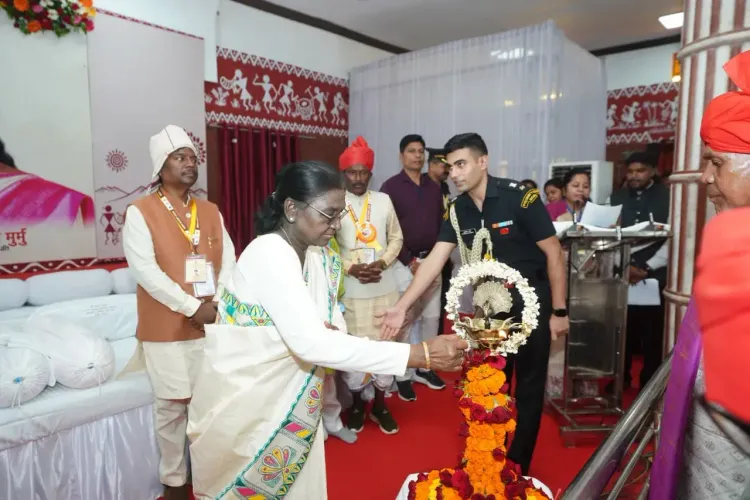
President Draupadi Murmu participated in the Muriya Darbar , the historic tribal assembly at Bastar Dussehra 2026 .
CM Vishnu Deo Sai described the event as a proud moment for Chhattisgarh's tribal communities and folk traditions.
The Muriya Darbar is a centuries-old open tribal assembly that places collective public aspirations at the centre of decision-making.
President Murmu is the first person from a tribal community to hold India's highest constitutional office, making her presence symbolically significant.
Bastar Dussehra is one of India's longest-running tribal festivals, spanning over 75 days and rooted in the worship of deity Danteshwari .
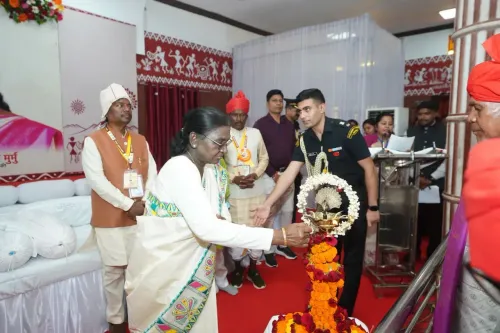
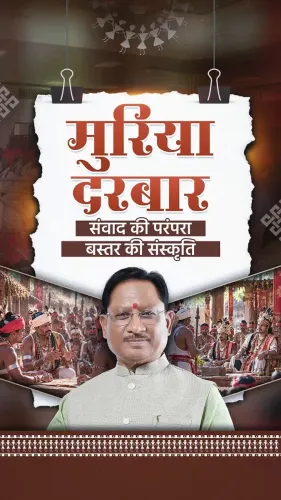
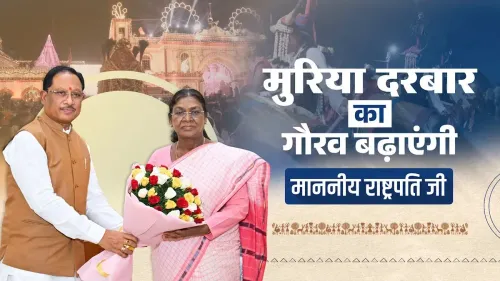
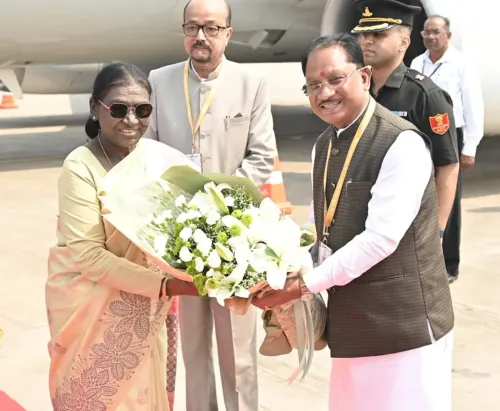
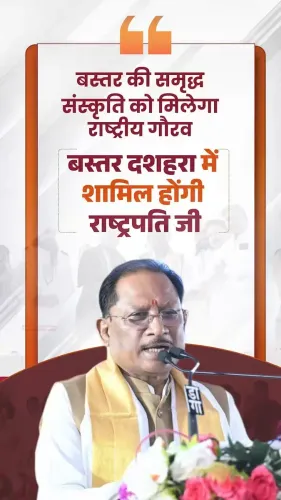
Centuries old and still sovereign — the Muriya Darbar, the ancient tribal assembly at the heart of Bastar Dussehra, received its most prominent visitor in living memory on Friday, 23 October 2026, when President Draupadi Murmu joined the gathering. Chhattisgarh Chief Minister Vishnu Deo Sai called the moment a matter of deep pride for the state's tribal communities and folk traditions.
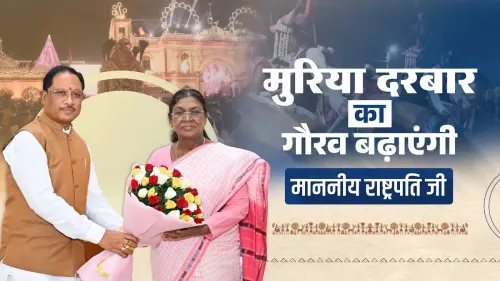
In his post, CM Sai described the Muriya Darbar as 'जनआकांक्षाओं और सामुदायिक मूल्यों को सर्वोच्च स्थान' — 'the highest place for public aspirations and community values' — and welcomed the President's participation as a 'glorious moment for Chhattisgarh's folk traditions and tribal pride.'
What the Muriya Darbar actually is
The Muriya Darbar is not ceremony for ceremony's sake. It is a structured open assembly embedded within the weeks-long Bastar Dussehra festival — widely regarded as one of the longest running tribal festivals in the world — where community elders, clan heads, and ordinary residents voice collective decisions and articulate shared aspirations. No minister chairs it. No party flag flies over it. The people of Bastar, a region in southern Chhattisgarh with a predominantly tribal population, have kept this practice alive across centuries of political change.
Why Draupadi Murmu's presence carries extra weight
President Murmu, who took office in 2022, is the first person from a tribal community to hold India's highest constitutional position. Her attendance at an institution that is itself a living expression of tribal self-governance is therefore more than a ceremonial visit — it is a symbolic loop closing. The community that built the Muriya Darbar sees, in the President's chair, a reflection of its own heritage.
Indian national leaders have periodically engaged with regional tribal festivals to acknowledge indigenous traditions, but the convergence of a tribal President with one of the country's oldest tribal assemblies is a rarer alignment. CM Sai, himself a prominent voice for tribal representation within the BJP, framed the moment in exactly those terms.
Bastar Dussehra's place in India's cultural calendar
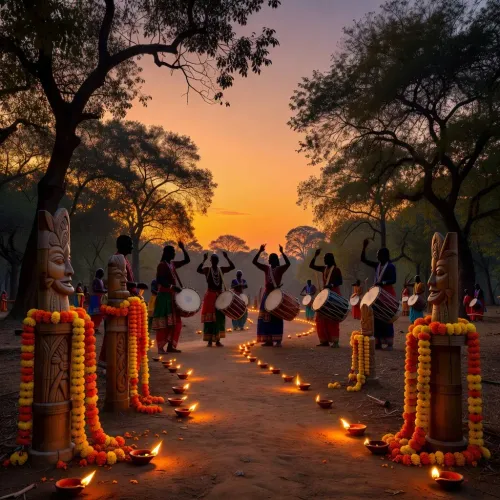
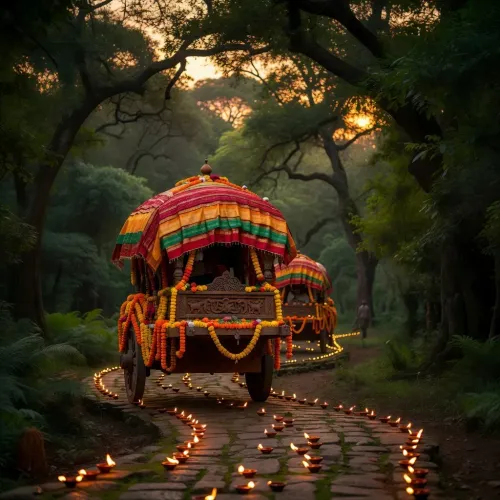
Bastar Dussehra differs strikingly from the mainstream North Indian festival of the same name. It is presided over by the deity Danteshwari, runs for over 75 days, and draws participants from dozens of tribal clans across the region. The Muriya Darbar sits at its ceremonial and democratic core — a reminder that participatory governance, in parts of India, predates modern democracy by centuries.
For Chhattisgarh, the occasion is also a cultural-tourism moment of national visibility, placing Bastar and its living traditions at the centre of the country's attention.
A tribal President in a tribal assembly that has outlasted empires — that is the image CM Sai is asking the country to hold onto.
Point of View
Himself a tribal leader in a state where tribal voters are electorally decisive, amplifying this moment is both culturally genuine and politically coherent. The symbolism of a tribal President at an ancient tribal assembly also quietly reinforces a narrative that India's constitutional apex and its deepest indigenous traditions are not in tension but in dialogue. Subsequent state policy on tribal cultural preservation will be the real test of whether the gesture translates into institutional commitment.
NationPress
23 Oct 2026
Frequently Asked Questions
What is the Muriya Darbar in Bastar Dussehra?
The Muriya Darbar is a traditional open tribal assembly held during Bastar Dussehra in Chhattisgarh, where community elders and residents collectively voice decisions and aspirations. It is considered one of the oldest forms of participatory governance in India.
Why did President Draupadi Murmu attend Bastar Dussehra 2026?
President Murmu participated in the Muriya Darbar as part of Bastar Dussehra 2026. Her attendance is significant because she is the first person from a tribal community to serve as India's President, making her presence at a historic tribal assembly especially meaningful.
What is Bastar Dussehra and how is it different from regular Dussehra?
Bastar Dussehra is a tribal festival in the Bastar region of Chhattisgarh that spans over 75 days and is dedicated to the deity Danteshwari. Unlike the mainstream North Indian Dussehra, it features distinct tribal rituals, clan processions, and the Muriya Darbar assembly.
What did CM Vishnu Deo Sai say about Muriya Darbar?
CM Sai called the Muriya Darbar a living symbol of Chhattisgarh's rich cultural heritage, tribal identity, and the tradition of collective decision-making. He described President Murmu's participation as a glorious moment for the state's folk traditions and tribal pride.
Who is Vishnu Deo Sai and why does he highlight tribal issues?
Vishnu Deo Sai is the Chief Minister of Chhattisgarh and a BJP leader who assumed office after the 2023 state elections. He is himself from a tribal community, which makes tribal heritage and identity central to both his political identity and his governance agenda.