USMCA renewal blocked: Trump refuses 16-year extension, renegotiation begins
Synopsis
The Trump administration has refused to extend the USMCA, the trade pact Trump himself negotiated, citing persistent trade deficits and unresolved disputes with both Canada and Mexico. The pact stays alive for now, but Washington has signalled it wants a fundamentally rewritten deal — and the president retains the power to walk away entirely.
Key Takeaways
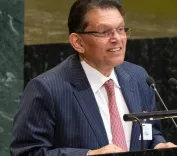
US Trade Representative Jamieson Greer announced on 1 July that the USMCA will not be renewed in its current form.
The decision followed the first mandatory six-year joint review of the agreement, which entered into force in 2020 .
The pact remains in force during the renegotiation period; it is not automatically terminated.
President Trump retains authority under US law to withdraw unilaterally before the review concludes.
Key US grievances include Canada's dairy sector restrictions and disputes over US energy and agricultural exports to Mexico .
A third round of US-Mexico bilateral talks is scheduled for the week of 20 July , covering rules of origin, labour compliance, and intellectual property.
US Trade Representative Ambassador Jamieson Greer announced on Wednesday, 1 July that the Trump administration has declined to renew the United States-Mexico-Canada Agreement (USMCA) in its current form, triggering a formal renegotiation process while the pact remains operational. The decision followed the first mandatory six-year joint review of the agreement, which originally entered into force on 1 July 2020.
What Washington Decided
'The United States did not agree to renew the USMCA in its current form. As a result, the USMCA is not renewed,' Greer said in an official statement issued after the trilateral review meeting. He added that the US would 'continue to engage with Mexico and Canada to address the Agreement's shortcomings and our trade deficits with these countries,' while confirming the pact remains in force pending resolution.
Crucially, under the USMCA's own review mechanism, a failure by all three parties to agree on an extension does not automatically terminate the agreement. Instead, it initiates a negotiation window during which trade flows continue uninterrupted. A senior administration official also confirmed that President Donald Trump retains the legal authority under US law to withdraw from the agreement before that process concludes.
The Core Grievances: Deficits, Dairy, and Energy
A senior administration official told reporters that the administration views the USMCA as having modernised North American trade rules but having failed on one of its primary objectives — reducing the US trade deficit. 'The primary issues that the president's been focused on... is our trade deficit,' the official said. 'We believe that the USMCA did not operate to control the deficit as the president intended.'
Specific flashpoints cited include Canada's dairy sector market access restrictions and unresolved disputes over US energy and agricultural exports to Mexico. The administration characterised these as persistent structural imbalances that the existing agreement had not corrected.
What the Renegotiation Will Target
The United States is scheduled to hold a third round of bilateral negotiations with Mexico during the week of 20 July. According to the senior official, the talks will focus on strengthening rules of origin, enhancing North American economic security, improving labour and environmental compliance, and expanding intellectual property protections.
The administration is also pushing for stronger US content requirements in manufactured goods. 'What we don't want is a situation where... everyone says, fine, I'm just gonna move everything to Mexico and import to the US duty-free,' the official said, signalling a clear intent to close loopholes that allow tariff-free access without sufficient domestic production.
Canada in the Crosshairs
Discussions with Canada are also set to continue, though the tone from Washington was notably sharper. The senior official criticised Ottawa's retaliatory measures against US tariffs and flagged what the administration considers unresolved non-tariff trade barriers as additional sticking points in the relationship.
Background: From NAFTA to USMCA
The USMCA replaced the North American Free Trade Agreement (NAFTA) on 1 July 2020, following years of negotiations led by President Trump during his first term. It introduced updated rules on digital trade, labour standards, automotive manufacturing, and intellectual property, while embedding a mandatory joint review every six years — the very mechanism now triggering this renegotiation. The design was deliberate, the official noted: 'The idea was to make sure that any agreement between Mexico, Canada and the United States always put America first rather than let a trade deal persist on autopilot over decades as had happened with NAFTA.'
With bilateral talks with Mexico resuming in late July and Canada negotiations ongoing, the shape of North American trade — and its ripple effects on global supply chains — will be closely watched in the weeks ahead.
Point of View
Now repurposed as leverage. The stated rationale, reducing trade deficits, has always been a contested metric for measuring a trade deal's success; economists broadly argue that deficits reflect savings and investment dynamics more than trade rules. What is underreported is the legal overhang: Trump's retained authority to withdraw unilaterally means Canada and Mexico are negotiating under the constant threat of a cliff edge, which structurally weakens their bargaining position. The dairy and energy disputes are not new — they festered through the original USMCA negotiations. That they remain unresolved five years later suggests the renegotiation will be protracted, and supply chains that have restructured around USMCA certainty face an extended period of uncertainty.
NationPress
30 Sept 2026
Frequently Asked Questions
What happened to the USMCA renewal on 1 July 2025?
The Trump administration declined to renew the USMCA in its current form following the agreement's first mandatory six-year joint review. The pact, however, remains in force while the US, Mexico, and Canada continue renegotiations.
Does rejecting the USMCA extension mean the trade deal is cancelled?
No. Under the USMCA's own rules, a failure to agree on an extension does not terminate the agreement. It triggers a review and negotiation period during which the pact continues to operate. President Trump does, however, retain the legal authority to withdraw unilaterally under US law.
Why did the US refuse to renew the USMCA?
The administration cited the agreement's failure to reduce the US trade deficit with Mexico and Canada as the primary reason. Specific unresolved issues include Canada's dairy sector market access restrictions and disputes over US energy and agricultural exports to Mexico.
What will the renegotiation focus on?
According to a senior US official, upcoming talks will target stronger rules of origin, North American economic security, labour and environmental compliance, and expanded intellectual property protections. The US is also seeking higher domestic content requirements in manufactured goods to discourage tariff-free imports assembled primarily outside the US.
What is the USMCA and how does it differ from NAFTA?
The USMCA replaced the North American Free Trade Agreement (NAFTA) on 1 July 2020 after negotiations led by President Trump during his first term. It updated rules on digital trade, automotive manufacturing, labour standards, and intellectual property, and introduced a mandatory six-year joint review — the mechanism now driving the current renegotiation.