Mexico to seek 16-year USMCA extension at July 1 trilateral meet
Synopsis
Mexico is pushing for a 16-year USMCA extension at the 1 July trilateral review — and Economy Minister Marcelo Ebrard is framing the floor scenario as favourable: even if talks stall, the agreement runs another decade. With Trump's tariff threats still in the background and steel-and-drone classification fights already consuming hours of negotiation, the real question is not whether USMCA survives, but on whose terms.
Key Takeaways
Mexico will formally propose a 16-year USMCA extension at a virtual trilateral meeting on 1 July .
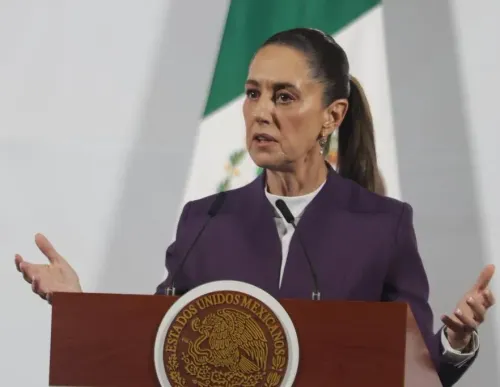
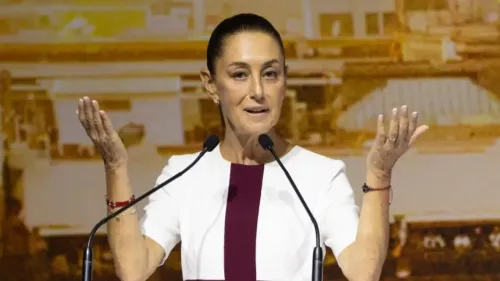
The proposal letter will be signed by President Claudia Sheinbaum , according to Economy Minister Marcelo Ebrard .
If no extension is agreed, the USMCA remains valid for another 10 years — no country has filed the required six months' withdrawal notice.
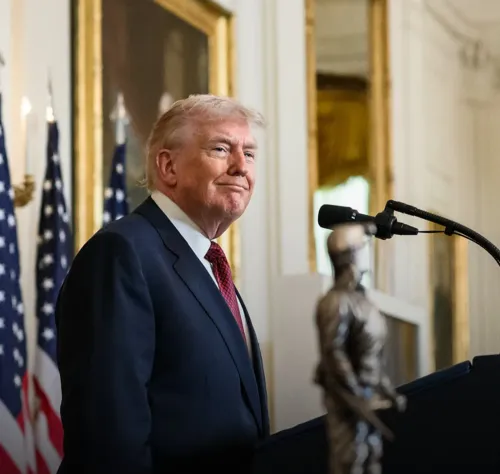
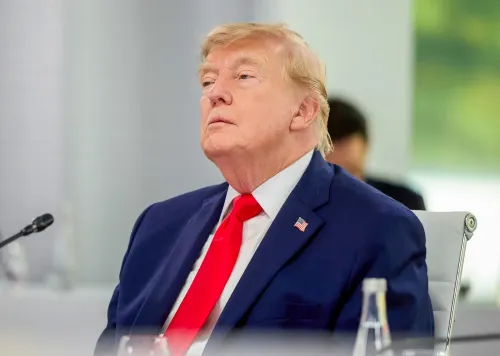
Despite earlier threats of 25 per cent blanket tariffs by US President Donald Trump , most Mexico-US trade remains tariff-free under the current agreement.
Negotiations are described as highly complex, with classification of steel-derived components in robotics and drones alone taking several hours to deliberate.
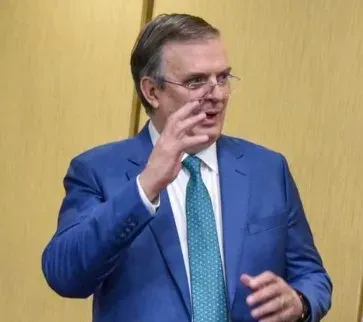
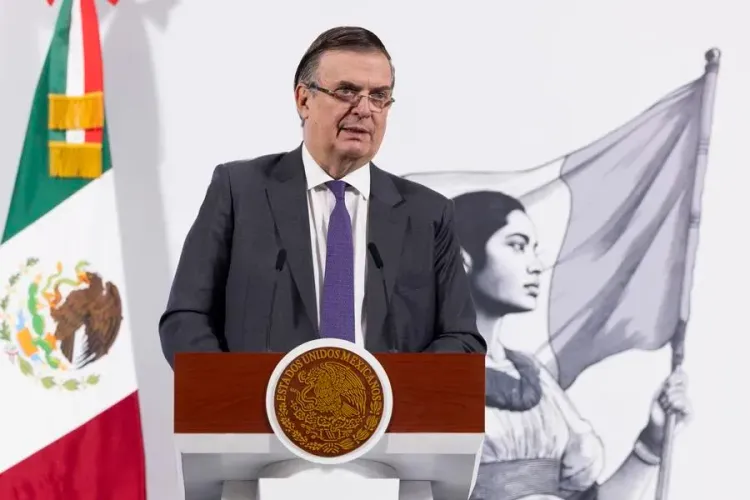
Mexican Economy Minister Marcelo Ebrard announced on Tuesday that Mexico will formally propose extending the United States-Mexico-Canada Agreement (USMCA) for another 16 years during a virtual trilateral meeting scheduled for 1 July. The proposal will be formalised in a letter signed by President Claudia Sheinbaum, Ebrard confirmed.
What Happens on July 1
Ebrard was clear that 1 July marks the beginning of the USMCA review process, not its conclusion. Under the agreement's provisions, the three partner governments — Mexico, the United States, and Canada — must formally state on that date whether they wish to extend the pact for a further 16 years. Mexico's position, Ebrard said, is an unambiguous yes.
The Floor Scenario: 10 More Years Either Way
Even if any party declines to back the extension, the USMCA would not lapse. 'Your worst-case scenario is that it continues for 10 years,' Ebrard said, noting that no country has yet issued the six months' advance notice required to formally initiate withdrawal from the agreement. The minister's framing was notably reassuring — designed, analysts would argue, to contain business uncertainty ahead of the review deadline.
Complexity on the Table
Ebrard acknowledged that the negotiations involve significant technical complexity. As one example, he cited discussions on steel-derived products — specifically, how components used in technologies such as robots and drones should be classified, given the large number of parts and transformation processes involved. That single issue reportedly consumed several hours of deliberation, illustrating the granular difficulty of modernising a trade framework that governs hundreds of billions of dollars in annual commerce.
Tariff Threats and Trade Realities
Despite US President Donald Trump's earlier threats to impose blanket tariffs of 25 per cent on Mexican imports, Ebrard confirmed that the USMCA remains in force and that most trade between Mexico and the United States continues on a tariff-free basis. He said Mexico deliberately chose to begin talks with Washington ahead of schedule in order to reduce uncertainty and protect national interests in an international environment increasingly shaped by US protectionist policies.
What Comes Next
The 1 July virtual meeting will set the tone for what could be a prolonged and technically demanding renegotiation. Mexico's principal challenge, according to Ebrard, is to maintain and deepen its trade integration with its North American partners even as the broader global trade environment grows more restrictive. The outcome of the review will have significant implications for supply chains across the continent, particularly in sectors such as automotive, electronics, and agriculture.
Point of View
Mexico is managing domestic business anxiety while signalling confidence to Washington and Ottawa. What the framing obscures is that a 10-year continuation without a fresh extension would leave the agreement unreformed, preserving structural imbalances that US negotiators have already flagged. The steel-and-drone classification dispute, seemingly technical, is a preview of how contentious the modernisation agenda will be. Mexico's decision to front-run the review timeline is smart diplomacy — but the harder question is whether it has the leverage to shape the outcome, not just the optics.
NationPress
22 Sept 2026
Frequently Asked Questions
What is Mexico proposing at the USMCA July 1 meeting?
Mexico will formally propose extending the USMCA for another 16 years at a virtual trilateral meeting on 1 July, with President Claudia Sheinbaum signing the corresponding letter. Economy Minister Marcelo Ebrard confirmed the proposal on Tuesday.
What happens if the USMCA extension is not agreed upon?
If any party declines to support the 16-year extension, the USMCA does not lapse — it remains in force for the next 10 years. No country has yet issued the six months' advance notice required to formally withdraw from the agreement.
Why has Mexico started USMCA talks ahead of schedule?
Mexico chose to begin negotiations early in order to reduce business uncertainty and protect national interests amid a more protectionist US trade policy environment. Economy Minister Ebrard said the early engagement was a deliberate strategic decision.
Are US tariffs on Mexico currently in effect despite USMCA?
Most trade between Mexico and the United States remains tariff-free under the USMCA, despite earlier threats by US President Donald Trump to impose blanket tariffs of 25 per cent on Mexican imports. Ebrard confirmed the agreement continues to govern the bulk of bilateral trade.
What makes the USMCA renegotiation technically complex?
The negotiations involve highly granular classification disputes — for example, determining how steel-derived components used in robots and drones should be categorised under trade rules, a discussion that reportedly took several hours given the number of parts and transformation processes involved.