Trump casts doubt on USMCA renewal: 'We don't need anything from them'
Synopsis
Trump's blunt 'I don't know that I'm going to renew it' on USMCA is more than rhetorical posturing — it is a deliberate signal ahead of the pact's formal review window. By invoking trade deficits and US economic leverage in the same breath, Trump is setting the terms of a renegotiation before one has even been formally announced, leaving Canada and Mexico with little choice but to prepare for a harder bargain.
Key Takeaways
President Donald Trump said on Wednesday he is not certain he will renew the USMCA when it comes up for review.
Trump cited persistent trade deficits with both Canada and Mexico as a key concern.
He called NAFTA 'the worst trade deal ever made' and credited USMCA 's review clause as its most valuable feature.
The USMCA entered into force in 2020 and is scheduled for a formal review in the coming years.
No formal withdrawal or review process was announced; the remarks are expected to raise uncertainty across North American supply chains.
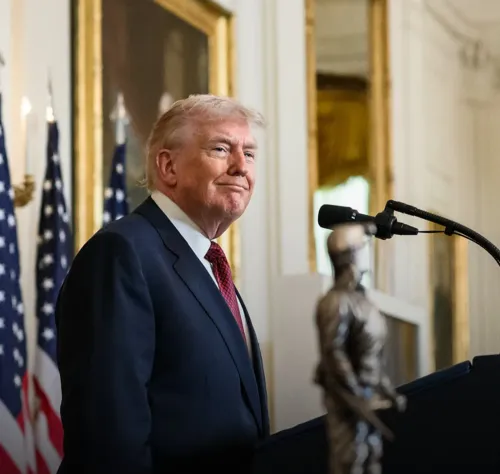
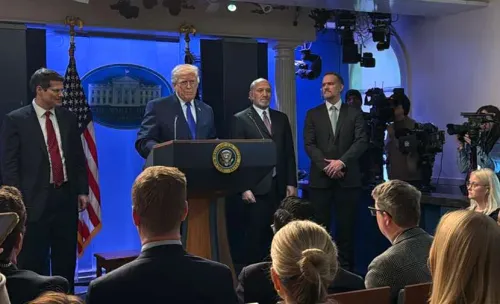
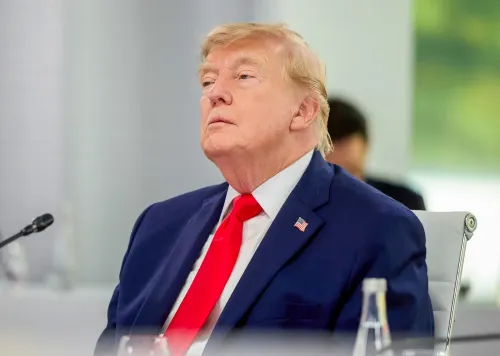
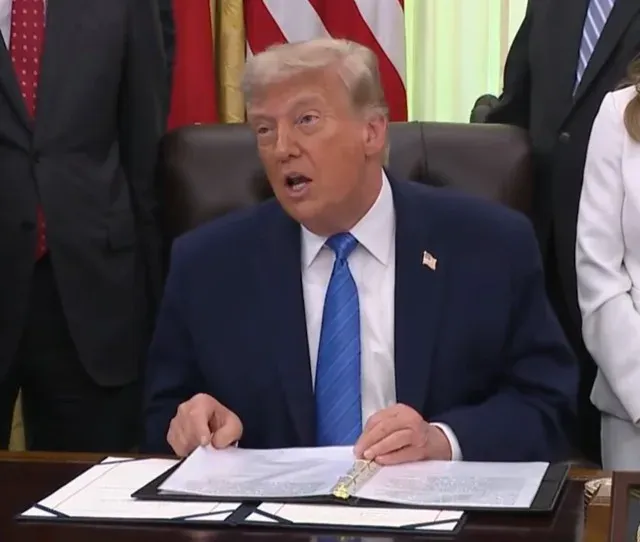
President Donald Trump on Wednesday cast fresh doubt over the future of the United States-Mexico-Canada Agreement (USMCA), saying he is not certain he will renew the landmark North American trade pact when it comes up for review during his current term. The remarks, made at the White House after he signed the Secure America Act, are likely to unsettle manufacturers, exporters, and investors across the three-nation supply chain.
What Trump Said
"I don't know that I'm going to renew it," Trump said when asked directly about the agreement's future. He also dismissed the economic weight of the two neighbouring partners, stating: "We don't need anything that Canada has. We don't need anything that Mexico has, but they need everything that we have. And they have to treat us better."
Trump further pointed to persistent trade deficits with both countries as a core grievance. "With Mexico and Canada, we have trade deficits," he said. "We should have surpluses with them."
Why USMCA's Review Clause Matters to Trump
Trump, who negotiated the USMCA during his first term to replace the North American Free Trade Agreement (NAFTA), argued that the pact's built-in review mechanism is its most valuable feature. "USMCA did one thing that I loved," he said. "After six years, it comes up for renewal." He reiterated his long-standing view that NAFTA was damaging to the United States — calling it "a disaster for our country, the worst trade deal ever made, by far."
The USMCA entered into force in 2020 following negotiations led by the Trump administration. It modernised rules governing trade in goods, services, digital commerce, labour standards, and intellectual property across North America — areas where NAFTA was widely seen as outdated.
What Happens at the Review
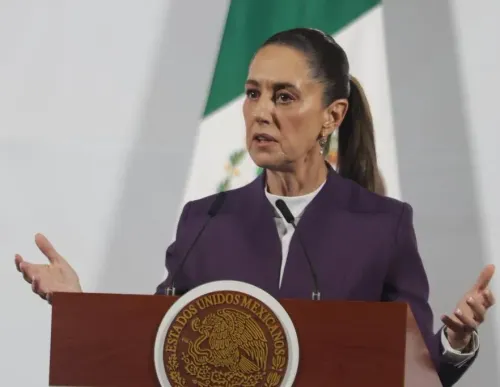
The pact is scheduled for a formal review in the coming years, a provision that distinguishes it from NAFTA and gives all three member countries the opportunity to reassess its operation and future direction. While Trump stopped short of announcing a formal withdrawal process, his comments signal that the United States intends to use that review as leverage.
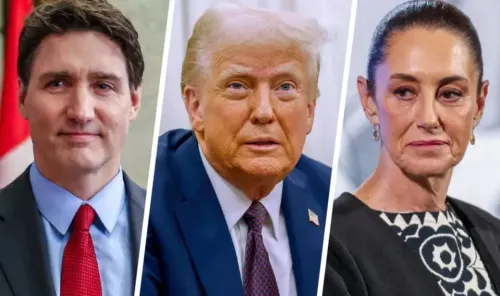
Trump suggested the US holds greater economic leverage than its two North American trading partners and should deploy that advantage in any future renegotiation. This comes amid broader US efforts to reset trade relationships globally, with tariffs already imposed on a range of imports from both Canada and Mexico earlier in 2025.
Impact on Trade and Industry
The three-country bloc represents one of the world's largest integrated trade zones. Businesses — particularly in automotive, agriculture, and electronics — have built cross-border supply chains premised on the stability of the USMCA framework. Any uncertainty around renewal is likely to delay investment decisions and prompt contingency planning across sectors. Notably, this is not the first time Trump has questioned the durability of trade agreements he himself negotiated, a pattern that has historically kept trading partners in a state of strategic uncertainty.
With the formal review window approaching, all eyes will now be on whether Washington issues a formal notice of intent — or uses the ambiguity itself as a bargaining chip.
Point of View
It is a negotiating opening. Canada and Mexico, both already absorbing US tariff pressure, now face the added uncertainty of a foundational trade framework being placed in question. The irony is that the USMCA was Trump's own first-term achievement, which suggests the target is not the agreement itself but the leverage it provides. Whether that leverage translates into better terms or simply prolonged uncertainty for integrated North American industries remains the central question heading into the review window.
NationPress
26 Sept 2026
Frequently Asked Questions
What is the USMCA and why is Trump questioning its renewal?
The USMCA is the United States-Mexico-Canada Agreement, a trade pact that entered into force in 2020, replacing the older NAFTA. Trump said on Wednesday he is not certain he will renew it, citing US trade deficits with both Canada and Mexico and arguing that the US holds greater economic leverage over its two neighbours.
When is the USMCA scheduled for review?
The USMCA includes a built-in review clause that requires member countries to formally assess the agreement after six years of operation, with the review window approaching in the coming years. Trump specifically cited this clause as the feature he values most about the pact.
How does the USMCA differ from NAFTA?
The USMCA, negotiated by the Trump administration in his first term, modernised rules on digital commerce, labour standards, intellectual property, and rules of origin — areas where NAFTA, signed in 1994, was considered outdated. It also introduced the six-year review mechanism that NAFTA lacked.
What impact could Trump's remarks have on businesses?
Businesses in the automotive, agriculture, and electronics sectors that have built cross-border supply chains relying on USMCA stability are likely to face uncertainty around investment decisions. Any ambiguity over the pact's future could prompt contingency planning across industries in all three countries.
Did Trump announce a formal withdrawal from the USMCA?
No. Trump stopped short of announcing a formal review or withdrawal process. His remarks signal intent to use the upcoming review as leverage, but no official notice has been issued as of Wednesday.