India's election system: Why Trump praised its voter ID and multi-layer checks
Synopsis
Trump's praise for India's voter ID system has put the Election Commission of India in the global spotlight — but the real story is how India's model goes far beyond ID cards. With 642 million voters, over a million polling stations, EVMs backed by VVPAT trails, and overlapping layers of constitutional, administrative, and party-level scrutiny, India's electoral architecture is a system of systems — not a single silver bullet.
Key Takeaways
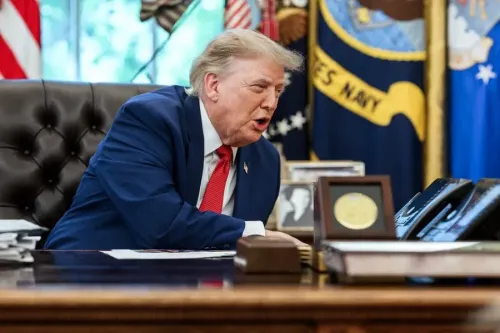
US President Donald Trump praised India's voter identification system after a conversation with Chief Election Commissioner Gyanesh Kumar .
Trump linked his remarks to renewed support for the SAVE America Act , which proposes mandatory photo ID and proof of citizenship for US federal elections.
In the 2024 Lok Sabha election , more than 642 million people voted across more than one million polling stations .
India's system layers Booth Level Officers , Booth Level Agents , polling and counting agents, EVMs , and VVPAT trails for end-to-end oversight.
The Election Commission of India is an independent constitutional authority — insulated from executive control.
US President Donald Trump has publicly praised India's voter identification system, citing it as a model the United States should emulate — drawing fresh global attention to one of the world's most expansive and layered democratic frameworks. Referring to his conversation with Chief Election Commissioner Gyanesh Kumar, Trump questioned how elections could be credibly conducted in the US without mandatory photo identification, and renewed his push for the SAVE America Act, which proposes documentary proof of citizenship and government-issued photo ID for federal elections.
More Than a Voter ID Card
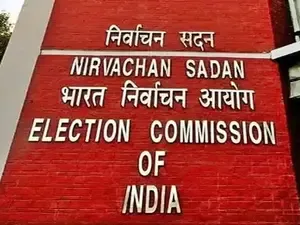
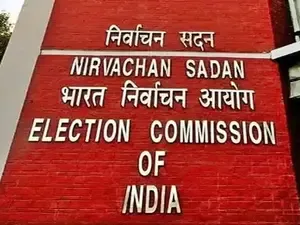
India's electoral strength rests on far more than the Electoral Photo Identity Card (EPIC). At the apex of the system sits the Election Commission of India (ECI) — an independent constitutional authority responsible for overseeing elections to the Lok Sabha, Rajya Sabha, State Legislative Assemblies and Councils, and the offices of the President and Vice President. The ECI operates without executive interference, a structural feature that distinguishes India's model from many other large democracies.
Scale of the Exercise
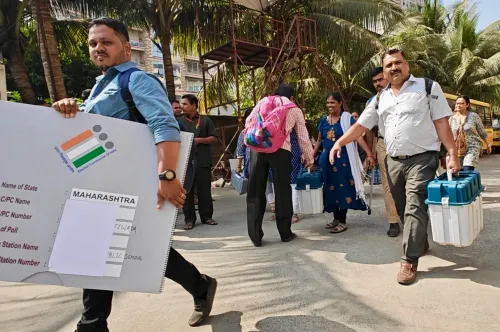
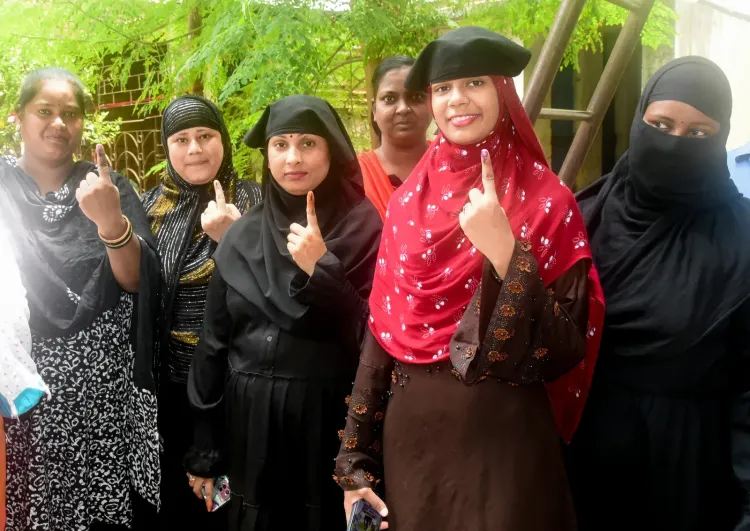
The numbers alone are staggering. In the 2024 Lok Sabha election, more than 642 million people cast their votes — making it one of the largest single democratic exercises in recorded history. These voters were spread across more than one million polling stations, spanning remote Himalayan villages, dense urban centres, and difficult terrain across the country.
How the Rolls Are Built and Verified
Booth Level Officers prepare, verify, and update voter lists at the grassroots level. Political parties are permitted to appoint Booth Level Agents to scrutinise these rolls and flag discrepancies — creating a dual layer of administrative and political oversight in the very first step of the process. At polling stations, voters are typically identified through the EPIC, though the ECI also permits a range of other approved identification documents. Digital e-EPIC services have further broadened access to voter credentials and electoral information.
Polling Agents, EVMs, and the VVPAT Trail
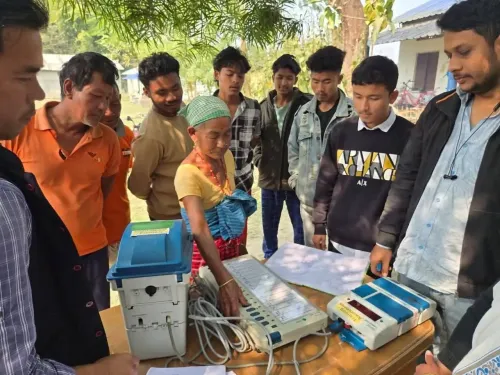
Candidates and political parties may appoint polling agents to observe proceedings inside polling stations, and counting agents to be present during the tallying of votes — adding a layer of partisan scrutiny at both critical stages. On the technology side, Electronic Voting Machines (EVMs) are backed by Voter Verifiable Paper Audit Trail (VVPAT) systems, and are subject to strict procedures covering commissioning, sealing, storage, transportation, and verification. Dedicated strong rooms, independent election observers, and detailed counting protocols add further safeguards.
Why the System Is Considered Robust
According to officials and electoral experts, India's electoral resilience stems from the combination of all these elements working in concert — not from any single mechanism. 'From voter registration and polling to counting and verification, the system combines constitutional oversight, administrative machinery, political-party scrutiny, candidate representatives and technology,' officials noted. This is the architecture that Trump's remarks, intentionally or otherwise, have placed under an international lens.
Point of View
But it selectively highlights one element of a far more complex architecture. India's electoral credibility does not flow from the EPIC card alone — it flows from the ECI's constitutional independence, the presence of party agents at every stage, and a technology stack with paper-audit redundancy. Transplanting just the ID requirement into the US system, without the surrounding institutional scaffolding, would be a surface-level import. The more instructive lesson from India is structural: independent administration, multi-party scrutiny, and transparent technology — not a single document requirement.
NationPress
2 Oct 2026
Frequently Asked Questions
Why did Trump praise India's voter ID system?
Trump praised India's voter ID system after a conversation with Chief Election Commissioner Gyanesh Kumar, citing it as a model for the United States. He used the comparison to renew support for the SAVE America Act, which proposes mandatory photo ID and proof of citizenship for US federal elections.
What is the SAVE America Act?
The SAVE America Act is a proposed US law that would require documentary proof of citizenship and a government-issued photo ID to vote in federal elections. Trump has cited India's Electoral Photo Identity Card system as evidence that such requirements are feasible.
How many people voted in India's 2024 Lok Sabha election?
More than 642 million people voted in the 2024 Lok Sabha election, across over one million polling stations — making it one of the largest democratic exercises in history.
What makes India's election system robust beyond voter ID?
India's electoral framework combines constitutional oversight by the independent Election Commission of India, grassroots voter roll verification by Booth Level Officers, political-party scrutiny through Booth Level Agents and polling agents, and technology in the form of EVMs backed by VVPAT paper trails. The system's strength lies in these overlapping checks, not any single element.
What is the VVPAT system used in Indian elections?
The Voter Verifiable Paper Audit Trail (VVPAT) is a mechanism attached to Electronic Voting Machines (EVMs) that generates a printed slip confirming a voter's choice, allowing independent verification of electronic results. EVMs and VVPATs are subject to strict procedures for commissioning, sealing, storage, and transportation.