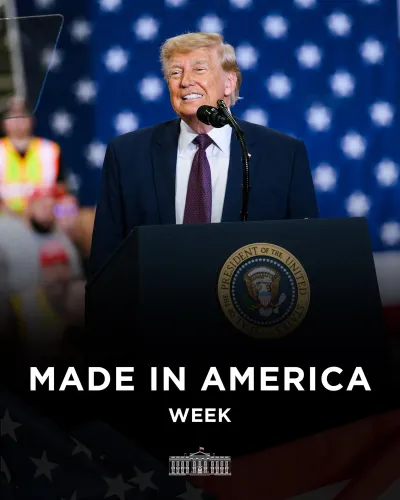
Trump deploys Cabinet in 50-state blitz to sell America First record
Synopsis
The Trump administration launched its most coordinated Cabinet road show yet, fanning officials from Alaska to Florida on a single day to sell the America First record. With a $5 billion rail pledge, a $102 million rural health injection, and Apple's Houston plant as a centrepiece, the blitz is as much a political messaging operation as a policy tour — and the scale signals the White House is preparing its economic narrative well ahead of the next electoral cycle.
Key Takeaways
President Trump deployed Cabinet officials across the United States on 21 August to promote the administration's domestic record.
Transportation Secretary Sean Duffy announced a $5 billion US rail investment in Cincinnati , targeting 30 crossing closures and 1,000 upgrades.
HHS Secretary Robert F.
Kennedy Jr. announced a $102 million rural health centre investment in Atwater, California .
Commerce Secretary Howard Lutnick toured Apple 's advanced manufacturing centre in Houston , citing it as proof of reshoring progress.
SBA chief Kelly Loeffler said SBA lending reached $45 billion in the previous year, supporting 1,600 small businesses weekly.
Researchers and homeless service providers have reportedly challenged the administration's faith-based homelessness approach as ineffective.
President Donald Trump has dispatched his entire Cabinet across the United States in a sweeping, coordinated outreach campaign to promote the administration's record on manufacturing, energy, health care, transport, and border security, the White House announced on 21 August. The blitz stretched from Alaska and California to Iowa, Ohio, Texas, and Florida, with officials conducting factory tours, farm roundtables, and public events to amplify federal spending and tax-cut messaging.
Manufacturing and Energy in Focus
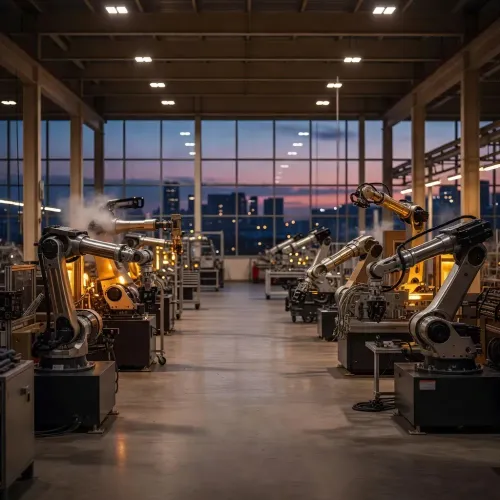
Commerce Secretary Howard Lutnick toured Apple's new advanced manufacturing centre in Houston, framing the facility as proof of the administration's push to reshore domestic technology production. “President Trump set out to bring technological manufacturing back to America,” Lutnick said. “And he’s actually doing it, and he’s doing it right now.” Lutnick also joined Representative Vince Fong at a farmer roundtable in Bakersfield, California, where discussion centred on agricultural exports and industry challenges.
Energy Secretary Chris Wright travelled to the Permian Basin as part of the Department of Energy's “Great American Energy Comeback Tour,” visiting an ExxonMobil oil rig alongside Representative August Pfluger to promote the administration's drive for greater domestic energy output.
Infrastructure and Tax Policy Announcements
Transportation Secretary Sean Duffy announced a series of infrastructure awards during stops in Florida and Ohio. In Tampa, he unveiled a $16.5 million award for a passenger ferry linking Tampa and St. Petersburg, along with a $1 million shipyard grant. In Cincinnati, Duffy announced a $5 billion investment in the US rail system — a programme designed to close 30 railway crossings and upgrade an additional 1,000, according to White House materials.
Treasury Secretary Scott Bessent used appearances in Iowa and Arizona to advocate for Trump's tax policies, visiting Vermeer Corp. in Pella and joining House Speaker Mike Johnson and Representative Juan Ciscomani at a Frito-Lay facility in Casa Grande.
Health Care, Homelessness, and Veterans
Health and Human Services Secretary Robert F. Kennedy Jr. announced a $102 million investment in rural health centres in Atwater, California, and promoted a presidential fitness test for children at an Iowa YMCA. Kennedy, alongside Housing and Urban Development Secretary Scott Turner, endorsed a treatment-first, faith-based approach to homelessness and addiction during appearances in Los Angeles and San Diego. Notably, homeless service providers and independent researchers have challenged that approach as ineffective, according to the source material.
Veterans Affairs Secretary Doug Collins toured the Omaha VA, emphasising health care for women and younger veterans, and participated in the annual Veterans Day Parade at the Iowa State Fair.
Labour, Small Business, and Jobs
Acting Labor Secretary Keith Sonderling visited manufacturers in Texas, Ohio, and Iowa. Stanley Black & Decker announced that $4.6 million — drawn from a broader $1 billion US manufacturing investment — would support its Mission, Texas facility and is expected to add 100 jobs.
Small Business Administration chief Kelly Loeffler visited manufacturers and farmers in Indiana, Iowa, and Virginia. During the Virginia stop, she said SBA lending had reached $45 billion in the previous year, benefiting 1,600 small businesses each week.
The Political Strategy Behind the Blitz
The White House described the travel as evidence that Trump's “America First agenda is delivering real, measurable wins for the American people,” compiling reports from local media organisations to support the claim. Cabinet-wide outreach campaigns are a standard tool for presidential administrations seeking to bypass national political media and reach local audiences directly. This coordinated rollout, however, is notable for its simultaneous, multi-department scale and its explicit tie to a branded messaging framework. Whether the announcements represent new federal commitments or repackaged existing funding remains a question observers are tracking closely.
Point of View
All-Cabinet road show of this scale is less routine communications and more a pre-emptive counter-narrative — the administration is clearly aware that its economic messaging has not broken through national media and is betting on local audiences to carry it instead. The announcements are a mix of genuinely new commitments and reframed existing spending, and that distinction matters: a $5 billion rail figure sounds transformative, but the programme's actual timeline and appropriations status are unverified in the White House's own release. The faith-based homelessness approach, which researchers have called ineffective, being promoted simultaneously by two Cabinet secretaries suggests ideological consistency is being prioritised over evidence. The real test of this blitz is whether local economic indicators in targeted states move — or whether it remains a well-produced photo opportunity.
NationPress
5 Oct 2026
Frequently Asked Questions
Why did Trump send Cabinet officials across the US on 21 August?
The White House deployed Cabinet secretaries nationwide to promote the Trump administration's record on manufacturing, energy, health care, transport, and border security. The coordinated visits were designed to reach local audiences through factory tours, farm roundtables, and public events, bypassing national political media.
What was the $5 billion rail investment announced by Sean Duffy?
Transportation Secretary Sean Duffy announced a $5 billion investment in the US rail system during a visit to Cincinnati. According to White House materials, the programme would close 30 railway crossings and upgrade an additional 1,000 across the country.
What did Robert F. Kennedy Jr. announce during the Cabinet tour?
HHS Secretary Robert F. Kennedy Jr. announced a $102 million investment in rural health centres in Atwater, California, and promoted a presidential fitness test for children at an Iowa YMCA. He also, alongside HUD Secretary Scott Turner, endorsed a faith-based, treatment-first approach to homelessness — an approach that homeless service providers and researchers have reportedly challenged as ineffective.
Which states did Cabinet officials visit during the blitz?
The coordinated travel covered a broad sweep of states including Alaska, California, Iowa, Ohio, Texas, Florida, Arizona, Indiana, Virginia, and Nebraska, among others. Officials visited manufacturing plants, energy facilities, farms, veterans' hospitals, and community centres.
How does this Cabinet tour compare to previous administration outreach?
Cabinet secretaries routinely travel outside Washington to announce funding and explain federal policy. However, the simultaneous, multi-department scale of this particular rollout — tied to a single branded White House messaging framework — is notable and reflects a deliberate effort to consolidate the administration's economic narrative ahead of future electoral cycles.