How Could Trump's 'Most Favoured Nation' Drug Policy Transform Trade with Indian Pharma?

Synopsis
US President Donald Trump’s ambitious drug price cuts under the 'Most Favoured Nation' policy are set to reshape trade dynamics with India's pharmaceutical industry. This policy could significantly impact pricing strategies and healthcare costs for American families, raising questions about the future of affordable medicine supply from India.
Key Takeaways
Trump's 'Most Favoured Nation' policy aims to cut drug prices in the US.
The policy could significantly impact Indian pharmaceutical companies.
Price reductions are expected to begin in January 2023.
Consumers can access new prices through TrumpRx.gov.
The initiative may reshape international drug pricing negotiations.
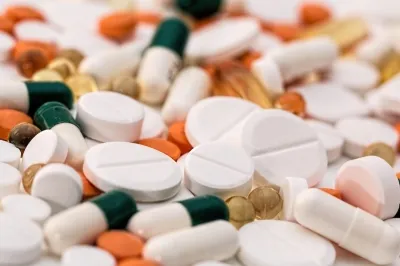
Washington, Dec 18, (NationPress) The recent declaration by US President Donald Trump regarding extensive reductions in prescription drug prices through a “Most Favoured Nation” policy has drawn significant attention to India’s pharmaceutical sector, as the US aims to align its drug prices with those in other nations.
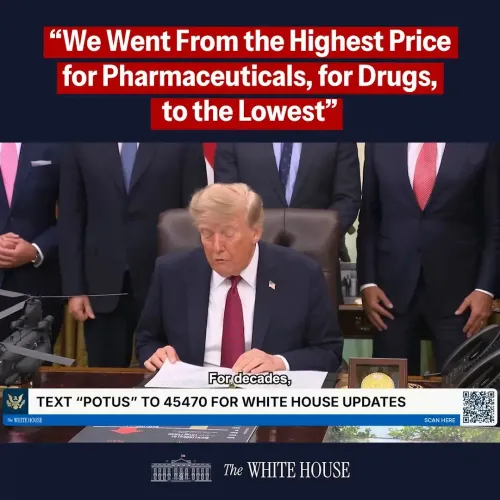
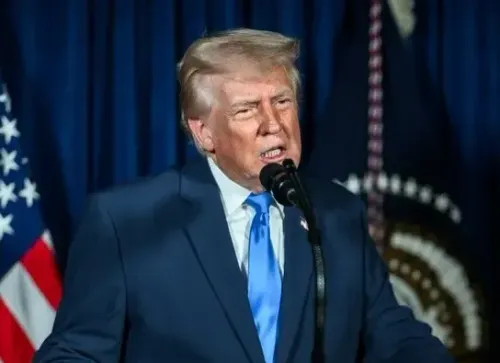
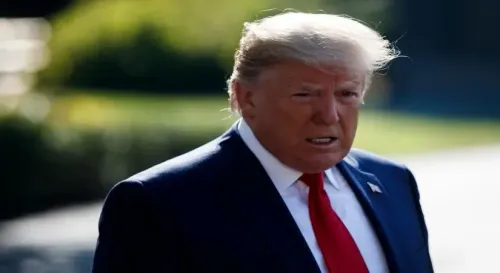
During his address to the nation on Wednesday (local time), Trump stated that his administration had successfully negotiated substantial price cuts by directly engaging with pharmaceutical companies and foreign governments, utilizing trade pressure to induce changes in global pricing.
"I negotiated directly with the drug companies and foreign nations, which have taken advantage of our country for many decades to reduce prices on drugs and pharmaceuticals by as much as 400, 500, and even 600 percent," Trump remarked.
He indicated that the “Most Favoured Nation” policy is set to reverse years of escalating drug costs in the United States.
"There has never been anything like this in the history of our country," Trump added, emphasizing that drug prices that have only increased will now begin to decline at unprecedented rates.
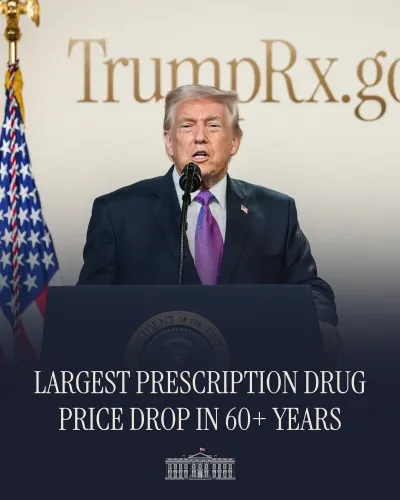
He announced that the initial round of price cuts would commence in January and would be accessible via a new government website, TrumpRx.gov.
It is noteworthy that Indian pharmaceutical firms play a crucial role in providing affordable medications to American consumers and are deeply embedded within US healthcare supply chains.
Trump mentioned that he leveraged the “threat of tariffs” to compel foreign nations to share the burden of reducing US drug prices.
"I used the threat of tariffs to ensure that foreign countries, which would never have acted otherwise, contribute to this significant dollar reduction," he stated.
This implies that trade mechanisms could potentially be utilized alongside healthcare policies, reshaping the international negotiation landscape for drug prices and how exporters interact with the US market.
Trump also took aim at health insurance companies, asserting that they have profited from funds that “should go directly to the people,” and contended that reduced drug prices would significantly alleviate healthcare costs for American families.
"These substantial price cuts will dramatically lower healthcare expenses," he asserted.
For Indian pharmaceutical manufacturers, the critical consideration will be how the Most Favoured Nation model is executed and whether this pricing pressure primarily impacts branded drugs, generics, or both.
Indian companies supply a considerable portion of off-patent medicines in the US and have made significant investments in facilities that comply with US regulatory standards.
Trump’s renewed efforts bring back a topic he repeatedly addressed during his first term, where he claimed that Americans were subsidizing lower drug prices internationally and advocated for global price parity.
As Trump seeks to reform US healthcare pricing, Indian pharma faces the challenge of managing pricing pressures while continuing its vital role in providing affordable medicines to the United States.
Point of View
It is essential to recognize the potential implications of President Trump's 'Most Favoured Nation' policy. While the initiative aims to lower drug prices for Americans, we must also consider the ripple effects on India's pharmaceutical sector, which plays a vital role in providing affordable medications. Balancing these interests will be crucial as the situation unfolds.
NationPress
24 Sept 2026
Frequently Asked Questions
What is the 'Most Favoured Nation' policy?
The 'Most Favoured Nation' policy is a strategy introduced by President Trump to align US drug prices with those in other countries, aiming to reduce prescription costs significantly.
How will this policy affect Indian pharmaceutical companies?
Indian pharmaceutical companies may face pricing pressures as the US government benchmarks drug prices, impacting their profitability and pricing strategies.
When will the price cuts take effect?
The first round of price reductions under the 'Most Favoured Nation' policy is set to begin in January.
How can consumers access the new prices?
Consumers will be able to access the reduced prices through a dedicated government website, TrumpRx.gov.
What impact could this have on healthcare costs?
Trump has stated that these significant price cuts will greatly reduce overall healthcare costs for American families.