UN chief warns of global recession if Strait of Hormuz stays closed
Synopsis
UN Secretary-General Guterres has put a number on the cost of the Hormuz crisis: a potential global recession, inflation above 6%, and growth collapsing to 2% if the Iran war drags through year-end. With two competing blockades — Iranian and American — stalling talks, the world's most critical oil chokepoint remains shut, and the UN's diplomatic toolkit is visibly stretched.
Key Takeaways
UN Secretary-General António Guterres warned on 30 April that continued closure of the Strait of Hormuz risks a global recession.
Best-case scenario: global growth falls from 3.4% to 3.1% ; inflation rises from 3.8% to 4.4% .
Worst-case scenario: growth plummets to 2% , inflation surpasses 6% .
The Strait handles roughly 20% of the world's oil and gas traffic; Iran has blocked navigation in defiance of a 11 March UN Security Council resolution.
IMO chief Arsenio Dominguez is developing an evacuation framework for ships and seafarers in the conflict zone.
UN envoy Jorge Moreira da Silva is heading to the region to advance a possible humanitarian corridor.
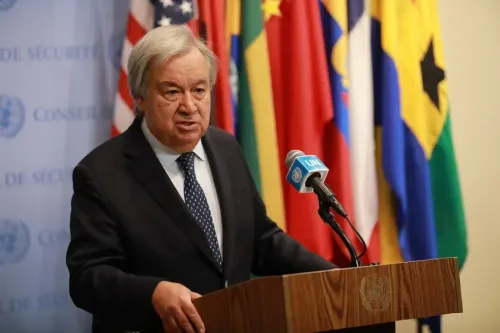
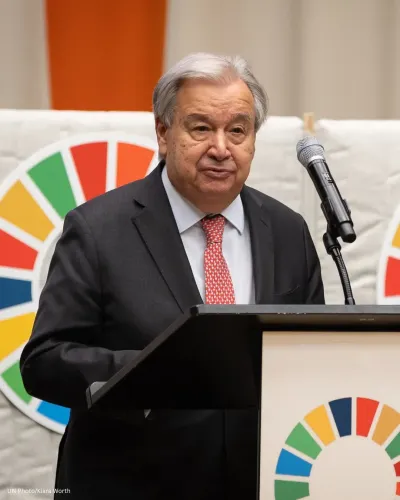
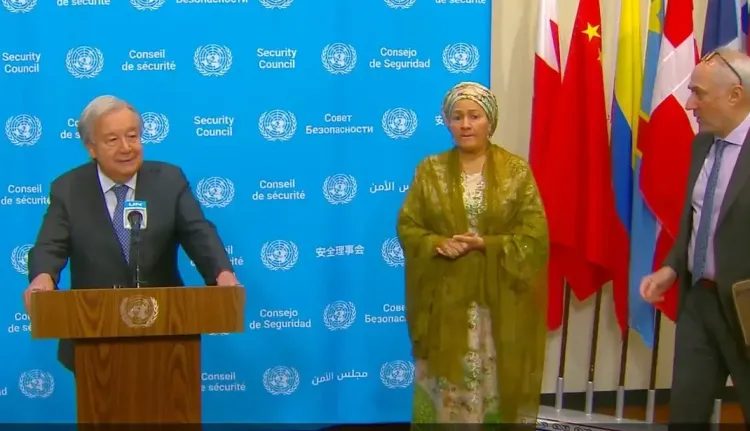
UN Secretary-General António Guterres on 30 April issued a stark warning that prolonged closure of the Strait of Hormuz could trigger a global recession, sharply raise inflation, and push millions into poverty — as the Iran war entered its third month with no diplomatic resolution in sight.
The Economic Stakes
Guterres laid out two scenarios for the global economy. In the best case — if the war ends immediately — he warned that global economic growth would still fall from 3.4% to 3.1%, while global inflation, which had been declining, would climb from 3.8% to 4.4%. "Supply chains will take months to recover, prolonging lower economic output and higher prices," he told reporters.
In the worst case — if the war continues through the end of the year — he said the world would "confront the spectre of a global recession," with inflation skyrocketing past 6% and growth plummeting to 2%. "Immense suffering takes hold, especially among the world's most vulnerable populations," he said.
Why the Strait Matters
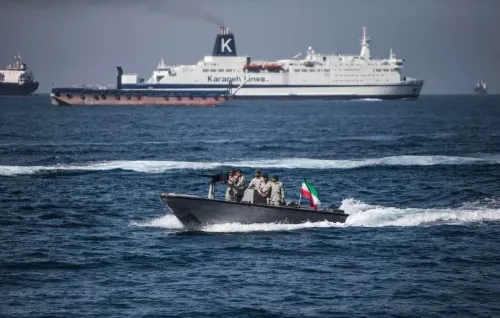
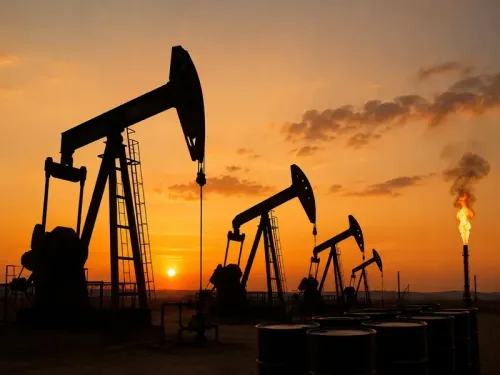
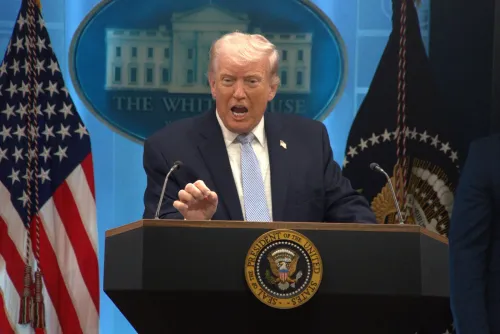
The Strait of Hormuz is a critical chokepoint for roughly 20% of the world's oil and gas traffic. Iran has blocked free navigation through the Strait in defiance of a Security Council resolution passed on 11 March. The United States has since imposed a blockade of its own, targeting Iranian ports. Negotiations to end the conflict have stalled over the two competing blockades.
Guterres underscored that the consequences of the disruption are not merely additive. "The consequences are not cumulative. They are exponential," he said. "The longer this vital artery is choked, the harder it will be to reverse the damage."
What the UN Is Doing
Guterres said the UN was actively working to contain the fallout. "I have remained in close contact with a number of parties, as has my Personal Envoy Jean Arnault," he said. Separately, International Maritime Organisation (IMO) Secretary-General Arsenio Dominguez is reportedly developing a framework to evacuate ships and seafarers from the conflict zone.
Jorge Moreira da Silva, who leads the UN Task Force for the Strait of Hormuz, is set to travel to the region to advance consultations for a possible humanitarian corridor, Guterres noted — to be activated "if the worst-case scenarios materialise."
Beyond Physical Access
Guterres cautioned that simply reopening the Strait would not be sufficient on its own. Shipping through the waterway would need to be made "safe, predictable, and insurable" before normal commerce could resume. He added that "as with every conflict, the whole of humanity is paying the price — even if a few are reaping huge profits. The pain will be felt for a long time to come."
With diplomatic talks deadlocked and the humanitarian corridor still in the planning stage, the trajectory of the crisis will likely be determined by whether either blockade — Iranian or American — shows any sign of easing in the weeks ahead.
Point of View
Iranian and American, serve political purposes their respective governments are not yet ready to abandon. The UN Task Force and the IMO framework are meaningful gestures, yet neither addresses the core impasse. The real question mainstream coverage is underplaying: at what point does the economic pain — felt most acutely by import-dependent developing nations, not the parties to the conflict — generate enough third-party pressure to force a negotiated opening?
NationPress
23 Sept 2026
Frequently Asked Questions
Why is the Strait of Hormuz closure so economically significant?
The Strait of Hormuz is the passage for approximately 20% of the world's oil and gas traffic, making it one of the most critical energy chokepoints on the planet. Its prolonged closure disrupts global supply chains, drives up energy prices, and slows economic growth worldwide.
What economic scenarios has the UN outlined for the Hormuz crisis?
UN Secretary-General Guterres outlined two scenarios: if the war ends immediately, global growth still drops from 3.4% to 3.1% and inflation rises from 3.8% to 4.4%. If the war continues through year-end, growth could fall to 2% and inflation could exceed 6%, risking a global recession.
Why have negotiations to end the Iran war stalled?
Talks have stalled because both Iran and the United States have imposed competing blockades — Iran blocking the Strait of Hormuz in defiance of a UN Security Council resolution, and the US imposing a blockade targeting Iranian ports. Neither side has shown willingness to lift its blockade as a precondition for talks.
What is the UN doing to address the Hormuz crisis?
The UN Secretary-General is in contact with multiple parties through Personal Envoy Jean Arnault. The IMO chief is developing a framework to evacuate ships and seafarers, and the UN Task Force head Jorge Moreira da Silva is travelling to the region to consult on a potential humanitarian corridor.
What does Guterres mean when he says reopening the Strait is not enough?
Guterres said that physically opening the Strait must be accompanied by conditions that make shipping 'safe, predictable, and insurable.' Without those assurances, commercial vessels and insurers are unlikely to resume normal operations even if the blockade is formally lifted.