What Happened in 2025: Veto Power and the UN's Peace-Making Efforts?
Synopsis
In 2025, the UN faced significant challenges with veto power stagnation impacting peace initiatives. As the US stepped in, conflicts like Gaza saw resolution, but the UN's power and finances remained fragile. Explore the dynamics of global peacekeeping and the UN's struggle against terrorism and financial constraints.
Key Takeaways
UN's peace-making initiatives were hindered by veto power dynamics.
US involvement shifted the focus of peace efforts, particularly in Gaza.
The UN's financial stability is under threat due to significant funding shortfalls.
The UN80 program is aimed at improving operational efficiency.
Terrorism remains a significant challenge for the UN and its efficacy.
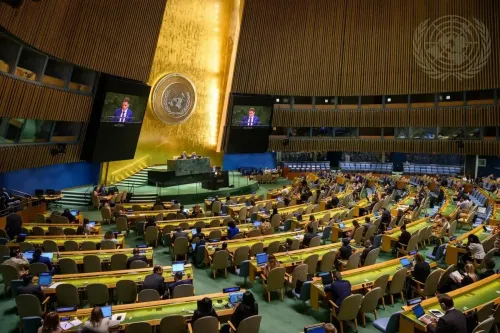
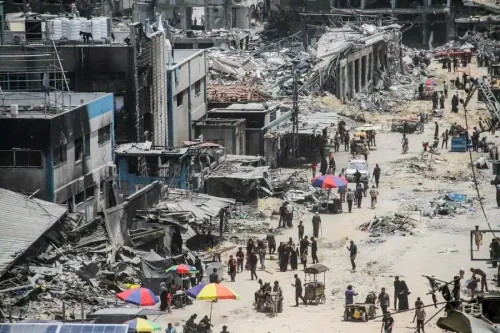
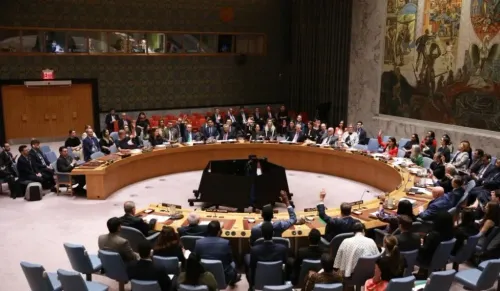
United Nations, Dec 29 (NationPress) As the Security Council was mired in veto-induced inertia throughout 2025, the UN's peace-making efforts shifted towards the White House. This move led to the resolution of the seemingly unresolvable Gaza conflict and helped stabilize disputes like the one between Thailand and Cambodia.
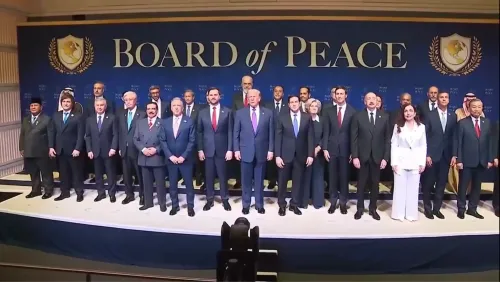
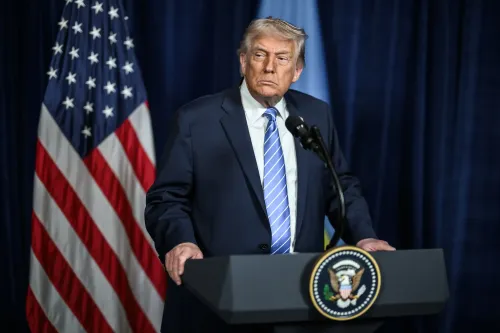
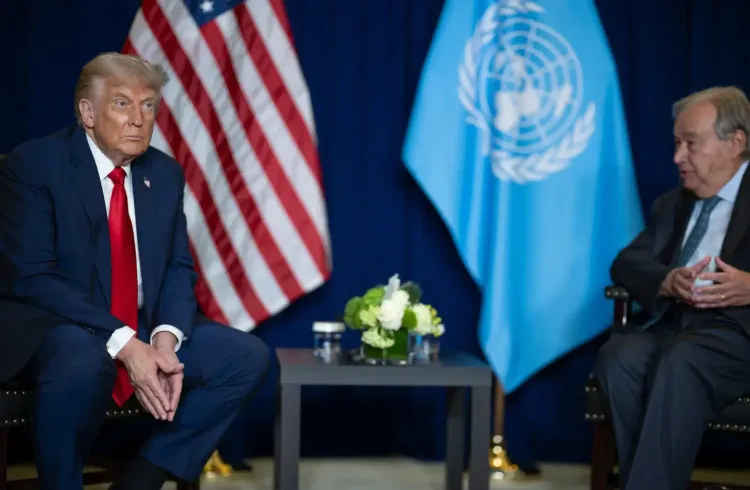
In a demonstration of the UN's lasting global influence, US President Donald Trump, who has often criticized the UN, sought the Council's endorsement for partners to formalize the Gaza peace agreement.
Trump succeeded in halting the Gaza War, cooling tensions in the Armenia-Azerbaijan and Democratic Republic of Congo-Rwanda conflicts, and mitigating the clashes between Thailand and Cambodia by leveraging Washington’s economic power.
This highlights the UN's limitations, as the standoffs between the veto-holding Western nations and Russia and China hinder the Council from effectively utilizing its charter-granted authority to maintain peace.
Furthermore, the UN has been unable to bring an end to the Ukraine War, the deadliest conflict in Europe since World War II, due to the fact that a permanent member of the Council is the aggressor.
However, Trump’s influence with Russia does not match his sway over other nations.
Globally, various hotspots continue to smolder.
In the world’s most lethal region, where genocide is real, civil war and chaos persist in Sudan, and neither the UN nor the US has managed to extinguish the flames of conflict.
The US is also embroiled in a crisis with Venezuela, enforcing a blockade and seizing vessels linked to it, while sinking boats accused of drug trafficking.
In the Indo-Pacific, China is exerting pressure on its neighbors.
In response to this turmoil, UN Secretary-General Antonio Guterres expressed concerns about the ongoing fragmentation of the world, the selective adherence to the UN Charter by many member states, and the continuous neglect of international law, as articulated by his spokesperson Stephane Dujarric.
The fragmentation feared by Guterres is evident not just in the Security Council, but also in trade conflicts, deteriorating relations, and the quest for new alliances.
Trump casts a shadow over another crisis facing the UN: the financial crunch.
As of late this month, the Trump administration had not fulfilled its obligation to contribute to the UN's budgets—$820 million, or 22% of the operational budget, and $1.2 billion, roughly 26% of the peacekeeping budget, which Congress has approved.
Guterres has cautioned that the UN's financial situation is 'fragile.'
In response to this financial pressure, the UN has begun reducing its workforce, relocating operations to more cost-effective areas, scaling back security measures, eliminating simultaneous translations, and even exploring minor savings that could lead to substantial cuts (including removing paper towels from bathrooms at headquarters, estimated to save $100,000 annually).
While funding from the US may eventually materialize due to Congress approval, Trump has suggested a reduction of $610 million in next year’s contribution to the UN's regular budget, potentially destabilizing the organization’s finances.
In anticipation, Guterres’ proposed budget for 2026 includes a $577 million cut from this year’s figures—a 15% reduction—and the elimination of about 12,700 positions, or approximately 18% of the current workforce.
The General Assembly initiated the UN80 program—named to commemorate the organization’s 80th anniversary this year—to streamline the UN and enhance its efficiency and effectiveness.
Terrorism remains another area of vulnerability for the UN, continuing a trend that has persisted for decades.
After terrorists based in Pakistan attacked tourists in Pahalgam, resulting in 26 deaths in a religiously motivated massacre, the Council could only release a statement of condemnation.
No sanctions against The Resistance Front, a faction stemming from the Lashkar-e-Tayyiba that claimed responsibility for the attack, have been implemented.
Progress on a Comprehensive Convention on International Terrorism, proposed by India, remains stalled due to disputes over definitions related to terrorism.
For the 16th consecutive year, reforms to the Security Council remain stagnant, hindered by procedural tactics employed by a small group to obstruct even the adoption of a negotiation text.
Nevertheless, the UN has achieved successes in certain areas despite overwhelming odds.
Reflecting on the year, Dujarric stated, 'The Secretary-General takes great pride in tirelessly defending the ideals of this organization, the Charter, international law, and multilateralism, which is his duty.'
'He has, I believe, maximized every dollar and effort from this organization to ensure humanitarian support, promote development, and work tirelessly on peace and security,' Dujarric added.
Peacekeeping efforts, with over 5,000 Indian personnel among approximately 60,000 deployed across 20 missions, have persisted in maintaining peace even amid attacks.
The humanitarian branches of the UN have provided assistance to victims of both natural disasters and human-induced crises, even while facing resource limitations.
Point of View
It is crucial to recognize the ongoing challenges faced by the UN amid political maneuvering and financial strain. The organization's capacity to foster global peace and security is at a critical juncture, highlighting the need for renewed commitment from member states to uphold international law and support the UN's mission.
NationPress
3 Oct 2026