US Arms Sales Reach $330 Billion as System Reforms Accelerate
Synopsis
The U.S. authorized over $330 billion in arms sales last fiscal year, with the Trump administration pushing major reforms to expedite defense deliveries to allies. Explore the implications of these changes on international security.
Key Takeaways
$330 billion authorized in U.S. arms sales last fiscal year.
Reforms aim to speed up defense sales process.
Global demand for U.S. weapons remains strong.
Concerns over outdated Congressional processes.
Backlog of $250 billion in pending foreign military sales.
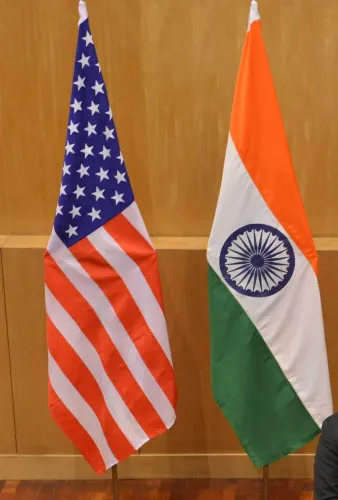
Washington, March 18 (NationPress) The United States has *authorized* over $330 billion in arms exports during the last fiscal year, according to a senior official from the State Department. This move by the Trump administration aims to reform a sluggish and intricate defense sales system, thus facilitating quicker deliveries to allied nations.
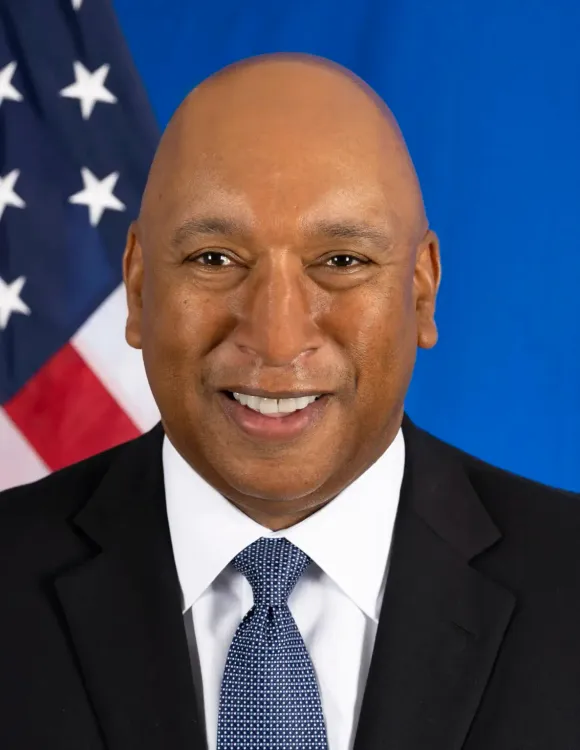
Stanley L. Brown, Senior Bureau Official for the Bureau of Political-Military Affairs, informed lawmakers that the vast scale of approvals indicates a robust global demand for American weaponry.
“This demand signifies the confidence our allies and partners have in U.S. defense technologies and in the U.S. as their preferred security ally,” Brown stated during a House Foreign Affairs Committee session.
However, he admitted that the current system is having difficulty keeping up with demands. “Our operations have not always met the rapid speed or scale necessary to fulfill urgent operational requirements,” he mentioned.
In his testimony, the State Department official emphasized a collection of executive orders, including the “America First Arms Transfer Strategy,” designed to quicken approval processes, fortify the defense industrial sector, and align arms sales with national security objectives.
Nevertheless, he cautioned lawmakers that outdated Congressional notification thresholds and procedural bottlenecks could drive partners to seek alternative suppliers, leading to “long-term interoperability issues and geopolitical ramifications.”
Pentagon acquisition chief Mike Duffey supported the call for reform, directly linking arms transfers to U.S. military readiness and industrial might.
“The strength of our national security is fundamentally tied to the resilience of our defense industrial base and our international alliances,” Duffey stated.
He further noted that the administration is reconfiguring the system to eliminate regulatory hurdles and expedite delivery timelines. “*America First* does not equate to *America alone*,” he remarked.
Duffey mentioned that new agreements with defense contractors are intended to boost production, allowing companies to invest additional capital while enhancing output of crucial munitions and systems.
The Defense Security Cooperation Agency manages more than $100 billion annually in arms transfers and bolsters security cooperation across 136 U.S. embassies, according to officials.
Lawmakers displayed significant disagreement over the reforms and their wider implications.
Chairman Brian Mast supported the administration’s strategy, labeling the current process as “a Cold War relic” that “actively undermines U.S. national security” by delaying armament deliveries and weakening allies.
He also endorsed using emergency powers to hasten arms transfers, asserting that such measures are essential to ensure partners receive weapons “swiftly.”
Congressman Ryan Zinke highlighted inefficiencies within the structure. He mentioned a backlog of approximately $250 billion in pending foreign military sales and indicated there is no consolidated tracking system. He called for “speed, lethality, and the establishment of a database” to enhance accountability and delivery timelines.
Ranking Member Gregory Meeks expressed that the administration has exhibited “systematic contempt for Congressional oversight,” warning that circumventing review processes compromises accountability and weakens alliances.
Congresswoman Madeleine Dean criticized what she termed the administration’s “ignorance and deep contempt for Congress’s constitutional role,” especially concerning arms transfers associated with ongoing conflicts.
Point of View
It is essential to recognize the complexities surrounding U.S. arms sales and their global ramifications. The ongoing reforms reflect a commitment to enhancing national security while navigating international partnerships, but they also raise questions regarding oversight and accountability.
NationPress
22 Sept 2026
Frequently Asked Questions
How much did the U.S. authorize in arms sales last year?
The U.S. authorized over $330 billion in arms sales during the last fiscal year.
What is the purpose of the America First Arms Transfer Strategy?
The strategy aims to accelerate arms sales approvals, strengthen the defense industrial base, and align sales with national security priorities.
What are the risks associated with outdated Congressional notification thresholds?
Outdated thresholds and procedural delays could lead partners to seek alternative suppliers, affecting long-term interoperability and geopolitical stability.
How does the Pentagon view arms transfers?
The Pentagon links arms transfers directly to U.S. military readiness and the strength of its defense industrial base.
What are the implications of the backlog in foreign military sales?
The backlog of approximately $250 billion in pending sales and lack of a unified tracking system highlight inefficiencies that could hinder timely military support to allies.