How is Trump's Order Transforming US Arms Sales?
Synopsis
Discover how President Trump's recent executive order is set to transform US arms sales, bolster domestic manufacturing, and expedite military support to key allies. This strategic move addresses long-standing issues in the defense industrial base and aims to strengthen American security partnerships.
Key Takeaways
Executive order aims to speed up US arms sales.
Focus on revitalizing domestic manufacturing.
New strategy prioritizes key partners investing in their own defense.
Transparency measures will be implemented.
India is a significant player in US defense partnerships.
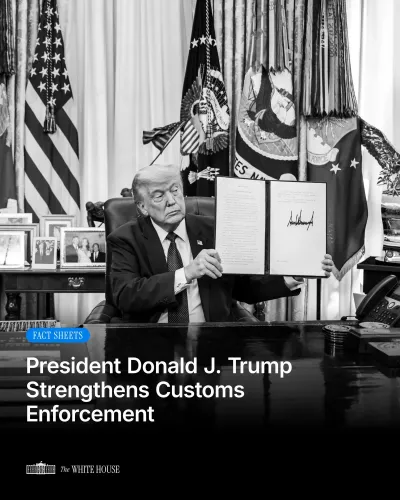
Washington, Feb 7 (NationPress) President Donald Trump has enacted an executive order to overhaul the manner in which the United States conducts arms sales internationally. This initiative seeks to rejuvenate domestic manufacturing, eliminate bureaucratic hurdles, and expedite the provision of American-made military equipment to crucial allies and partners.
According to the White House, this order introduces an “America First Arms Transfer Strategy” aimed at ensuring that the US defense industrial sector remains the “Arsenal of Freedom” for the nation and its allies.
Under this directive, arms transfers from the US will prioritize enhancing production capabilities for weapons deemed critical to the National Security Strategy. The focus will also be on bolstering domestic reindustrialization, fortifying supply chains, and giving preference to partners who invest in their own defense and hold strategic significance.
The order mandates the Secretaries of War, State, and Commerce to compile a catalog of priority weaponry and systems. They are also encouraged to intensify advocacy for US arms sales aligning with the strategy's objectives and to collaborate more closely with industry stakeholders.
A newly established Promoting American Military Sales Task Force will supervise the strategy and monitor progress in significant defense transactions.
To mitigate delays, the directive instructs departments to identify efficiencies in Enhanced End Use Monitoring, the Third-Party Transfer process, and the Congressional Notification process. The administration maintains that these measures are intended to reduce the bureaucracy that hampers arms sales.
This order also aims to enhance transparency, directing departments to publish aggregate quarterly performance metrics concerning the handling of defense sales cases.
The White House stated that this strategy builds upon record levels of US defense sales. It intends to utilize these sales to revitalize the defense industrial base while enabling partners and allies to take on greater responsibilities for their own security.
The administration noted that previous arms transfer practices did not adequately consider the needs of the American industrial base, with production decisions being largely influenced by foreign demand.
The White House pointed out that this led to production backlogs, cost overruns, and extended delivery delays as orders exceeded manufacturing capacity.
This new strategy is expected to leverage over $300 billion in annual defense sales to facilitate the reindustrialization of the United States and ensure expedited delivery of American-made weapons to partners and allies.
The administration emphasized that this shift reflects a broader initiative to guarantee that allies and partners can defend themselves while the United States retains the capability to deliver advanced military equipment punctually.
The latest executive order builds on earlier efforts by Trump to reform defense production and arms sales. In January 2025, he signed an executive order to modernize defense acquisitions and stimulate innovation by minimizing bureaucratic barriers.
In April 2025, Trump enacted another order aimed at enhancing speed and accountability within the foreign defense sales framework.
In January 2026, he signed a directive requiring defense contractors to prioritize production capacity, innovation, and timely delivery over stock buybacks and excessive corporate distributions for the US military.
While the new strategy does not specify individual countries, its emphasis on partners that invest in their own defense and play a crucial strategic role has implications for India.
Importantly, India is recognized as a Major Defence Partner of the US, with the Trump Administration viewing it as a key security player in the Indo-Pacific region.
India has consistently increased its defense purchases from the United States in recent years.
Point of View
It is crucial to recognize the significance of President Trump's latest executive order in reshaping US arms sales. This move not only aims to enhance domestic manufacturing but also solidifies America's role as a key player in global defense. It reflects a strategic approach to ensure allies can defend themselves while maintaining timely delivery of advanced military equipment.
NationPress
19 Oct 2026
Frequently Asked Questions
What is the purpose of Trump's executive order on arms sales?
The executive order aims to reshape US arms sales, enhance domestic manufacturing, cut red tape, and accelerate the delivery of American-made weapons to key partners and allies.
How will this order impact US defense relationships?
The order is designed to strengthen defense partnerships by prioritizing arms sales to allies that invest in their own defense and hold strategic importance.
What are the expected benefits of this new strategy?
Expected benefits include revitalizing the US defense industrial base, reducing delays in arms sales, and ensuring that allies can take on greater responsibility for their security.
What is the significance of India in this context?
India is recognized as a Major Defence Partner of the US, and the new strategy has implications for enhancing defense cooperation with India.
How will the administration ensure transparency in arms sales?
The order directs departments to publish aggregate quarterly performance metrics on how defense sales cases are handled.