Trump Acts to Keep U.S. Military the World's Strongest
Synopsis
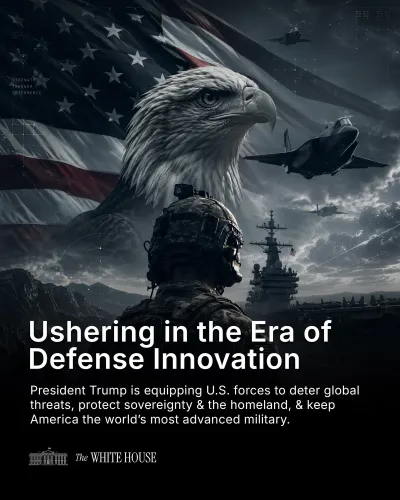
The White House announced on 20 July 2026 that President Trump is acting to preserve America's military dominance, keeping U.S. forces the strongest and best-equipped globally. The move continues a long-standing policy emphasis on qualitative military superiority amid strategic competition with peer adversaries.
Key Takeaways
The White House announced on 20 July 2026 that President Trump is taking action to maintain U.S. military dominance .
The administration's stated goal is to keep the U.S.
Armed Forces the strongest and best-equipped military in the world.
During Trump's first term, the 2018 National Defense Strategy shifted focus to long-term competition with China and Russia .
U.S. service members and the defence industrial base are the most direct stakeholders in any resulting procurement or modernisation decisions.
The next National Defense Authorization Act (NDAA) will be the key legislative vehicle for translating these priorities into binding policy and funding.
For strategic partners including India , a U.S. commitment to military primacy has direct implications for Indo-Pacific security cooperation.
The White House announced on Monday, 20 July 2026 that President Donald Trump is taking action to maintain America's military dominance and ensure the United States Armed Forces remain the strongest and best-equipped in the world.
Context
The official White House post stated that 'President Trump is acting to maintain America's military dominance and keep the U.S. military the STRONGEST and best-equipped in the world.' While the post does not specify the precise measures being taken, it signals a continued emphasis on military readiness and qualitative superiority as a cornerstone of the administration's national security posture.
This announcement comes against the backdrop of sustained geopolitical competition, with the United States facing long-term strategic challenges from peer adversaries. The framing of military strength as non-negotiable has been a consistent thread across successive American administrations.
Policy Backdrop
During Trump's first term (2017–2021), the administration significantly increased defence budgets and established the United States Space Force, the first new military branch in decades. The 2018 National Defense Strategy formally shifted America's strategic focus toward long-term competition with China and Russia, moving away from the counterterrorism-first posture of the preceding years.
The Department of Defense, which oversees military policy, procurement, and operations under civilian leadership, has consistently framed sustained investment in modernisation and readiness as essential to deterrence. Successive defence budgets have reflected this priority, channelling resources into advanced weapons systems, cyber capabilities, and force readiness.
U.S. policy has long prioritised maintaining qualitative military superiority through technological modernisation. This emphasis has continued across administrations as competition with peer adversaries has intensified on land, sea, air, space, and in the cyber domain.
Stakeholders and Impact
The most immediate stakeholders in any expansion or reinforcement of military capability are U.S. service members, whose training, equipment, and readiness levels are directly shaped by defence policy decisions. For the roughly 1.3 million active-duty personnel and hundreds of thousands of reservists, modernisation commitments translate into operational capacity and force protection.
The U.S. defence industrial base — comprising major contractors and thousands of smaller suppliers — also stands to be affected by any new procurement or modernisation directives. Decisions made at the Pentagon ripple through supply chains and employment in multiple states, giving defence policy a significant domestic economic dimension as well.
For India and other strategic partners, a U.S. commitment to maintaining military primacy carries implications for bilateral defence cooperation, technology-sharing agreements, and the broader Indo-Pacific security architecture that both countries have invested in building.
What's Next
Observers will watch closely for specific executive actions, budget proposals, or procurement announcements from the Pentagon that give substance to the White House's stated commitment. Congressional action on the next National Defense Authorization Act (NDAA) will be a key legislative vehicle through which any new priorities are translated into law and funding.
The administration's ability to deliver on its military-strength pledge will ultimately be measured by concrete investments in force modernisation, readiness levels, and strategic deterrence — benchmarks that allies and adversaries alike will be tracking in the months ahead.
Point of View
Consistent with the muscular defence posture he championed during his first term. By framing the action in superlative terms — 'STRONGEST and best-equipped' — the administration is simultaneously messaging domestic audiences and projecting resolve to strategic competitors. For India, which has deepened defence ties with Washington under successive governments, a U.S. doubling-down on military investment generally reinforces the value of the bilateral partnership. The critical question is whether the rhetoric is matched by specific budgetary and procurement commitments that can be assessed against measurable benchmarks.
NationPress
20 Oct 2026
Frequently Asked Questions
What action is President Trump taking on U.S. military strength?
The White House announced on 20 July 2026 that President Trump is acting to maintain America's military dominance, with the stated aim of keeping U.S. forces the strongest and best-equipped in the world. Specific measures had not been detailed in the post at the time of publication.
What was Trump's defence policy during his first term?
During his first term (2017–2021), Trump increased defence budgets, established the U.S. Space Force, and issued the 2018 National Defense Strategy, which shifted America's strategic focus to long-term competition with China and Russia.
How does U.S. military policy affect India?
A strong U.S. military posture supports the Indo-Pacific security architecture that India and the United States have jointly invested in. It also underpins bilateral defence cooperation, including technology-sharing and joint exercises between the two countries.
What is the National Defense Authorization Act?
The National Defense Authorization Act (NDAA) is the annual U.S. legislation that sets policy and funding levels for the Department of Defense. It is the primary vehicle through which military priorities, procurement programmes, and readiness investments are given legal and budgetary effect.
Who are the main stakeholders in U.S. military modernisation?
The primary stakeholders are U.S. service members, whose operational capability is directly shaped by readiness investments, and the defence industrial base of contractors and suppliers that builds and maintains military equipment. Strategic allies, including India, are also affected through security partnerships.