Strategic Implications of Recent U.S. Interest in South and Central Asia
Synopsis
As the U.S. navigates complex geopolitical tensions in South and Central Asia, President Trump's remarks on potential military interventions raise significant questions about America's strategic objectives in the region. This article delves into the implications of these developments for various stakeholders, including Pakistan, Afghanistan, and India.
Key Takeaways
U.S. strategic interests in the region include military presence and resource access.
Pakistan's military leadership is key to U.S. engagement strategies.
Bagram airfield is a critical location for operations.
Potential U.S. interventions may affect regional stability .
Balochistan's rare earth reserves present economic opportunities for Pakistan.
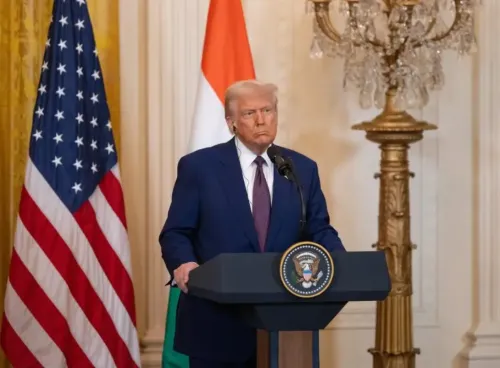
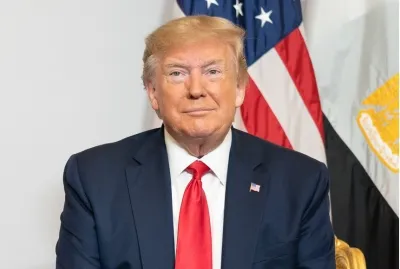
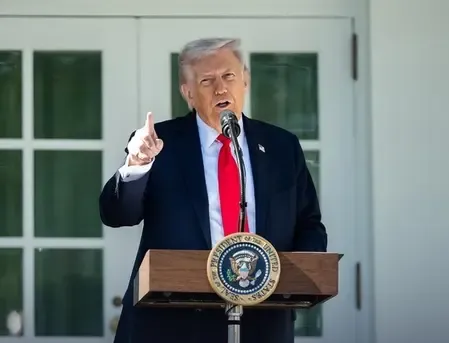
New Delhi, Feb 28 (NationPress) When questioned directly by the American media about his potential involvement in the Afghanistan-Pakistan conflict, President Donald Trump appeared to be more preoccupied with impending military actions in Iran than focusing on other matters.
Nevertheless, he indicated that he might consider intervention, stating, "I get along with Pakistan, as you know very well. Very, very well," just before departing on Marine One.
Once the U.S. fulfills its objective of regime change and establishes a presence in Iran—either through direct military action or by installing a compliant regime in Tehran—it would find itself at Afghanistan's western frontier.
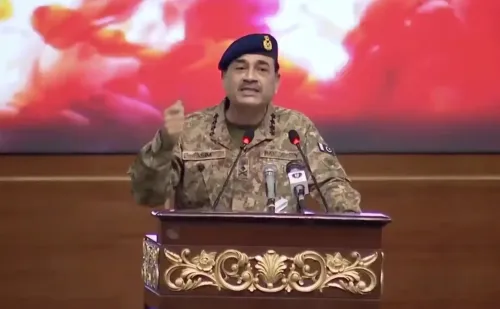
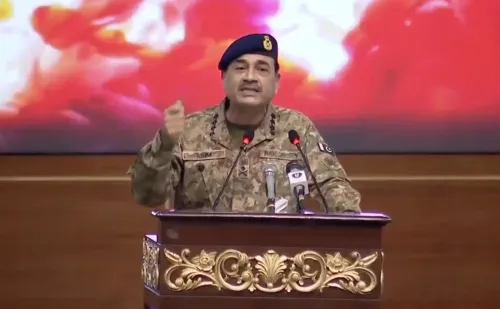
Pakistan's Asim Munir, known as Trump's "favorite Field Marshal," would handle the southern and eastern fronts of Afghanistan.
President Trump has shown interest in re-establishing a U.S. military base at Bagram, a strategically vital airfield located roughly 60 km north of Kabul. This facility was the operational hub for the International Security Assistance Force (ISAF) during the American-led occupation of Afghanistan.
The Taliban has dismissed this prospect outright, asserting Afghanistan's sovereignty and independence.
The Bagram location is ideal for operations and reconnaissance across a significant portion of Asia, particularly for monitoring China.
With the Taliban facing pressure from various fronts, the route to Bagram could become increasingly accessible.
By gaining a foothold in Iran, the U.S. would secure direct access to maritime routes connecting the Persian Gulf to the Arabian Sea, utilizing ports at Bandar Abbas and Chabahar in Iran, as well as Gwadar, Pasni, and Karachi in Pakistan.
This access also allows Washington to tap into the rare earth mineral reserves in Balochistan, minimizing concerns about insurgent activities, as the Baloch separatists would be isolated.
This strategic area is situated at the crossroads of Pakistan, Afghanistan, and Iran.
During a visit to the White House last year alongside Pakistan's Prime Minister Shehbaz Sharif, General Munir reportedly highlighted these vital minerals to President Trump and engaged with American investors, pursuing a $500 million investment agreement to develop Balochistan's critical minerals sector.
They also proposed to Trump the development of Pasni, a deep-sea fishing port located in Balochistan's Gwadar district, into a fully operational harbor.
General Munir views these rare earth reserves as a promising economic resource for Pakistan, which could aid in alleviating its substantial debt and replenishing its treasury.
Trump has expressed interest in these rare earth elements, essential for various applications in American industries.
Since that meeting, Trump has consistently praised Pakistan's Chief of Army Staff, Asim Munir, and Prime Minister Sharif.
"You have a great Prime Minister. You have a great General there. You have a great leader that... I think two of the people that I really respect a lot. And I think that Pakistan is doing terrifically well," the U.S. President stated when asked about the renewed hostilities between Afghanistan and Pakistan that raised new alarms regarding the region's stability.
While developments unfold, India remains vigilant; any adverse outcomes could greatly impact peace and stability throughout the region.
Point of View
The implications for regional stability, particularly concerning Pakistan and Afghanistan, are significant and warrant close attention from policymakers and analysts alike.
NationPress
11 Oct 2026
Frequently Asked Questions
What are the strategic interests of the U.S. in South and Central Asia?
The U.S. aims to secure military footholds, monitor regional adversaries such as China, and access vital resources, including rare earth minerals in Balochistan.
How is Pakistan's military leadership involved in U.S. plans?
Pakistan's Chief of Army Staff, Asim Munir, has engaged with U.S. officials to discuss cooperation and the development of critical mineral resources.
What is the significance of Bagram airfield?
Bagram airfield serves as a strategic location for military operations and surveillance in the region, particularly for U.S. interests in Afghanistan and its neighbors.
What are the potential impacts of U.S. intervention in Afghanistan?
U.S. intervention could escalate tensions with the Taliban and impact security and stability in the region, affecting neighboring countries like India and Pakistan.
What are the rare earth mineral reserves in Balochistan?
Balochistan is believed to hold significant rare earth mineral reserves, which are crucial for various industrial applications and could be economically beneficial for Pakistan.