V-P Radhakrishnan inaugurates research facilities at Panjab University, calls for world-class push
Synopsis
Vice-President C.P. Radhakrishnan's visit to the 144-year-old Panjab University wasn't ceremonial — it came with a campus safety directive following a Ph.D. student's death, the launch of five advanced research instruments, and a restructured innovation forum. The dual inauguration signals a serious institutional pivot toward translational research and entrepreneurship at one of India's oldest universities.
Key Takeaways
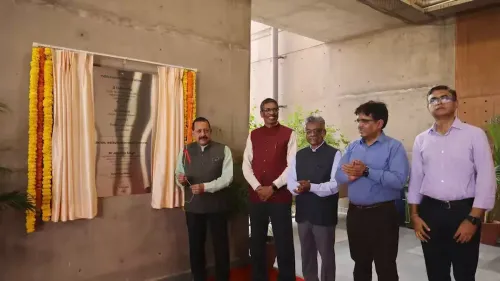
Radhakrishnan inaugurated the Advanced Instrumentation Facility at SAIF/CIL and the Panjab University Tech Innovation Forum (PU-TIF) on 4 September in Chandigarh .
Five instruments added to SAIF/CIL: Atomic Force Microscope , Raman Spectrometer , DNA Sequencer , Flow Cytometer , and FTIR Spectrometer .
PU-TIF has been restructured as a Section 8 not-for-profit company , replacing the earlier Bio-NEST incubation programme.
Radhakrishnan ordered a comprehensive campus safety audit following the death of a Ph.D. student; an internal committee has been constituted.
Panjab University , founded in 1882 , is one of India's oldest universities, now targeting a world-class research standing.
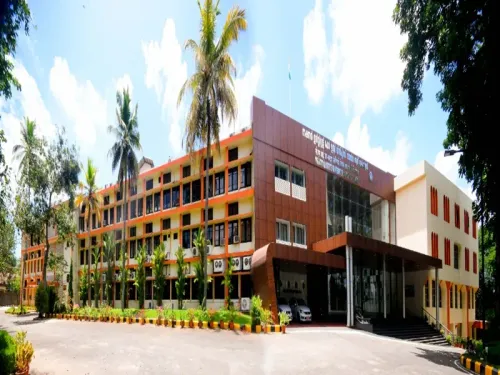
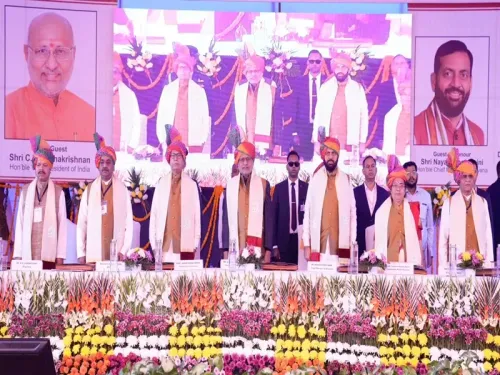
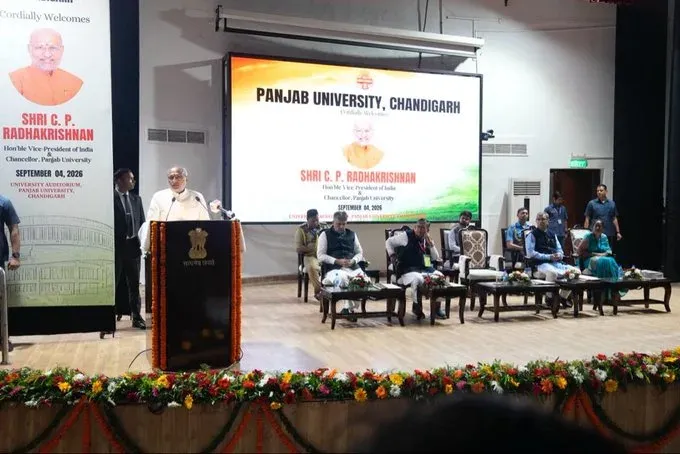
Vice-President C.P. Radhakrishnan on Friday, 4 September visited the 144-year-old Panjab University in Chandigarh and inaugurated two major research infrastructure initiatives — the Advanced Instrumentation Facility at the Sophisticated Analytical Instrument Facility/Central Instrumentation Laboratories (SAIF/CIL) and the Panjab University Tech Innovation Forum (PU-TIF). The visit marked a significant step in the university's ambition to position itself as a globally competitive institution of higher education and research.
What Was Inaugurated
The Advanced Instrumentation Facility at SAIF/CIL now houses five state-of-the-art scientific instruments: an Atomic Force Microscope, a Raman Spectrometer, a DNA Sequencer, a Flow Cytometer, and an FTIR Spectrometer. According to the Vice-President, these additions will significantly strengthen the university's research capabilities in nanotechnology, materials science, environmental science, and genomics.
The PU-TIF, which evolved from the earlier Bio-NEST incubation programme, has been reconstituted as a Section 8 not-for-profit company — a structural shift designed to provide a more robust institutional framework for advancing research, entrepreneurship, and technology development. Together, SAIF/CIL and PU-TIF form the backbone of the university's ecosystem for academic, applied, and translational research.
Key Remarks by the Vice-President
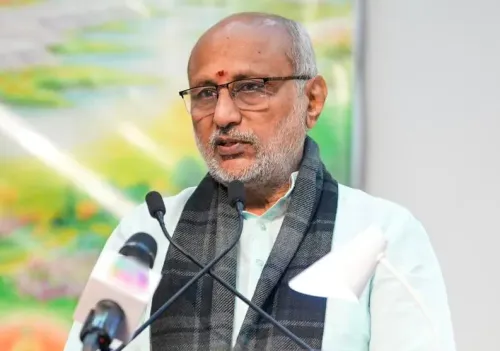
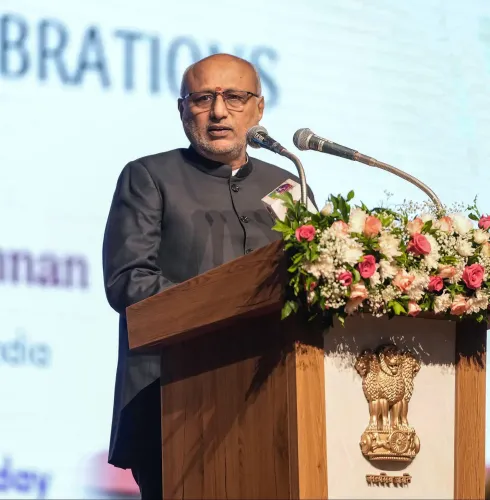
Radhakrishnan recalled Panjab University's distinguished legacy since its establishment in 1882, acknowledging its contribution to nation-building through generations of leaders, jurists, scientists, sportspersons, and public servants. He said India is increasingly emerging as a global destination for quality education, research, and innovation.
Addressing young researchers, the Vice-President urged them to pursue science with purpose, remain resilient in the face of failure, and develop innovations that are 'inclusive, scalable and capable of addressing real societal needs.' He stressed that research must have a meaningful impact on society and that ideas from classrooms and laboratories should translate into opportunities for youth, contributing to the vision of Viksit Bharat and Atmanirbhar Bharat.
Campus Safety and Student Welfare
Radhakrishnan also addressed a sensitive issue — campus safety — following the death of a Ph.D. student at the university. He stated that he had immediately directed university authorities to undertake a comprehensive safety audit of the entire campus. An internal committee has been constituted to review existing infrastructure and submit a detailed report. The Vice-President stressed that the safety and well-being of students and staff must remain the university's highest priority.
Anti-Drug Appeal and Path Forward
Calling upon students to contribute towards a 'Nasha Mukt Bharat', Radhakrishnan urged them to stay away from substance abuse and encourage their families and friends to do the same. He concluded by inviting suggestions from the university community on concrete measures to transform Panjab University into a world-class institution of higher education and research, calling for collective efforts from all stakeholders.
Among those present were Punjab Governor Gulab Chand Kataria, Haryana Governor Ashim Kumar Ghosh, Lok Sabha MP Manish Tewari, and Vice-Chancellor Meenakshi Goyal. The inauguration signals a renewed institutional commitment to research-led growth at one of India's oldest universities, with its next phase of development likely to hinge on how effectively PU-TIF bridges academia and industry.
Point of View
But the harder question is whether the institutional scaffolding — a Section 8 company, a safety audit committee — translates into sustained research output or remains ceremonial infrastructure. India's public universities have a long history of receiving high-profile inaugurations without the follow-through funding or faculty incentives to sustain them. The Vice-President's direct intervention on campus safety, triggered by a student death, is the more urgent story here — it exposes a governance gap that no amount of new instrumentation can paper over. Whether PU-TIF can genuinely bridge academia and industry will depend on its ability to attract private capital and retain research talent, two areas where Indian public universities have historically struggled.
NationPress
19 Oct 2026
Frequently Asked Questions
What did Vice-President Radhakrishnan inaugurate at Panjab University?
Vice-President C.P. Radhakrishnan inaugurated the Advanced Instrumentation Facility at the Sophisticated Analytical Instrument Facility/Central Instrumentation Laboratories (SAIF/CIL) and the Panjab University Tech Innovation Forum (PU-TIF) on 4 September in Chandigarh. These facilities are designed to strengthen the university's research, incubation, and entrepreneurship ecosystem.
What instruments were added to Panjab University's SAIF/CIL?
Five advanced scientific instruments were installed: an Atomic Force Microscope, a Raman Spectrometer, a DNA Sequencer, a Flow Cytometer, and an FTIR Spectrometer. These are expected to boost research in nanotechnology, materials science, environmental science, and genomics.
What is the Panjab University Tech Innovation Forum (PU-TIF)?
PU-TIF is the restructured successor to the earlier Bio-NEST incubation programme, now constituted as a Section 8 not-for-profit company. It is designed to provide institutional support for research, entrepreneurship, and technology development by bringing together academia, industry, incubators, and investors.
Why did the Vice-President order a campus safety audit at Panjab University?
Radhakrishnan ordered a comprehensive safety audit of the entire Panjab University campus following the death of a Ph.D. student. An internal committee has been constituted to review existing infrastructure and submit a detailed report, with the Vice-President stressing that student and staff safety must be the university's highest priority.
How old is Panjab University and where is it located?
Panjab University was established in 1882, making it 144 years old, and is located in Chandigarh. It is one of India's oldest universities and has contributed to nation-building across generations through leaders, scientists, jurists, and public servants.