VAIBHAV fellowship turns brain drain into brain gain for Indian diaspora scientists
Synopsis
For over 30 years, India watched its brightest minds build careers abroad with no structured way to bring that talent back. The VAIBHAV fellowship, launched in 2023, finally offers a model: fully funded two-month annual stints at Indian research institutions, no relocation required. It's the first government framework to institutionalise diaspora science engagement at scale — and early signals from fellows across the US, Canada, Sweden, and Australia suggest the idea has real traction.
Key Takeaways
The VAIBHAV (Vaishvik Bharatiya Vaigyanik) fellowship was launched by the Department of Science and Technology in 2023 to engage Indian diaspora researchers in STEM.
Fellows spend roughly two to three months per year collaborating with Indian academic and R&D institutions — without relocating .
Collaborative tie-ups can range from 2-3 months to 2-3 years , offering flexible participation models.
Principal Scientific Adviser Professor Ajay Kumar Sood described the programme as part of a broader effort to connect all who can contribute to India's growth, whether at home or abroad.
Fellows from universities and R&D centres in the US , Canada , Sweden , and Australia have reportedly praised the initiative and offered practical collaboration ideas.
The programme is still in its early stages and has not yet demonstrated full-scale research outcomes.
India's decades-old challenge of brain drain — the steady exodus of top scientific talent to universities and research labs in the United States, Europe, Canada, and Australia — is being tackled through a structured government programme that lets overseas Indian scientists contribute to domestic research without uprooting their lives abroad. The VAIBHAV (Vaishvik Bharatiya Vaigyanik) fellowship, launched by the Department of Science and Technology in 2023, is designed to convert brain drain into what its architects call 'brain gain' and 'brain exchange'.
What the VAIBHAV Programme Offers
The fellowship facilitates short-term collaborative engagements — typically two to three months per year — between Indian diaspora researchers in STEM (Science, Technology, Engineering and Mathematics) and Indian academic and research institutions. Crucially, fellows are not required to relocate permanently, making participation far more accessible. According to programme details, the government provides full funding for fellows to spend roughly two months a year working alongside Indian institutions on projects deemed strategically useful to the nation.
Collaborative tie-ups under the framework can range from short stints of two to three months to longer partnerships spanning two to three years, offering flexibility that earlier diaspora engagement models lacked.
What the Principal Scientific Adviser Said
Professor Ajay Kumar Sood, Principal Scientific Adviser to the Government of India, described the initiative as an effort to build meaningful connections with everyone — whether in India or abroad — who can contribute to the country's growth. 'PM Modi's goal has been to really connect with everyone, either in India or abroad, who could contribute to India's growth and development,' Professor Sood said, clarifying the government's broader strategic intent.
His remarks underscore that VAIBHAV is positioned not as a one-off scheme but as part of a wider architecture to institutionalise diaspora engagement in science and technology.
How Fellows and the Diaspora Have Responded
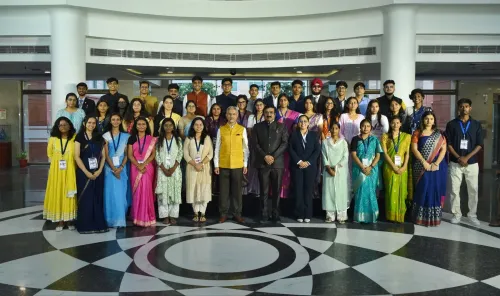
VAIBHAV Fellows drawn from universities and R&D centres across the US, Canada, Sweden, and Australia have reportedly praised the government's approach and shared practical suggestions for deepening collaboration between Indian institutions and global Indian researchers. The diaspora community has broadly welcomed the policy, with several fellows describing it as a 'smart bridge' that allows global Indian talent to contribute meaningfully without sacrificing their established careers overseas.
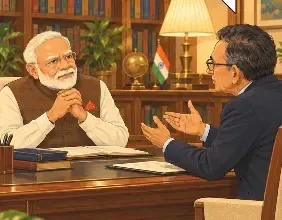
Notably, a video shared by the social media handle Modi Story on X highlighted how the programme works, featuring an AI-generated segment depicting Prime Minister Narendra Modi encouraging Indian scientists abroad to share their expertise. The post stated: 'PM Modi's VAIBHAV initiative is giving foreign-based Indian geniuses full funding to spend two months a year, collaborating with Indian institutions on projects and technologies, useful to the nation.'
Background: Brain Drain and Why It Matters
India's brain drain accelerated through the 1990s as liberalisation opened global opportunities while domestic research funding and infrastructure lagged behind. Generations of top engineers, scientists, and academics built careers at institutions such as MIT, Stanford, and Oxford — enriching host countries but leaving Indian institutions relatively under-resourced in cutting-edge talent. The cumulative loss in intellectual capital has long been a policy concern, yet systematic remedies remained elusive for over three decades.
VAIBHAV represents the first institutionalised framework to address this gap at scale, analysts note. This comes amid a broader push by the Centre to strengthen India's R&D ecosystem, including increased allocations in recent Union Budgets and the establishment of new national research foundations.
Early Days and the Road Ahead
The programme is still in its early stages and is acknowledged to be some way from delivering its full impact. However, the strong diaspora buy-in and the involvement of fellows from multiple high-credential institutions signal a promising start. Whether VAIBHAV translates diaspora goodwill into measurable research outcomes — patents, publications, technology transfers — will be the true measure of its success in the years ahead.
Point of View
Yet the programme's real test lies in what the fellowships actually produce: patents filed, technologies transferred, PhD students co-supervised. India has a long history of well-designed schemes that stall at implementation, and a two-month annual visit, however well-funded, risks becoming a networking exercise rather than a research collaboration. The government would do well to publish transparent outcome data early, before the initiative becomes another headline without a scorecard.
NationPress
29 Sept 2026
Frequently Asked Questions
What is the VAIBHAV fellowship programme?
The VAIBHAV (Vaishvik Bharatiya Vaigyanik) fellowship is a government programme launched by India's Department of Science and Technology in 2023. It enables Indian diaspora researchers in STEM fields to collaborate with Indian academic and research institutions for short periods — typically two to three months per year — without requiring them to permanently relocate.
Who is eligible for the VAIBHAV fellowship?
The fellowship targets Indian nationals and persons of Indian origin working in STEM disciplines at universities and R&D centres abroad. Fellows from countries including the US, Canada, Sweden, and Australia have already participated in the programme.
How does VAIBHAV address brain drain?
Rather than asking diaspora scientists to give up their overseas careers, VAIBHAV provides full government funding for fellows to spend roughly two months a year working alongside Indian institutions. This 'brain exchange' model allows knowledge and expertise to flow into India without requiring permanent return migration.
What has the government said about the VAIBHAV initiative?
Principal Scientific Adviser Professor Ajay Kumar Sood stated that the programme reflects the government's goal of connecting everyone — in India or abroad — who can contribute to the country's growth. He described it as part of a wider framework to institutionalise diaspora engagement in science and technology.
Has VAIBHAV shown results so far?
The programme is still in its early stages and is acknowledged to be some way from delivering its full impact. However, fellows from multiple high-credential institutions have reportedly responded positively and shared practical ideas for deepening collaboration between Indian and global research teams.