Is the Diaspora Essential for India's Growth While Dual Citizenship Remains a Challenge?
Synopsis
Ram Madhav highlights the critical role of the Indian diaspora in elevating India's status globally while emphasizing the complexities surrounding dual citizenship and voting rights. He advocates for a balanced approach that respects India's unique geopolitical landscape. Discover how the Indian government is navigating these intricate issues to strengthen ties with its overseas citizens.
Key Takeaways
The Indian diaspora is essential for India's global standing.
Challenges surrounding dual citizenship are complex.
The government has expanded benefits under the OCI framework.
Illegal immigration is being addressed quietly and effectively.
Engagement with the diaspora is a priority for the Modi government.
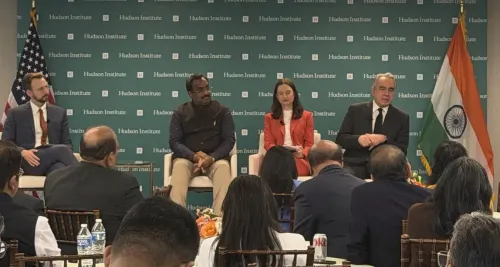
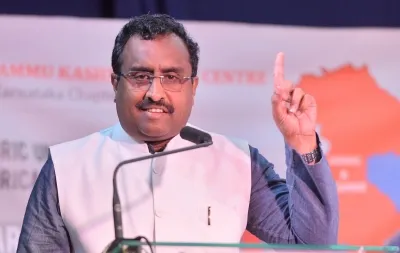
Washington, Jan 12 (NationPress) The Indian diaspora is crucial for enhancing India's international reputation; however, matters like dual citizenship and voting rights necessitate careful consideration due to India’s distinct geopolitical and constitutional landscape, stated senior BJP leader Ram Madhav.
While speaking at an interaction organized by the Overseas Friends of BJP (OFBJP), Madhav recognized the emotional and political ties that Indians abroad maintain with Mother India. He remarked, “Your minds may operate here, but your hearts are in Bharat,” addressing an audience comprising numerous US citizens and permanent residents.
In response to queries about India's reluctance to provide dual citizenship and voting privileges to non-resident Indians (NRIs), Madhav explained that the situation is significantly more intricate than it seems.
He cited issues like territorial disputes, geopolitical challenges, and regional security threats.
Madhav noted that granting citizenship might lead to unforeseen repercussions. “When you grant citizenship, regardless of whether it applies to them or not, numerous other complexities arise,” he remarked.
Instead, Madhav mentioned that India has broadened the benefits under the Overseas Citizen of India (OCI) scheme. “This offers a plethora of benefits already, aside from the right to vote,” he added, while also recognizing that additional facilities could be explored.
“More can be extended as per your demands. If you seek anything additional, that can be contemplated as well,” he noted, describing the current government as “very, very accommodating to NRIs.”
Madhav asserted that the BJP government has consistently addressed the concerns of its diaspora.
When asked about illegal immigration issues, including worries regarding undocumented migrants entering India, Madhav assured that the government is taking discreet yet firm action. “We are accomplishing more while publicizing less,” he stated.
“Certain matters must be addressed appropriately,” he added, avoiding specific figures. “Rest assured that the concern you harbor is matched tenfold by those within the government.”
Madhav contrasted India’s method with what he described as superficial politics seen in other regions. “We are doing more and propagating less,” he insisted.
He called for patience in dealing with delicate diaspora-related matters, indicating that not everything should be publicly discussed. “Not everything needs to be expressed openly,” he emphasized.
Madhav also warned against aggressive stances in international relations, arguing that India’s global credibility is built on restraint. “Assertiveness must be responsible; it cannot be aggressive,” he stated.
He highlighted that India’s independent foreign policy has garnered global esteem. “You’ll be surprised to learn that 40 countries have emulated us,” he remarked, referring to India’s neutral positions on significant global conflicts.
Madhav pointed out that the Indian diaspora has become a cornerstone of India-US relations. “Indian Americans play a vital role in this relationship,” he stated, noting that the community has now grown to over four million.
It is noteworthy that India has progressively enhanced its engagement with its overseas populace through OCI schemes, investment initiatives, and political interactions, while stopping short of granting dual citizenship.
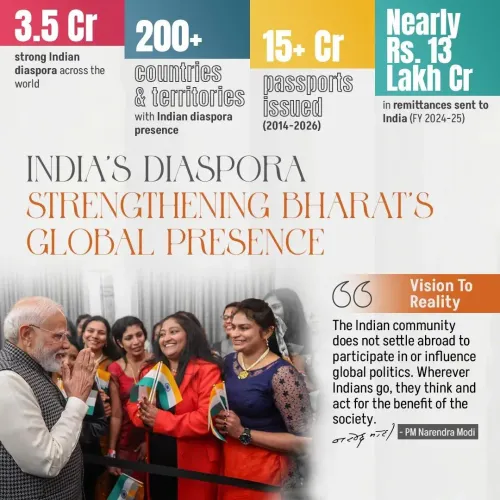
The influence of the diaspora has surged in nations such as the United States, the United Kingdom, and Canada, shaping the global perception of India’s ascent. One of the defining features of the Modi government is its active engagement with the diaspora.
Point of View
It's crucial to recognize that the Indian diaspora significantly contributes to the nation's global image. While the complexities of dual citizenship and voting rights are acknowledged, a cautious approach is necessary to preserve India's interests and address the unique challenges presented by its geopolitical environment. The government’s focus on strengthening ties with NRIs is commendable and reflects a commitment to inclusivity.
NationPress
19 Sept 2026
Frequently Asked Questions
Why does India not grant dual citizenship to NRIs?
India's stance on dual citizenship is influenced by various geopolitical and constitutional complexities, including territorial disputes and regional security concerns.
What benefits do Overseas Citizens of India receive?
Overseas Citizens of India enjoy numerous benefits under the OCI framework, such as access to certain financial services and educational opportunities, albeit without the right to vote.
How is the Indian government addressing illegal immigration?
The government is taking discreet actions to manage illegal immigration while ensuring that sensitive issues are handled appropriately.
What role does the Indian diaspora play in India-US relations?
The Indian diaspora, particularly Indian Americans, serves as a crucial link in strengthening India-US relations, contributing to over four million individuals in the community.
What is the government's approach towards NRIs?
The current government is described as very accommodating towards NRIs, continuously exploring ways to enhance benefits for this community.