Vance clarifies H-1B 'indentured servant' remark, targets employers not immigrants
Synopsis
JD Vance's 'indentured servant' label for H-1B workers was never about the immigrants — it was about the American companies holding their legal status over them. At a Michigan town hall, Vance reframed the remark as a structural critique of employer power, while invoking wife Usha's South Indian roots. For India's tech diaspora, the biggest question remains: will the rhetoric become policy?
Key Takeaways
JD Vance clarified at a CBS News town hall in Flat Rock, Michigan on 18 October 2026 that his 'indentured servant' description targeted exploitative H-1B employers, not visa holders.
Vance admitted his rhetoric had been 'imperfect', saying: 'to the extent that my rhetoric has been imperfect here, that's on me.' He argued that employer-sponsored visa structures give companies 'way too much power' over foreign workers who cannot easily challenge workplace conditions.
Vance invoked the story of his wife Usha Vance 's parents, who immigrated from South India , to counter accusations of anti-immigrant sentiment.
Indian nationals are historically the largest beneficiary group of the H-1B programme , making any policy or rhetorical shift especially significant for India's tech workforce.
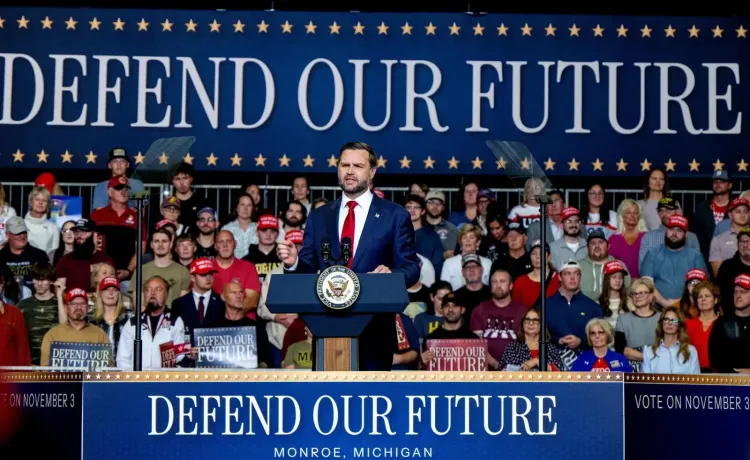
US Vice President JD Vance on 18 October 2026 defended his controversial characterisation of certain H-1B visa workers as 'indentured servants', clarifying at a CBS News town hall in Flat Rock, Michigan, that his criticism was aimed squarely at American companies that exploit foreign employees — not at the immigrants themselves. The remarks came during a direct exchange with a naturalised American citizen who had voted for the Trump-Vance ticket.
What Vance Said at the Town Hall
The confrontation was triggered by Niv Agaram, a naturalised American citizen who said he had immigrated to the United States roughly 20 years ago. Agaram told Vance he had voted for the Trump-Vance ticket over concerns about border security, drug trafficking, and human trafficking — but questioned whether the administration's immigration enforcement approach was genuinely making Americans safer.
Vance acknowledged that his past rhetoric had not always hit the mark. 'And, and to the extent that my rhetoric has been imperfect here, that's on me,' he said. He went on to reframe his earlier remarks as a structural critique of certain visa arrangements rather than a broadside against skilled foreign workers.
'When I say an indentured servant, that's not a criticism of the H-1B visa holder, that's a criticism of a company,' Vance said.
The Power Imbalance Argument
Vance argued that some employers recruit foreign workers after dismissing American staff, leaving the incoming employees in a precarious position — dependent on those same employers for their continued legal status in the country. Unlike US citizens, foreign workers on employer-sponsored visas can face consequences that extend well beyond job loss if they challenge workplace conditions.
'I think that gives employers way too much power,' he said. He also criticised companies that publicly claimed they could find no qualified American workers while simultaneously letting existing employees go — a practice he described as harmful to both domestic workers and immigrants alike.
Vance Invokes Wife Usha's Indian Heritage
The discussion broadened into questions about anti-immigrant rhetoric, with moderator Tony Dokoupil pressing Vance on whether the administration's language dehumanised immigrants. Vance pushed back, invoking the story of his wife Usha Vance and her parents, who emigrated from South India.
'I love my, my mother-in-law and father-in-law, who immigrated from South India, and obviously their daughter, born in the United States of America, is now the second lady and I'm very proud of her and I, and I love her very much,' he said. Vance maintained that the United States could continue welcoming immigrants without abandoning controls on the pace and scale of immigration, arguing that rapid, unchecked flows could strain social cohesion and unsettle communities.
Why H-1B Policy Matters for India
The H-1B programme allows American employers to hire foreign professionals for specialised roles. Indian nationals have historically accounted for the largest share of its beneficiaries, making any shift in policy — or in the political climate surrounding it — particularly consequential for India's technology workforce and for Indian-American families. Vance's clarification, while not announcing any policy change, signals a rhetorical recalibration that could carry weight in ongoing debates over visa reform in Washington.
How the administration translates these stated concerns about employer exploitation into actual regulatory action on the H-1B system remains to be seen.
Point of View
Not a policy announcement — and that distinction matters. The H-1B system's structural vulnerabilities, including workers tied to a single sponsor with limited recourse, are well-documented and predate this administration. What is notable is that a sitting US Vice President is now publicly framing employer exploitation as a problem within the visa system — a critique that, if converted into regulatory action, could reshape how American companies recruit and retain foreign talent. For India, the stakes are outsized: Indian nationals dominate H-1B approvals, and any genuine crackdown on employer abuse could cut two ways — protecting workers or shrinking the pipeline. The administration has not detailed a legislative or regulatory fix, and without one, Vance's town hall remarks risk being remembered as good optics rather than a turning point.
NationPress
18 Oct 2026
Frequently Asked Questions
What did JD Vance mean by calling H-1B workers 'indentured servants'?
Vance clarified at a Michigan town hall on 18 October 2026 that the term was a criticism of American companies that recruit foreign workers after laying off domestic staff, leaving the visa holders dependent on those employers for their legal status. He explicitly stated it was not directed at the H-1B workers themselves.
Where did JD Vance make these remarks?
Vance made the remarks at a CBS News town hall held in Flat Rock, Michigan, where he was questioned by Niv Agaram, a naturalised American citizen who had voted for the Trump-Vance ticket. Moderator Tony Dokoupil also pressed Vance on the administration's immigration language.
Why does H-1B policy matter for India?
Indian nationals have historically accounted for the largest share of H-1B visa approvals, making changes to the programme — or shifts in the political climate around it — directly significant for India's technology workforce and for Indian-American families. Any regulatory tightening could affect the pipeline of skilled Indian workers to the United States.
What is Vance's broader argument about the H-1B visa system?
Vance argued that the visa system concentrates too much power in the hands of employers, because foreign workers who challenge workplace conditions risk losing not just their jobs but their legal right to remain in the US. He said this structural imbalance harms both immigrants and American workers displaced by the practice.
Has the Trump administration announced any changes to the H-1B programme?
No specific policy change to the H-1B programme was announced at the town hall. Vance's remarks were a rhetorical clarification; the administration has not yet detailed legislative or regulatory steps to address the employer exploitation he described.