How is Vande Mataram a Mantra of Nation’s Courage and Consciousness, According to CM Yogi?
Synopsis
In a significant session, CM Yogi Adityanath commemorates the 150th anniversary of Vande Mataram, declaring it a powerful mantra embodying India's rich heritage and spirit. The discussion highlights the song's vital role in the freedom struggle, its cultural significance, and its relevance in today's India under PM Modi's leadership.
Key Takeaways
Vande Mataram is recognized as a powerful national anthem.
It symbolizes the courage and resilience of India's freedom fighters.
The Assembly discussion aimed to reaffirm commitments to Mother India.
Historical context highlights its importance during British rule.
It continues to inspire the nation towards development and unity.
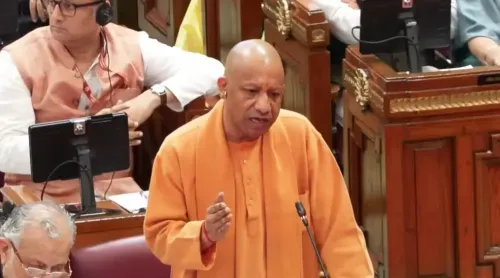
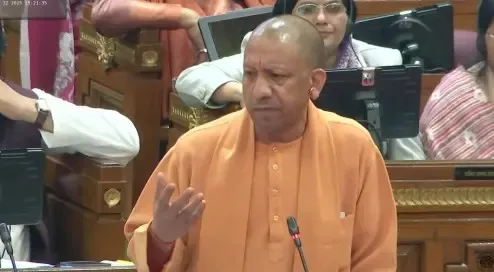
Lucknow, Dec 22 (NationPress) The Uttar Pradesh Assembly conducted a special session on Monday to commemorate the 150th anniversary of the national anthem Vande Mataram. During the discussion, Chief Minister Yogi Adityanath emphasized that Vande Mataram is far more than just a song; it serves as a mantra that encapsulates the essence of India’s fight for freedom, the bravery of its heroes, and the dignity of the nation.
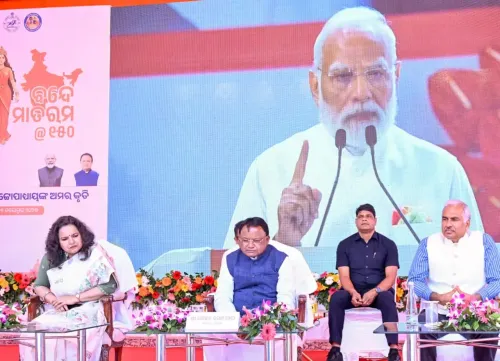
The Chief Minister pointed out that under the guidance of Prime Minister Narendra Modi, Uttar Pradesh is likely the first Assembly to engage in an extensive dialogue on this monumental topic.
He highlighted that this discussion transcended mere appreciation of the song, providing a chance to recommit to the country’s collective responsibilities towards Mother India.
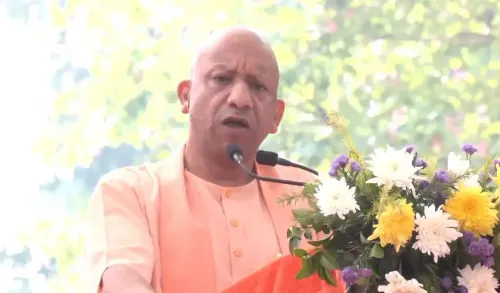
“The reverence for Vande Mataram goes beyond mere symbolism. It embodies our constitutional principles and national duties. It signifies the essence, struggle, and determination of our nation. It was not just a piece of poetry; it was a means of venerating our motherland, igniting cultural awareness, and expressing nationalism,” Yogi stated in the Assembly.
Reflecting on history, he noted that when Vande Mataram celebrated its silver jubilee, India was under British colonization, following the First War of Independence in 1857.
“Even amidst oppressive laws and brutalities, Vande Mataram kept the nation’s slumbering spirit alive,” he remarked.
He recalled that during its silver and golden jubilees, British dominance persisted, and Congress sessions offered a venue for fostering the spirit of liberty.
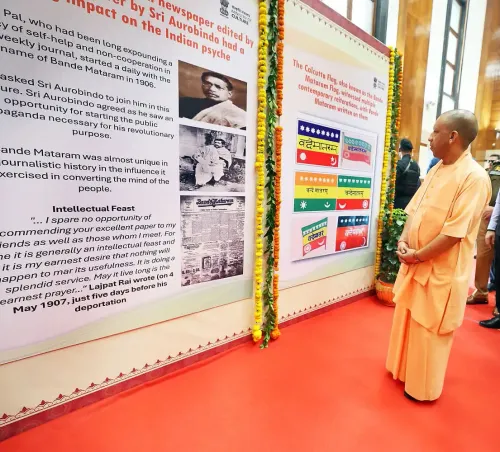
At the 1896 Congress meeting, Rabindranath Tagore was the first to present Vande Mataram, transforming it into a nationwide mantra, the Chief Minister remarked.
He further noted that when the song reached its centennial, the same Congress that had initially uplifted it was in power but imposed the Emergency, suppressing the Constitution. “This historical chapter should never be overlooked,” he insisted.
“As we honor the 150th anniversary of Vande Mataram, India, under Prime Minister Modi’s leadership, is confidently advancing toward becoming a developed nation,” Yogi stated, adding that the country is gradually fulfilling the vision of Bankim Chandra Chattopadhyay, the immortal creator of the national song. He noted the significance of the Assembly discussion's timing.
Referencing the First War of Independence, the Chief Minister remarked that the freedom movement unfolded nationwide under leaders such as Mangal Pandey in Barrackpore, Shaheed Bandhu Singh in Gorakhpur, Dhan Singh Kotwal in Meerut, and Rani Lakshmibai in Jhansi. He added that following the 1857 uprising’s failure, Vande Mataram reignited the national spirit during a time of despair.
Yogi also emphasized that Bankim Chandra Chattopadhyay, who worked as a Deputy Collector under British rule, expressed the sentiments of the common populace through Vande Mataram, making it a beacon of resistance against colonial oppression.
“Mother India transcends geographical boundaries; it represents the very essence of every Indian. Our quest for freedom was not merely a political goal but a spiritual journey,” the Chief Minister asserted.
He concluded by stating that the lines ‘Sujalam, Suphalam, Malayaja-Shitalam, Shasyashyamalam Mataram’ vividly depict India’s natural wealth, prosperity, beauty, and strength, fostering a profound sense of national consciousness within the Indian psyche.
Point of View
It is essential to recognize that the discussion surrounding Vande Mataram is not merely about celebrating a song; it reflects a profound connection to India's history, culture, and identity. The dialogue led by CM Yogi Adityanath emphasizes the importance of national pride and collective responsibility toward the motherland, a sentiment that resonates deeply with the populace today.
NationPress
19 Sept 2026
Frequently Asked Questions
What is the significance of Vande Mataram?
Vande Mataram serves as a national anthem and a mantra that reflects India's freedom struggle and cultural identity.
Who composed Vande Mataram?
The song was composed by Bankim Chandra Chattopadhyay, and it holds immense historical significance in India's fight for independence.
Why is the 150th anniversary of Vande Mataram important?
Celebrating the 150th anniversary reaffirms the nation's commitment to its values and acknowledges the sacrifices made during the freedom struggle.
How does Vande Mataram relate to modern India?
Vande Mataram continues to inspire and unite Indians, reminding them of their rich heritage and collective responsibilities.
What did CM Yogi Adityanath say about Vande Mataram?
CM Yogi Adityanath emphasized that Vande Mataram is a mantra embodying the spirit of India's freedom struggle and national pride.