Did Vande Mataram Play a Pivotal Role in National Awakening?
Synopsis
Union Home Minister Amit Shah reflects on the enduring significance of Vande Mataram in igniting national consciousness during India's freedom struggle, emphasizing its role in inspiring generations and the nation’s path towards a prosperous future.
Key Takeaways
Vande Mataram is a significant symbol of India's freedom struggle.
The song has inspired generations in their pursuit of patriotism.
It emphasizes the importance of cultural heritage and national identity.
The song remains relevant as India aims for a prosperous future.
Its historical context highlights the resilience of Indian culture against colonialism.
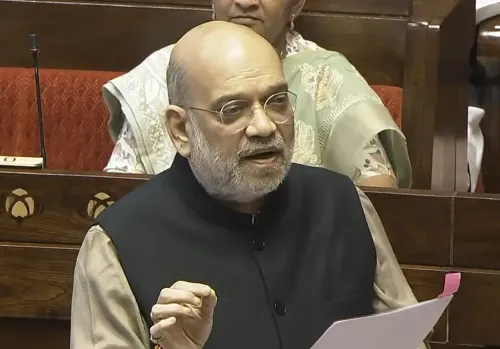
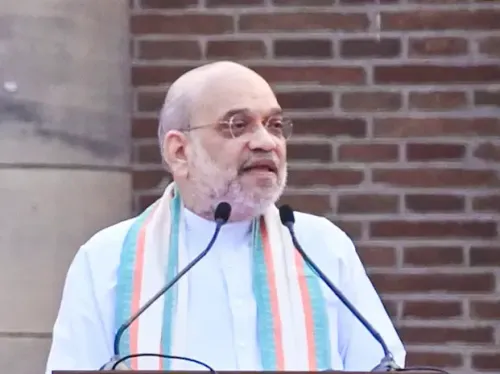
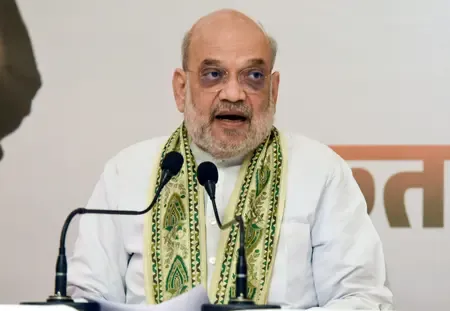
New Delhi, Dec 9 (NationPress) Union Home Minister Amit Shah stated on Tuesday that Vande Mataram significantly contributed to the "awakening of a powerful national consciousness" during India's freedom movement, which the British and their followers could not suppress.
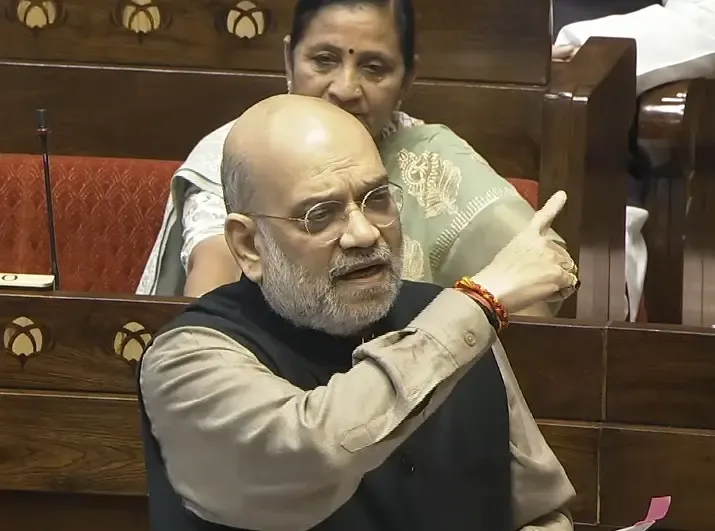
During a discussion commemorating 150 years of Vande Mataram in the Rajya Sabha, Shah remarked, "During the era of colonial rule, numerous temples, universities, cultural centers, agricultural practices, educational systems, and libraries were either destroyed or dismantled. However, despite the physical destruction of these institutions, the essence of our culture and its spirit remained intact within our people. Nevertheless, there was a pressing need to rekindle that spirit, to reorganize and fortify it."
"It was during such tumultuous times that Bankim Babu created Vande Mataram. The message of this song resonated across the nation, reaching even the remote islands of Andaman and Nicobar. Neither the British nor those who adopted British ways could halt its spread. Vande Mataram was crucial in stirring a formidable national consciousness," he further elaborated.
The Home Minister emphasized that through discussing Vande Mataram, the future generations will grasp the national song's "impact on the freedom struggle, the patriotism encapsulated in its verses, and the spirit of commitment to our nation and its heritage."
"Let this understanding motivate them to contribute to shaping a prosperous future for our great India," he expressed.
Shah added that the dialogue around Vande Mataram was vital during the freedom struggle and continues to be significant for the vision of Viksit Bharat 2047.
Criticizing the Opposition, he noted, "Some members questioned why discussions on Vande Mataram are necessary. The importance of discussing Vande Mataram, and the dedication it demands, was crucial then; it is essential now, and will always hold significance for the realization of the great India we envision for 2047."
In highlighting the historical context of Vande Mataram, Shah stated, "For centuries, our land faced invasions and attempts to distort our culture and history. During British rule, there were efforts to impose a foreign civilization and culture upon us."
"In such challenging times, Bankim Chandra Babu penned Vande Mataram. His work subtly depicted our ancient civilization, cultural nationalism, and the tradition of venerating the nation as a mother. This concept of honoring the nation as a mother has long been a part of our legacy and was beautifully articulated in his writing," he continued.
He further noted that the chant of Vande Mataram became a "battle cry to liberate Maa Bharti from the shackles of oppression."
"It turned into the clarion call for Independence, serving as a profound source of motivation during the freedom struggle. For those martyrs who made the supreme sacrifice, Vande Mataram instilled in them the determination to be reborn in India and once again offer their lives for Maa Bharti. This ancient nation, throughout the ages, drew inspiration from Vande Mataram to progress along the path of its cultural heritage. Many found that inspiration in this very song," he concluded.
Point of View
It is imperative to acknowledge the profound impact of Vande Mataram on India's identity and collective consciousness. This discourse not only reinforces our historical narrative but also serves as a catalyst for engaging future generations in the ideals of patriotism and cultural pride that are essential for a unified India.
NationPress
23 Sept 2026
Frequently Asked Questions
What is the significance of Vande Mataram?
Vande Mataram is crucial as it symbolizes India's struggle for independence and national unity, inspiring generations with its themes of patriotism and cultural pride.
Who composed Vande Mataram?
Bankim Chandra Chatterjee composed Vande Mataram , and it was first included in his novel Anandamath.
When was Vande Mataram first sung?
The song was first sung in 1896 during the annual session of the Indian National Congress.
How does Vande Mataram inspire people today?
Vande Mataram continues to inspire by fostering a sense of national pride and unity, encouraging citizens to contribute to the country's development.
What role did Vande Mataram play during the freedom struggle?
Vande Mataram served as a rallying cry and motivational anthem for freedom fighters, symbolizing their commitment to liberating India from colonial rule.