Mizoram Governor VK Singh honours WWI soldiers at Delhi Assembly symposium
Synopsis
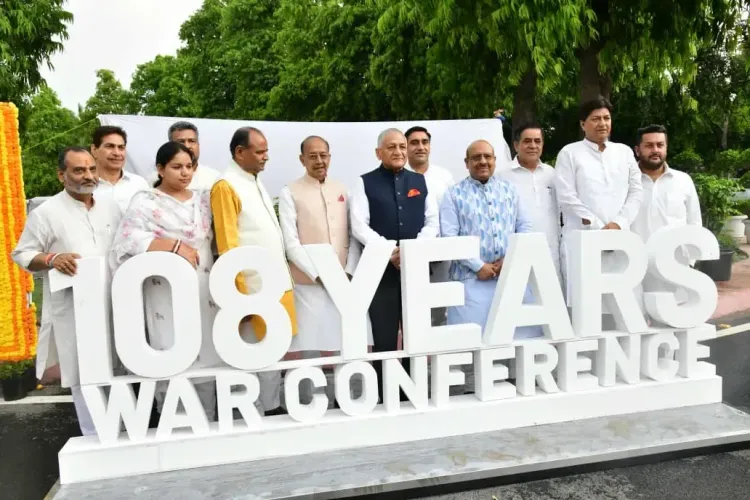
At a Delhi Assembly symposium marking the 108th anniversary of the 1918 War Conference, Mizoram Governor VK Singh reminded India that over 1.3 million of its soldiers fought in WWI — and 74,000 never came home. His message: they fought not as colonial subjects, but with the honour of the Bhagavad Gita in their hearts.
Key Takeaways
Mizoram Governor General (Retd) V.K.
Singh spoke at a symposium at the Delhi Legislative Assembly on 30 April .
The event marked the 108th anniversary of the 1918 War Conference ( Yudh-Sammelan ) held in the same building.
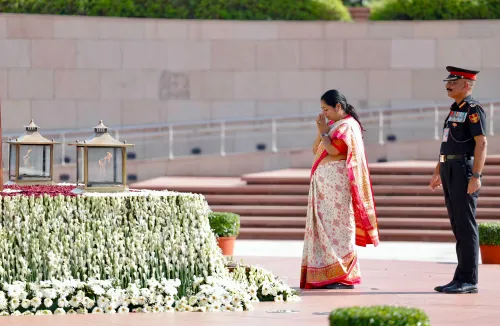
Over 1.3 million Indian soldiers served in WWI; nearly 74,000 died — their names inscribed at India Gate .
A commemorative book of the 1918 War Conference proceedings was released at the event.
Delhi Assembly Speaker Vijender Gupta noted that India's WWI support was followed not by reform but by the Rowlatt Act and Jallianwala Bagh massacre .
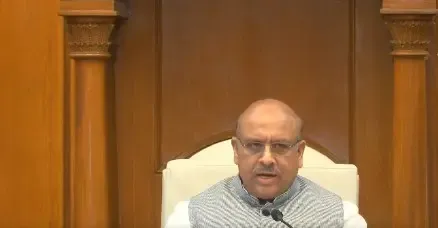
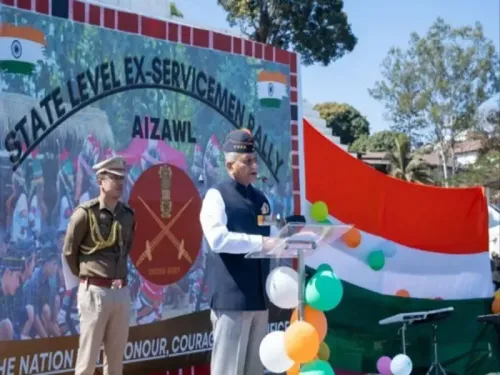
Mizoram Governor General (Retd) V.K. Singh on 30 April paid tribute to Indian soldiers who laid down their lives in World War I, asserting that a soldier fights not for personal reward but for duty, honour, and the conviction that his sacrifice will serve the nation. He was speaking at a symposium held at the Delhi Legislative Assembly to mark the 108th anniversary of the War Conference (Yudh-Sammelan) convened in the same building during the colonial era.
Scale of India's Contribution to World War I
General Singh highlighted that over 1.3 million Indian soldiers participated in World War I, with nearly 74,000 making the ultimate sacrifice — their names now commemorated at India Gate in New Delhi. He stressed that India's contribution extended far beyond manpower, encompassing financial support, logistics, and resources, representing a remarkable effort for a nation then under colonial rule.
He pointed to the traditions of remembrance within the Commonwealth of Nations as evidence of the global respect accorded to these soldiers, even as their contributions have not always received adequate recognition within India itself.
Honour, Not Reward: The Soldier's Philosophy
The Mizoram Governor was emphatic that Indian soldiers did not fight World War I with a
Point of View
And the nation has never fully reckoned with that sacrifice. The Delhi Assembly symposium is a welcome corrective, but the irony underscored by Speaker Vijender Gupta is sharper — India's loyalty in 1914–18 was repaid with the Rowlatt Act and Jallianwala Bagh. That betrayal shaped the independence movement as much as any act of resistance. Mainstream narratives of WWI remain Eurocentric; India's 74,000 dead deserve a more permanent place in the national curriculum, not just anniversary symposiums.
NationPress
19 Sept 2026
Frequently Asked Questions
What was the symposium at the Delhi Assembly about?
The symposium was held to mark the 108th anniversary of the War Conference (Yudh-Sammelan) convened at the Delhi Assembly building in April 1918 during the colonial era. Its theme was 'Pratham Vishvayudh aur Bharat' (World War I and India), focusing on India's contribution to the First World War.
How many Indian soldiers fought and died in World War I?
According to figures cited at the symposium, over 1.3 million Indian soldiers participated in World War I, with nearly 74,000 laying down their lives. Their names are commemorated at India Gate in New Delhi.
What did Mizoram Governor VK Singh say about Indian soldiers?
General (Retd) V.K. Singh stated that Indian soldiers did not fight with a slave mentality but with a deep sense of duty and honour, drawing inspiration from the philosophy of the Bhagavad Gita. He emphasised they fought for the honour of their units and the hope that their efforts would benefit the nation.
What was the 1918 War Conference held in Delhi?
The 1918 War Conference was convened at the Delhi Assembly building from 27 to 29 April 1918 during British colonial rule to mobilise India's support for the ongoing World War I. A commemorative book of its proceedings was released at the 2025 symposium.
How did India's WWI support lead to political betrayal?
Delhi Assembly Speaker Vijender Gupta noted that Indian leaders, including Mahatma Gandhi, encouraged recruitment believing cooperation would lead to self-governance. Instead, the British responded with the repressive Rowlatt Act and the Jallianwala Bagh massacre of 1919.