Ramtek Temple Bill: Wadettiwar demands joint committee review in Maha Assembly
Synopsis
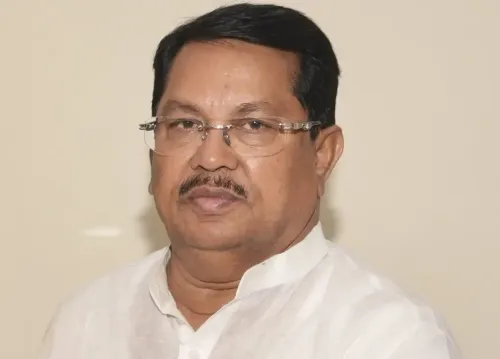
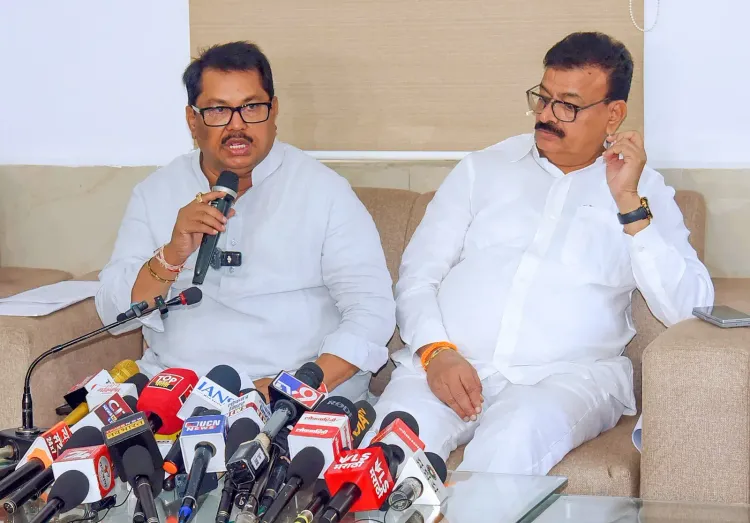
Congress leader Vijay Wadettiwar took on the Maharashtra government over the Ramtek Temple Bill on the final day of the Assembly session, demanding a joint committee review. His core charge: the Bill would hand elected politicians control over a historic religious site — and allow them to draw allowances from devotee donations.
Key Takeaways
Vijay Wadettiwar , Congress Legislative Party leader, opposed the Shri Ram Mandir Devasthan Trust Management, Ramtek Bill in the Maharashtra Legislative Assembly on 10 July .
He demanded the Bill be referred to a Joint Committee for comprehensive review before passage.
Wadettiwar opposed inclusion of MLAs, ministers, and mayors on the temple Trust Board, calling for devout, unblemished individuals instead.
He objected to a provision allowing Trust members to receive financial allowances from devotee donations.
He demanded strict disqualification of anyone with a criminal case, corruption charge, or record of moral turpitude from the Board.
The Bill was tabled on the final day of a three-week session, with the existing court-appointed committee reportedly functioning without irregularities.
Congress Legislative Party leader Vijay Wadettiwar on Friday, 10 July mounted a sharp challenge to the 'Shri Ram Mandir Devasthan Trust Management, Ramtek Bill' in the Maharashtra Legislative Assembly, demanding that the legislation be referred to a Joint Committee before passage. Wadettiwar argued that the Bill, tabled on the final day of a three-week Assembly session, was being rushed through without adequate scrutiny of its provisions.
Key Objections Raised
At the heart of Wadettiwar's opposition was the proposed inclusion of public representatives, MLAs, ministers, and mayors on the temple's Trust Board. He contended that elected officials, preoccupied with constituency duties, would be ill-suited to oversee the daily administration of a site of such religious and historical significance. He instead called for the Board to be constituted exclusively of devout, service-oriented individuals with unblemished records.
Wadettiwar also raised a pointed objection to a provision allowing Trust members to draw financial allowances from temple funds. 'Why should members receive allowances from the donations made by devotees? Serving at Lord Ram's temple should be driven by a pure sense of devotion and service,' he said.
Transparency and Eligibility Demands
The Congress leader insisted on strict disqualification criteria, arguing that anyone with a single criminal case, corruption charge, or record of moral turpitude must be barred from the Board. Drawing a parallel to reported financial irregularities at the Ram Temple in Ayodhya, he stressed that public donations must be handled with absolute accountability.
To underscore his position, Wadettiwar quoted former Prime Minister Atal Bihari Vajpayee: 'If a guard dog doesn't bark at thieves, it means it knows the thieves.' He noted that characterising critics of the Bill as 'hired people' or using derogatory labels did not diminish the legitimacy of the legislative concerns being raised.
Why the Timing Drew Scrutiny
Wadettiwar questioned the Maharashtra government's urgency in advancing the legislation on the session's closing day. He pointed out that the existing court-appointed committee managing the Ramtek Temple had been functioning without allegations of mismanagement or financial irregularities, raising the question of what necessitated a new Trust Board at this stage. 'What is the necessity of appointing a new Trust Board now? Bringing politics into temple management shakes the faith of the devotees,' he said.
Heritage and What Comes Next
Wadettiwar emphasised that the Ramtek Temple, representing thousands of years of tradition and heritage, deserved a governance framework centred on conservation, preservation, and reconstruction — entirely free of political interference. He urged the House to refer the Bill to a Joint Committee so that all relevant stakeholders could be consulted before the legislation is finalised. The government's response to the referral demand was not immediately available.
Point of View
Tabled at the last moment when scrutiny is hardest. Wadettiwar's objections — particularly on allowances for Trust members and the inclusion of elected officials — are substantive, not merely oppositional. The fact that the existing court-appointed committee drew no allegations of mismanagement makes the urgency harder to justify. If the Maharashtra government cannot explain what problem the new Trust Board solves, the demand for a joint committee review is not obstruction — it is due diligence.
NationPress
9 Oct 2026
Frequently Asked Questions
What is the Shri Ram Mandir Devasthan Trust Management, Ramtek Bill?
It is a Maharashtra state legislation proposing a new Trust Board to manage the Ramtek Temple, replacing the existing court-appointed committee. Congress leader Vijay Wadettiwar opposed several of its provisions in the Maharashtra Legislative Assembly on 10 July.
Why did Vijay Wadettiwar oppose the Ramtek Temple Bill?
Wadettiwar objected to provisions allowing elected officials such as MLAs, ministers, and mayors on the Trust Board, and to a clause permitting Trust members to draw financial allowances from devotee donations. He also raised concerns about the Bill being introduced on the final day of the Assembly session without adequate deliberation.
What did Wadettiwar demand regarding the Bill?
He demanded that the Bill be referred to a Joint Committee so that all relevant stakeholders — including religious communities and heritage experts — could be consulted before the legislation is enacted.
What eligibility criteria did Wadettiwar propose for Trust members?
He called for strict disqualification of anyone with a criminal case, corruption charge, or record of moral turpitude, insisting that Trust membership should be reserved for devout, service-oriented individuals with unblemished backgrounds.
Is the current management of the Ramtek Temple facing any issues?
According to Wadettiwar's statement in the Assembly, the existing court-appointed committee managing the Ramtek Temple has been functioning smoothly, with no reported allegations of mismanagement or financial irregularities.