How Did a Washed Plate Spark a Political Storm in Kerala?

Synopsis
Discover how a simple act of washing a plate during a CPI(M) campaign in Kerala spiraled into a major political debate. This incident exemplifies the intersection of everyday actions and political optics ahead of the Assembly elections.
Key Takeaways
Washing a plate turned into a political symbol ahead of elections.
Social media plays a crucial role in amplifying mundane actions.
Criticism reflects societal attitudes towards domestic work.
Political optics are increasingly intertwined with personal behavior.
The incident highlights the deep-rooted cultural values in Kerala.
Thiruvananthapuram, Jan 22 (NationPress) What started as a fleeting moment in the kitchen of a household in Kerala during a CPI(M) door-to-door initiative has escalated into a significant political and social media uproar, transforming a simple domestic act into a controversial political emblem in the lead-up to the Assembly elections.
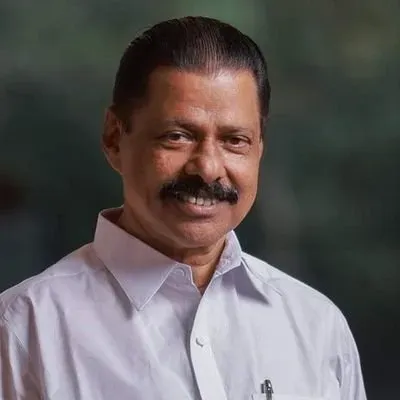
The event transpired when CPI(M) General Secretary M.A. Baby, while visiting a family in Thrissur as part of the Left Front's community outreach, entered the kitchen and began to wash his plate after partaking in rice and fish curry.
This action, recorded on video and shared extensively online, rapidly gained virality.
Within a short span, the footage faced severe social media backlash, as detractors dismissed it as a meticulously staged attempt to restore the image of the Pinarayi Vijayan government following the Left's defeat in the local body elections.
Interestingly, Baby stated that this is something he has consistently done since his youth.
Critics from the opposition and online commentators contended that the visual was crafted to project an image of humility and connect with everyday households at a time when the government is under mounting scrutiny.
Memes, sarcastic remarks, and parody posts flourished, framing the act as political theatrics rather than genuine spontaneity.
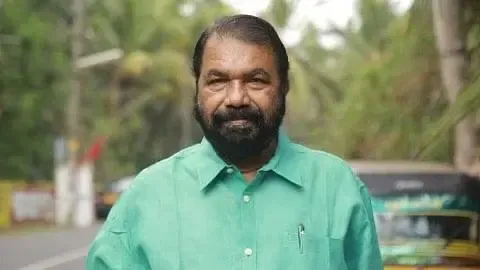
As the trolling intensified, General Education Minister V. Sivankutty came forward on Thursday to robustly defend the party leader.
In an elaborate social media message, Sivankutty contended that the criticism revealed a deeply rooted feudal attitude that disparages domestic work.
He clarified that washing dishes in someone else's home is neither humiliating nor unusual within the Communist ethos, but rather a reflection of principles emphasizing equality and the dignity of labor.
Quoting instances from Kerala's primary school syllabi, Sivankutty pointed out that children are educated from a young age that domestic responsibilities are devoid of gender or social rank.
Mocking such gestures, he remarked, demonstrates a lack of understanding of these fundamental teachings.
The minister urged critics to transcend political biases and acknowledge the broader cultural message being conveyed.
This incident underscores how, in election-sensitive Kerala, even the most trivial actions can be magnified and weaponized in the digital landscape.
As campaigns increasingly invade private domains such as homes and kitchens, the distinction between personal behavior and political messaging has sharply diminished.
In the current highly charged environment, a single washed plate has evolved into a representation of a larger discussion — concerning intent, optics, and the politics of daily life.
Point of View
It is imperative to highlight the complexities of political narratives. This incident showcases how mundane actions can be weaponized politically, reflecting broader societal attitudes towards humility and labor. It invites a discussion on how personal actions are interpreted in the context of political strategy, especially in the lead-up to elections. Our commitment remains to present balanced perspectives while empowering our audience with critical insights.
NationPress
21 Sept 2026
Frequently Asked Questions
What initiated the controversy surrounding the washed plate?
The controversy began when CPI(M) General Secretary M.A. Baby was filmed washing his plate after a meal during a campaign visit, leading to varied interpretations of the act's significance.
How did social media react to the video?
The video quickly went viral and faced significant trolling, with critics labeling it as a staged attempt to improve the government's image amid criticism.
What defense did General Education Minister V. Sivankutty provide?
Minister Sivankutty defended Baby's actions by emphasizing the values of equality and dignity of labor, asserting that there is no shame in participating in household chores.