Why has CM Stalin allied with the Congress after enduring MISA torture?
Synopsis
In a provocative statement, BJP spokesperson A.N.S. Prasad questions CM M.K. Stalin's alignment with the Congress party, recalling his imprisonment during the Emergency. As historical tensions resurface, the implications for Tamil Nadu's political landscape are significant. What does this alliance mean for the state's collective memory of past atrocities?
Key Takeaways
Historical Context: Understanding the legacy of MISA is crucial for contextualizing current political alliances.
Political Integrity: The implications of aligning with former adversaries raise questions about the motives of political leaders.
Collective Memory: The state's collective memory of past injustices plays a significant role in shaping political discourse.
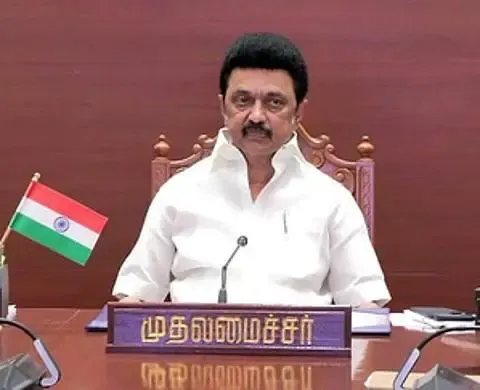
Chennai, Jan 3 (NationPress) A.N.S. Prasad, the spokesperson for the Tamil Nadu BJP, has posed a pointed political and ethical query that continues to resonate in the state after five decades: Why has Chief Minister M.K. Stalin, who was imprisoned during the Congress-led Emergency, opted to partner with the same party today?
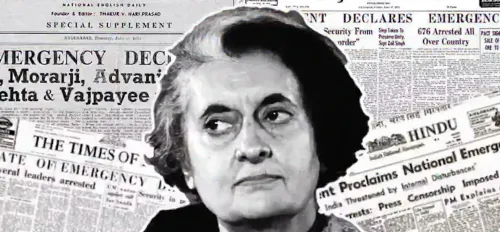
In 1975, Prime Minister Indira Gandhi proclaimed the Emergency, effectively suspending civil rights and quashing democratic opposition. On January 31, 1976, the elected DMK administration under Kalaignar M. Karunanidhi was dismissed, leading to the imposition of President's Rule in Tamil Nadu due to alleged corruption and lawlessness.
That very evening, police forces descended upon the Gopalapuram residence—not to apprehend Kalaignar, but his son, Stalin. Detained under the stringent Maintenance of Internal Security Act (MISA), Stalin endured severe custodial abuse.
More than 500 DMK leaders and supporters were arrested, tortured, and imprisoned across the state, including former Chennai Mayor Chittibabu, who valiantly protected Stalin from police brutality and ultimately lost his life as a consequence.
His sacrifice serves as a poignant reminder of the atrocities committed during the Emergency. For years, DMK leaders and “MISA martyrs” have publicly lambasted Congress every January 31, reminiscing about the betrayals and authoritarianism inflicted upon Tamil Nadu.
Prasad contends that this historical narrative is now being conveniently overlooked. During election periods, he asserts, the same DMK leadership that once decried Congress oppression abandons its principles, journeys to Delhi, and seeks political coalitions with the Congress.
This contradiction is further highlighted when viewed through the lens of Tamil cultural history. The landmark 1952 film 'Parasakthi', produced by Stalin’s grandfather, boldly critiqued Congress politics and anti-Tamil oppression.
Prasad argues that Tamil Nadu today warrants a new cinematic exploration—MISA Prisoner Stalin—to chronicle the harrowing tortures endured during the Emergency, the dismissal of the DMK government, Congress's betrayal of Tamil interests, and its involvement in the Sri Lankan Tamil crisis.
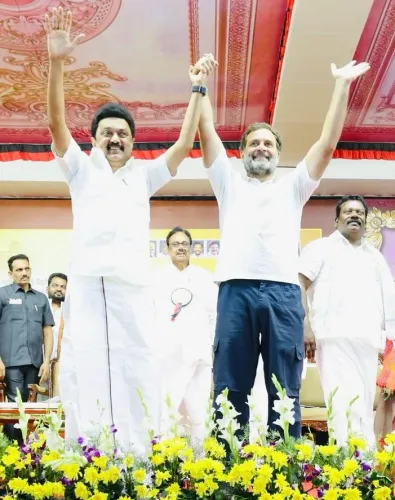
Such a narrative, he believes, must also interrogate how Stalin, while acknowledging these injustices, now openly embraces Rahul Gandhi as a political ally and “brother.”
Fifty years after MISA incarceration, Prasad asserts that this issue transcends mere history.
It centers on political integrity, collective memory, and the costs incurred when power supersedes principle in Tamil Nadu’s political landscape.
Point of View
The dialogue surrounding M.K. Stalin's political alignment raises essential questions about historical memory and integrity in governance. It’s crucial to analyze how past experiences shape contemporary political dynamics and what this means for the electorate in Tamil Nadu.
NationPress
10 Oct 2026
Frequently Asked Questions
What is the significance of MISA in Tamil Nadu's history?
MISA, or the Maintenance of Internal Security Act, was a controversial law during the Emergency in India that allowed for the detention of individuals without trial. Its implementation led to widespread abuses and remains a painful chapter in Tamil Nadu's political history.
Why is CM Stalin's alliance with Congress controversial?
CM Stalin's alliance with Congress is controversial because he was imprisoned during the Emergency, which was imposed by Congress. Many perceive this alliance as a betrayal of the struggles faced by those who opposed Congress's authoritarian rule.
How does this issue impact Tamil Nadu's political landscape?
This issue challenges the credibility of political alliances in Tamil Nadu, raising questions about the integrity of leaders who may forsake historical grievances for electoral gains.