Is WMO Increasing Investigations into GPS Spoofing Reported by Flights?
Synopsis
The WMO is set to enhance its investigation into GPS spoofing incidents affecting flights near New Delhi's IGI Airport. With recent advisories and procedures established by the DGCA, the aviation sector seeks to address these critical safety concerns amid rising cybersecurity threats. This article explores the implications for air travel and safety.
Key Takeaways
The WMO has been tasked with investigating GPS spoofing incidents affecting flights.
DGCA has issued advisories for managing GNSS interference.
GPS spoofing poses significant risks to aviation safety .
Cybersecurity threats are increasingly impacting the aviation sector.
Manual interventions by air traffic controllers are often required during spoofing events.
New Delhi, Dec 4 (NationPress) The Wireless Monitoring Organisation (WMO) has been tasked during a high-level meeting with enhancing efforts to uncover the origin of GPS spoofing incidents reported by flights. This directive comes in light of the approximate spoofing location details provided by the Directorate General of Civil Aviation (DGCA) and the Airports Authority of India (AAI), as disclosed to Parliament on Thursday.
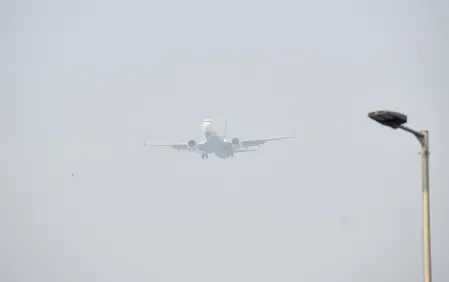
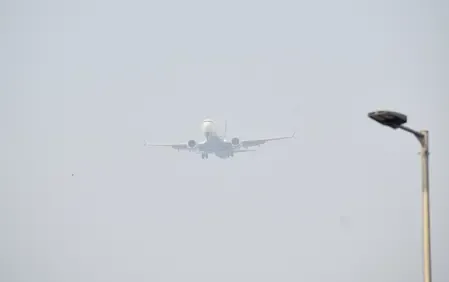
In a written statement to the Lok Sabha, Minister of State for Civil Aviation Murlidhar Mohol indicated that several flights encountered Global Positioning System (GPS) spoofing near New Delhi's Indira Gandhi International (IGI) Airport while executing GPS-based landing maneuvers as they approached Runway 10. Flight crews had to utilize contingency protocols when dealing with spoofed GPS approaches.
Mohol noted that on November 24, the DGCA released an advisory circular addressing Global Navigation Satellite System (GNSS) interference in the airspace. Additionally, on November 10, the DGCA established a Standard Operating Procedure (SoP) for the real-time reporting of GPS spoofing and GNSS interference events around IGI Airport.
The minister further elaborated that disturbances caused by GPS spoofing are a global issue, particularly prevalent in regions surrounding conflict zones.
The aviation sector is also facing significant cybersecurity threats, including ransomware and malware. The International Civil Aviation Organisation (ICAO) recognizes GNSS spoofing as a deliberate form of Radio Frequency Interference (RFI).
The ICAO GNSS Manual outlines a comprehensive mitigation strategy that includes preventive and reactive measures, ongoing threat monitoring, risk assessment, and the implementation of protective barriers. Furthermore, the International Air Traffic Association (IATA) has issued advisories to airlines for guidance on these matters.
Earlier, Union Minister of Civil Aviation Ram Mohan Naidu reiterated that contingency procedures were activated for flights affected by GPS spoofing as they approached Runway 10. He confirmed that operations at other runway ends, employing conventional navigational aids, remained unaffected.
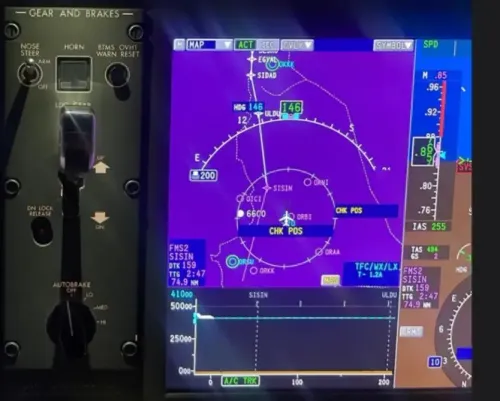
Last month, aircraft flying over Delhi reported experiencing severe GPS spoofing, leading to inaccurate navigation data such as incorrect aircraft positions and misleading terrain warnings. This situation poses a serious threat to flight safety, as highlighted by pilots and air traffic control officials.
Such incidents have been reported within a 60 nautical mile radius of Delhi, often necessitating manual interventions, where air traffic controllers had to provide direct navigation assistance to cockpit crews.
Point of View
It's crucial that the WMO's intensified investigation into GPS spoofing incidents is approached with diligence and transparency. Given the potential risks to aviation safety, a comprehensive understanding of the underlying causes is vital to restoring confidence in air travel. The nation must remain vigilant and proactive in addressing these emerging threats.
NationPress
3 Oct 2026
Frequently Asked Questions
What is GPS spoofing?
GPS spoofing is a technique used to deceive GPS receivers by sending false positioning signals, leading to incorrect navigation data.
Why is GPS spoofing a concern for aviation?
GPS spoofing can cause aircraft to receive incorrect position information, potentially leading to dangerous situations during flight operations.
What measures are being taken to address GPS spoofing?
The WMO is increasing its resources for investigation, while the DGCA has issued advisories and standard operating procedures to manage such incidents.
How often do GPS spoofing incidents occur?
GPS spoofing incidents have been reported with increasing frequency, particularly in areas near conflict zones.
What should pilots do if they suspect GPS spoofing?
Pilots are trained to follow contingency procedures and rely on alternative navigational aids if they suspect GPS spoofing.