Women's Reservation Bill Introduced in Lok Sabha: A Call to Action

Synopsis
The introduction of the Women's Reservation Bill in the Lok Sabha has sparked intense debate and controversy, highlighting the complexities of women's representation in India. Key political figures have raised concerns and objections, setting the stage for a significant parliamentary discussion.
Key Takeaways
The Women's Reservation Bill aims to reserve one-third of legislative seats for women.
Strong opposition from various political parties highlights the contentious nature of the bill.
Concerns over inclusivity and representation are central to the ongoing debate.
The bill's introduction is part of a broader legislative agenda in the Parliament.
Future discussions will be crucial in shaping the outcome of the bill and addressing objections raised.
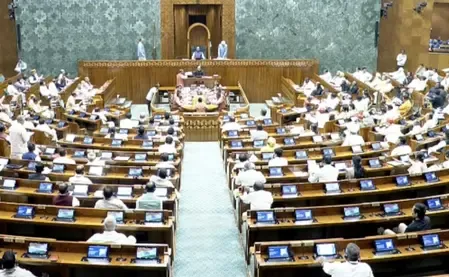
New Delhi, April 16 (NationPress) On Thursday, the Centre presented the Women's Reservation Bill in the Lok Sabha, a pivotal step in the current special Parliament session.
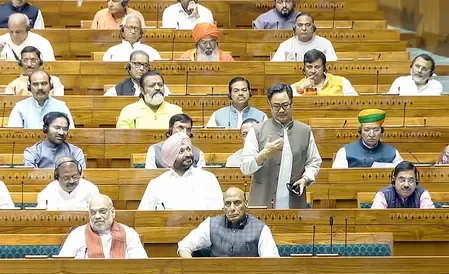
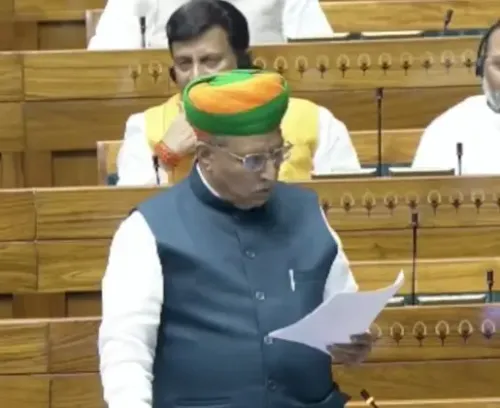
The debate commenced with Union Minister for Law and Justice, Arjun Ram Meghwal, who introduced the proposed Constitution (One Hundred and Thirty-First Amendment) Bill, 2026. He also brought forward the Delimitation Bill, 2026, laying the groundwork for discussions on a one-third reservation for women in legislative assemblies.
Furthermore, Union Home Minister Amit Shah presented the Union Territories Laws (Amendment) Bill, 2026, expanding the legislative agenda.
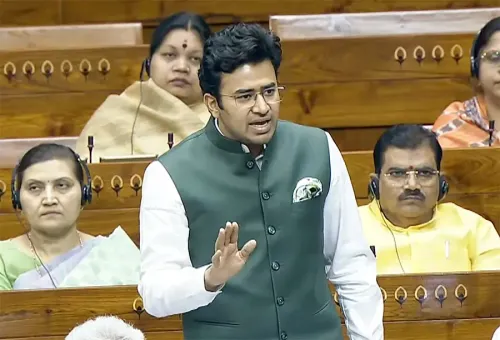
The introduction of these Bills ignited strong backlash from the Opposition. Congress MP K. C. Venugopal vehemently opposed all three legislations, formally articulating the party's objections in the House.
"The government aims to completely take over the Constitution," stated Venugopal. In response, Parliamentary Affairs Minister Kiren Rijiju and Home Minister Shah reiterated that the Bills had merely been introduced, with discussions yet to take place.
As Venugopal continued his lengthy address, Lok Sabha Speaker Om Birla intervened, assuring him that ample time would be allocated for debate.
MP Dharmendra Yadav of the Samajwadi Party raised concerns about the potential exclusion of Muslim women from the reservation system.
Rijiju promptly countered this assertion, labeling it as "unconstitutional".
SP leader Akhilesh Yadav voiced his party's support for women's reservation but questioned the government's delays in conducting the Census.
He commented, "They are stalling the census because, once conducted, we will demand a caste-based census, which they wish to avoid."
In response, Amit Shah clarified, "The Census process has already begun nationwide, and a caste-based census will follow. Presently, the House Listing is in progress; homes are not designated by caste. If SP has its way, they would classify homes by caste too."
The Home Minister also criticized Yadav's comments, asserting that the Constitution prohibits religious discrimination in reservation matters.
In turn, Yadav deemed Shah's remarks regarding the Muslim community "undemocratic". Shah sharply retorted, "We are not preventing the Samajwadi Party from nominating Muslim women for all their tickets."
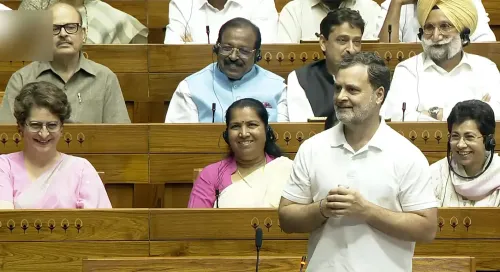
The Lok Sabha debate is poised to continue, with both the government and the Opposition gearing up to assert their positions on the proposed amendments and the overarching issue of enhancing women's representation in legislative assemblies.
Point of View
The introduction of the Women's Reservation Bill represents a crucial moment in India's legislative journey. While the government aims to enhance women's representation, the opposing views highlight significant concerns that warrant thorough discussion and scrutiny. Balancing representation and inclusivity remains key.
NationPress
16 Sept 2026
Frequently Asked Questions
What is the Women's Reservation Bill?
The Women's Reservation Bill aims to reserve one-third of seats in legislative bodies for women, promoting gender equality in political representation.
Who introduced the Women's Reservation Bill?
The bill was introduced by Union Minister for Law and Justice, Arjun Ram Meghwal, in the Lok Sabha.
What are the main objections raised against the bill?
Opposition parties, particularly the Congress, have raised concerns about the bill potentially hijacking the Constitution and excluding certain groups, including Muslim women.
What other bills were introduced alongside the Women's Reservation Bill?
The Delimitation Bill, 2026, and the Union Territories Laws (Amendment) Bill, 2026, were also introduced on the same day.
What is the significance of this legislative move?
The introduction of this bill is seen as a pivotal step towards enhancing women's representation in Indian politics, a topic of ongoing national debate.