Yogi Adityanath slams pre-2017 UP recruitment, alleges 'Munna Bhai' syndicate ran jobs
Synopsis
At a job-distribution event in Lucknow, CM Yogi Adityanath didn't just hand out appointment letters — he used the occasion to allege that pre-2017 UP recruitments were systematically rigged by a 'Munna Bhai' syndicate, where exam proxies collected certificates for others. The charge lands as a pointed political missile at the Samajwadi Party ahead of the state's electoral cycle.
Key Takeaways
CM Yogi Adityanath alleged on 11 November 2026 that a 'recruitment syndicate' controlled government appointments in Uttar Pradesh before 2017 .
He claimed 'Munna Bhais' appeared for exams while other candidates received the appointment letters.
1,146 junior assistants in the Revenue Department received appointment letters at the Lucknow event.
His government has distributed appointment letters to 9.5 lakh youth by 15 August ; a fresh target of one lakh more jobs is set for 26 January .
He alleged 1.5 lakh UP Police posts were vacant in 2017 and that the previous government disbanded 34 PAC companies .
CM Yogi also defended firecracker use during Diwali , saying his government placed no restrictions on celebrations.
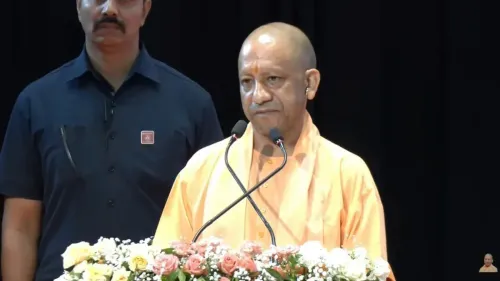
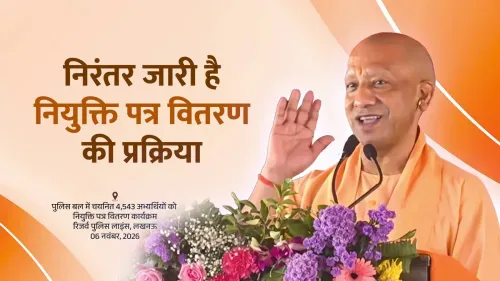
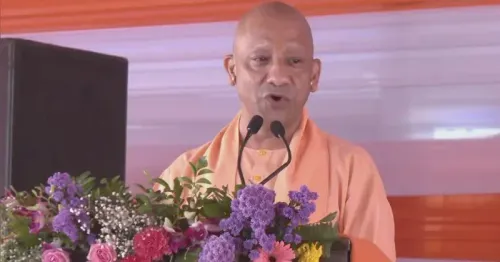
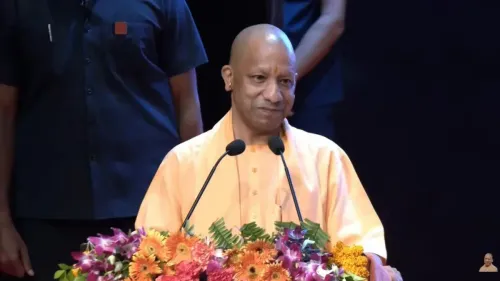
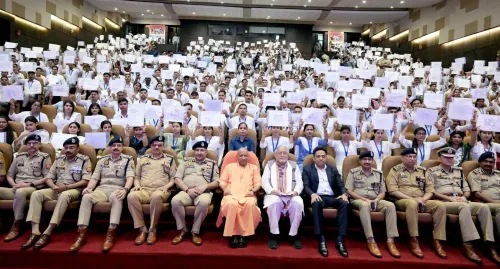
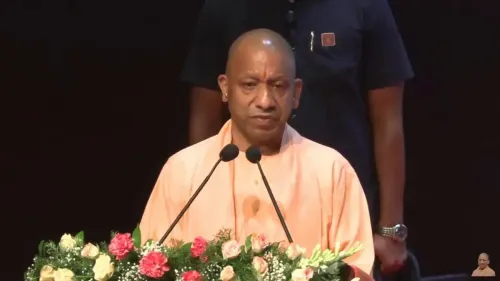
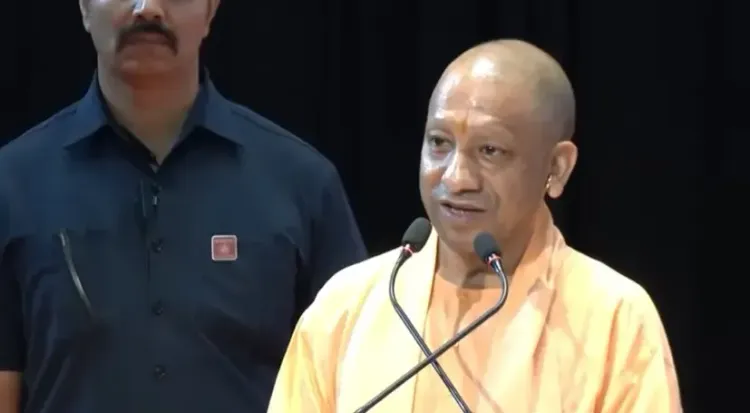
Uttar Pradesh Chief Minister Yogi Adityanath on Wednesday, 11 November 2026, launched a sharp attack on the state's pre-2017 recruitment system, alleging that a powerful syndicate controlled government appointments and that 'Munna Bhais' — proxy candidates — routinely appeared for examinations while others pocketed the appointment letters. The remarks were made at an event in Lucknow where he distributed appointment letters to 1,146 newly-selected junior assistants in the Revenue Department.
The 'Syndicate' Allegation
Speaking at the event, CM Yogi claimed that before 2017, all recruitment commissions and boards in Uttar Pradesh were effectively held hostage by what he described as a 'recruitment syndicate'. He alleged that no appointment was possible without recommendations or financial dealings.
'There used to be discrimination in the recruitment process. As Deputy Chief Minister Brajesh Pathak mentioned earlier, no one could get a job without recommendations or financial dealings. This kind of lawlessness existed in Uttar Pradesh before 2017. All the commissions and boards responsible for recruitment were held hostage by a syndicate,' CM Yogi said.
Drawing from the Bollywood film Munna Bhai M.B.B.S., he alleged that one person would sit for an examination while someone else entirely would receive the appointment letter — a practice he claimed was widespread before his government came to power. 'Before 2017, similar Munna Bhais were operating in the government and the recruitment process. One person would appear for the examination, while someone else would receive the appointment letter. Several such appointments took place before 2017,' he alleged.
Employment Record and New Targets
CM Yogi highlighted his government's hiring record, stating that appointment letters had been distributed to 9.5 lakh young people for government jobs and services by 15 August. He added that he had subsequently set a fresh target of providing government jobs to one lakh more youth within six months, with 26 January as the deadline.
The 1,146 appointments in the Revenue Department distributed on Wednesday were described by the state government as the result of a transparent selection process — a contrast the Chief Minister drew explicitly against what he characterised as the opaque practices of previous administrations.
Targeting the Samajwadi Party
Taking direct aim at the Opposition — particularly the Samajwadi Party (SP) — CM Yogi referred to recent statements questioning his government's pace of job distribution. He dismissively labelled the SP leadership the head of the 'Saifai Syndicate', a reference to Saifai, the village associated with the Yadav political family. 'At that time, a statement came from the head of the Saifai Syndicate, questioning when the appointment letters would be distributed. I said that if they knew how to count, they should start counting,' he said.
In a pointed — and sarcastic — aside, the Chief Minister suggested that Opposition leaders were likely unaware of the job distributions because they were asleep during the ceremonies, adding a jibe about Diwali gambling habits echoing the Mahabharat. 'Perhaps they do not know because whenever we distribute appointment letters, it is usually their sleeping time...If they gamble throughout the night, they would naturally wake up late, perhaps at noon, 2 p.m. or even 4 p.m.,' he claimed.
Police Vacancies and PAC Disbandment
The Chief Minister also alleged that when the Bharatiya Janata Party (BJP) assumed office in 2017, approximately 1.5 lakh posts in the Uttar Pradesh Police were vacant. He further claimed that the previous Samajwadi Party government had disbanded 34 companies of the Uttar Pradesh Provincial Armed Constabulary (PAC), a force widely recognised for its role in riot control.
On Diwali, Ayodhya, and Pollution
CM Yogi also defended public celebrations during Diwali, including the bursting of firecrackers, pushing back against criticism over pollution. He referenced the Deepotsav celebrations in Ayodhya and argued that those who raised pollution concerns over fireworks rarely questioned the alleged 'corruption' that had polluted public institutions. 'Nobody questions those who polluted the entire system through their corrupt practices. But if the public celebrates Diwali with firecrackers for just one day, suddenly it becomes a major pollution issue,' he said, adding that his government had placed no restrictions on firecrackers.
The remarks are consistent with CM Yogi's established pattern of using public appointment ceremonies to draw a sharp contrast between his administration and the state's pre-2017 governance record. With assembly elections still some time away, the political messaging at such events has grown increasingly pointed.
Point of View
Including paper-leak scandals in UP competitive exams that drew national attention. Accountability for the past is a legitimate political argument; credibility demands equal candour about the present.
NationPress
11 Nov 2026
Frequently Asked Questions
What did CM Yogi Adityanath allege about pre-2017 UP government recruitment?
CM Yogi Adityanath alleged that before 2017, a 'recruitment syndicate' controlled all government job selections in Uttar Pradesh, with candidates getting appointments only through recommendations or financial dealings. He further claimed that 'Munna Bhais' — proxy individuals — appeared for examinations while others received the actual appointment letters.
What is the 'Munna Bhai' reference in Yogi's speech?
CM Yogi borrowed the term from the Bollywood film Munna Bhai M.B.B.S., where the protagonist uses a proxy to sit a medical entrance exam. He used it to allege that before 2017, a similar practice operated in UP government recruitments, with one person sitting the exam and another collecting the job offer.
How many appointment letters has the Yogi government distributed so far?
According to CM Yogi, his government has distributed appointment letters to 9.5 lakh young people for government jobs and services as of 15 August. He has set a fresh target of providing jobs to one more lakh youth by 26 January.
Who did CM Yogi target with the 'Saifai Syndicate' remark?
The 'Saifai Syndicate' remark was aimed at the Samajwadi Party leadership — 'Saifai' being the village in UP associated with the Yadav political family. CM Yogi used the phrase to mock SP criticism of his government's pace of job distribution.
What did CM Yogi say about the UP Police and PAC?
CM Yogi alleged that when his government took office in 2017, around 1.5 lakh posts in the Uttar Pradesh Police were vacant. He also claimed the previous Samajwadi Party government had disbanded 34 companies of the UP Provincial Armed Constabulary (PAC), the force tasked with riot control.