Is Bangladesh's Yunus Administration Undermining the Legacy of 1971?
Synopsis
As Bangladesh's interim government under Muhammad Yunus faces scrutiny for potentially undermining the nation’s moral legacy established during its tumultuous history, the implications are profound. Is this leadership putting Bangladesh's foundational values at risk on the international stage? Dive into the critical analysis of this situation.
Key Takeaways
Bangladesh's interim government faces criticism for potentially undermining its historical legacy.
The ICTB is seen as pivotal yet increasingly controversial.
Political tensions are rising, affecting international relations.
The case of MP Tulip Siddiq raises serious diplomatic questions.
Britain's role is crucial in maintaining justice in Bangladesh.
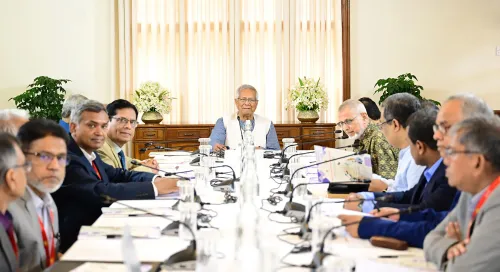
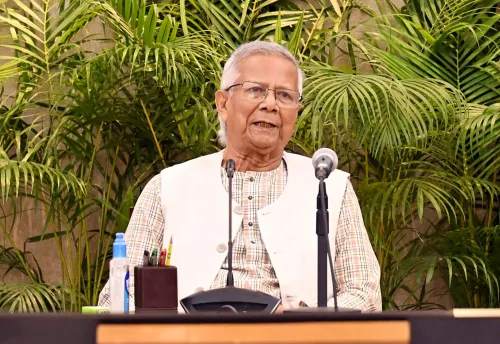
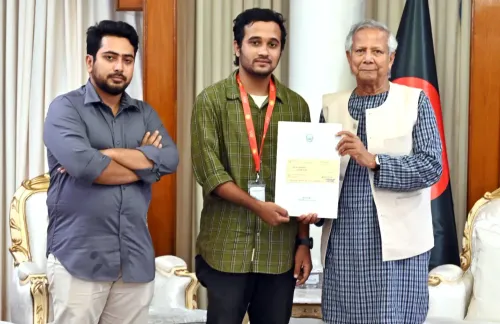
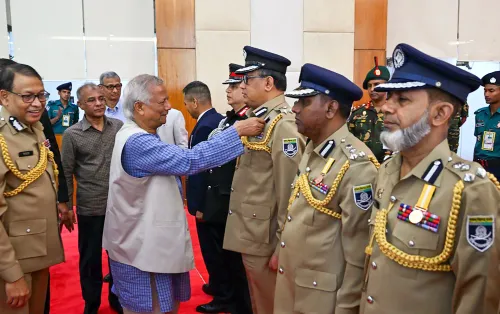
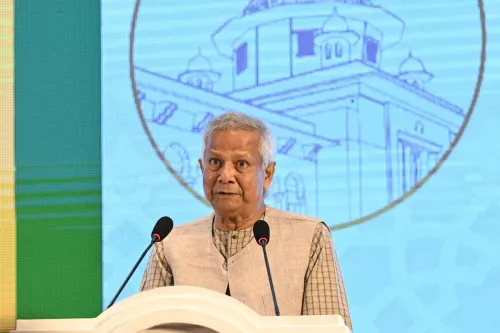
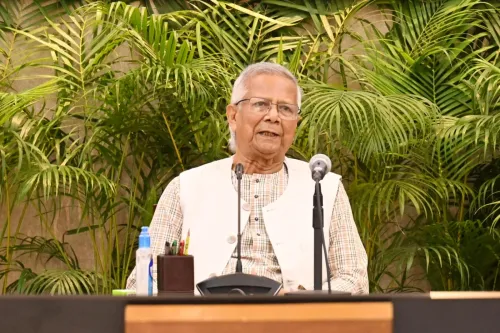
London, Dec 17 (NationPress) Bangladesh's interim government, led by Muhammad Yunus, is not only failing to foster stability and rebuild trust within the nation but is also at risk of projecting its internal conflicts onto the international stage. This could threaten the moral foundation established through the country’s harrowing history of genocide and its ongoing pursuit of justice, according to a report published on Wednesday.
The report further emphasizes that Britain, due to its legal history, diplomatic weight, and historical connections, must remain cautious about whom it legitimizes, prioritizing justice and truth over political convenience.
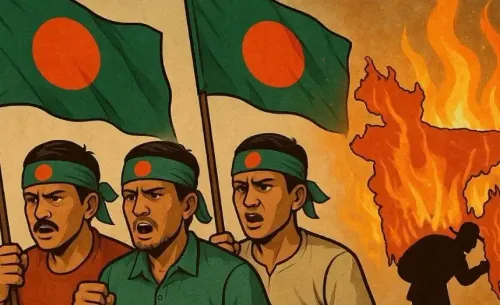
“Bangladesh is far from an ordinary postcolonial state, and Britain cannot afford to act as a neutral spectator in its evolving narrative. The nation was born from bloodshed. In 1971, as many as three million individuals lost their lives, millions more were displaced as refugees, and over 400,000 women were subjected to systematic rape during the Liberation War. This genocide — perpetrated by the Pakistani military with the assistance of local collaborators and radical Islamist militias from the Jamaat-e-Islami movement — is not merely a historical detail. It forms the moral backbone of today's Bangladesh,” stated Chris Blackburn, Communications Director at the European Bangladesh Forum, in an article for the UK-based ‘Comment Central’.
“Under the leadership of Muhammad Yunus, there is a growing concern that this vital legacy is being compromised. Not through blatant denial, but via selective justice, historical manipulation, and the subtle rehabilitation of previously condemned figures and narratives. The clarity surrounding 1971 is becoming obscured, along with the state’s moral compass,” he continued.
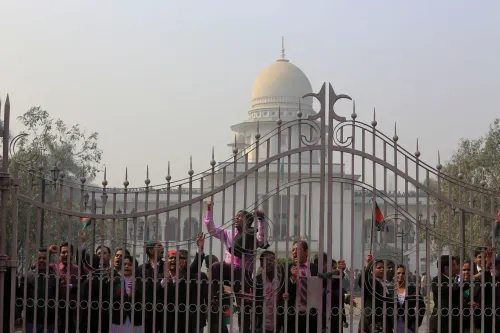
Blackburn pointed out that the International Crimes Tribunal of Bangladesh (ICTB) is central to these rising anxieties. Initially formed to address the atrocities of the 1971 Liberation War, the tribunal once symbolized the nation’s moral accountability, but this significance is now under threat.
“The ICTB faces increasing scrutiny from observers who argue it is being influenced by legal networks sympathetic to radical Islamists. This shift risks reopening unresolved debates regarding the moral reckoning of the Liberation War. What was intended to uphold historical accountability is now turning into a tool for political intimidation and a form of historical vandalism,” he noted.
Blackburn also emphasized the alarming example of targeting sitting British MP Tulip Siddiq. He described the use of Bangladeshi state resources against an elected UK legislator as “extraordinary.”
This case raises significant questions surrounding proportionality, due process, and political intent, echoing concerns highlighted by the International Bar Association’s Human Rights Institute (IBAHRI).
“This is not merely a legal issue; it represents a cross-border extension of domestic political strife and a violation of diplomatic norms. It also reveals a deeper contradiction: why is an unelected interim administration, supposedly focused on stabilization and reform, dedicating political resources to pursue a foreign parliamentarian?” he questioned.
Point of View
It is imperative to recognize the complexities surrounding Bangladesh's current political landscape. While the Yunus administration aims to foster stability, the potential erosion of historical truths cannot be ignored. The nation must navigate these challenges with a commitment to justice and accountability, ensuring that the lessons of 1971 are honored.
NationPress
7 Oct 2026
Frequently Asked Questions
What is the significance of the 1971 Liberation War in Bangladesh?
The 1971 Liberation War was a pivotal event in Bangladesh's history, resulting in the country's independence from Pakistan. It is marked by the loss of millions of lives and widespread atrocities, forming the moral foundation of the nation.
Who is Muhammad Yunus?
Muhammad Yunus is a prominent Bangladeshi social entrepreneur and economist, known for founding the Grameen Bank and pioneering the concept of microcredit.
What are the concerns surrounding the International Crimes Tribunal?
The ICTB was established to address war crimes from the 1971 Liberation War. However, it faces criticism for perceived biases and its potential use as a tool for political intimidation.
Why is Tulip Siddiq's case significant?
The case of MP Tulip Siddiq highlights international political tensions and raises questions about the appropriateness of state actions against foreign officials.
What is the role of the UK in this context?
The UK has historical ties with Bangladesh and a responsibility to uphold justice and truth, particularly in light of ongoing political developments in the country.