Are Zelensky and Trump on the Brink of a Deal to Conclude the Ukraine Conflict?
Synopsis
Discover the latest developments as Ukraine's President Zelensky reveals a peace plan nearly finalized and US President Trump's optimistic remarks on nearing a resolution to the four-year conflict. The stakes are high as both leaders engage in critical discussions amidst ongoing military tensions, highlighting the fragile path to lasting peace.
Key Takeaways
Zelensky's peace plan is almost finalized.
Trump expresses optimism about negotiations.
Military tensions persist, complicating the peace process.
Security guarantees are crucial for a lasting agreement.
The future of the Donbas region remains a significant hurdle.
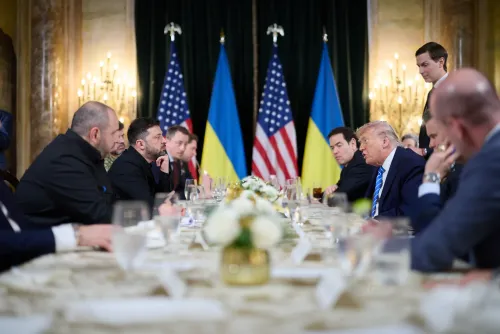
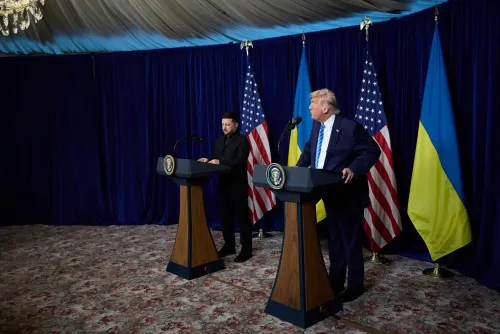
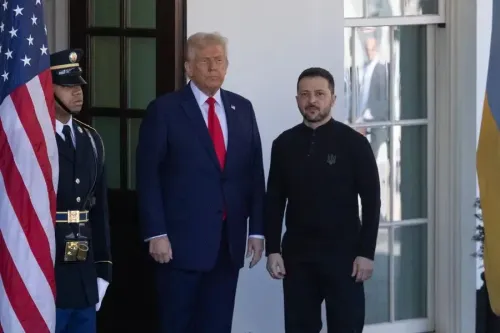
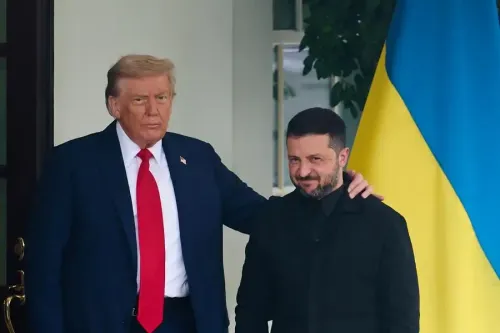
New York, Dec 29 (NationPress) Ukraine’s President Volodymyr Zelensky announced that a peace plan aimed at concluding the ongoing war is “90 per cent” ready. Meanwhile, US President Donald Trump expressed optimism, stating that they are “getting a lot closer, maybe very close” after their discussions aimed at resolving the four-year-long conflict.
This meeting occurred on Sunday amid significant air strikes by Russia targeting Ukraine and reciprocated attacks on Moscow’s oil refinery, highlighting the delicate nature of Trump’s peace initiative.
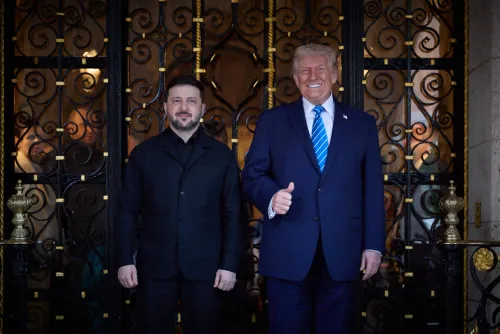
Before their meeting at his Mar-a-Lago estate in Florida, Trump urged caution regarding the peace prospects that have previously eluded his diplomatic efforts, noting, “It’s possible it doesn’t happen (and) in a few weeks, we’ll know one way or another”.
Both sides agreed to continue negotiations.
Zelensky shared on X that US-Ukraine teams would convene “as early as next week to finalize all discussed matters,” while Trump plans to meet with Ukrainian and European leaders in Washington next month.
A spokesperson for the Kremlin, Yury Ushakov, indicated that the US would maintain its focus through two working groups—one addressing security issues and the other economic matters—with finalized terms expected “most likely in early January.”
Zelensky, who presented a 20-point peace proposal, noted on X after their discussion, “We addressed all facets of the peace framework and made substantial progress. We also covered the sequence of forthcoming actions.”
“We concur that security guarantees are essential for achieving lasting peace, and our teams will persist in working on every aspect,” he stated.
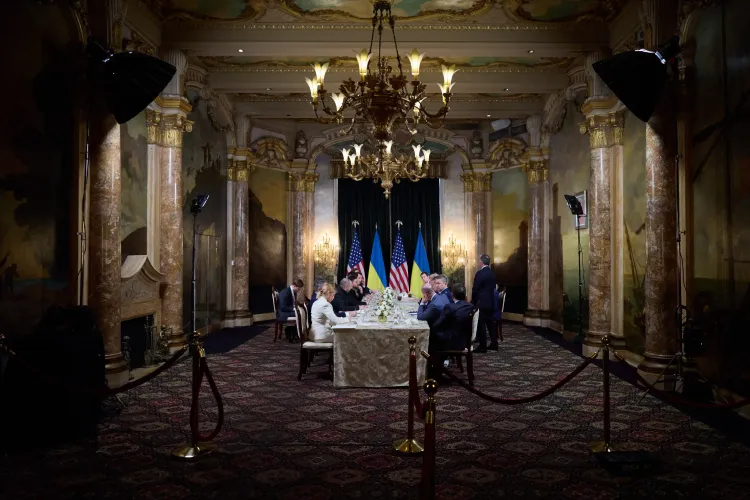
During their meeting, Trump and Zelensky also held a conference call with European leaders, including European Commission President Ursula von der Leyen and UK Prime Minister Keir Starmer.
Ukraine is receiving robust support from Western European nations and Canada, who are US allies, thereby exerting pressure on Trump.
Von der Leyen remarked on social media platform Bluesky, “There was good progress, which we welcomed.”
Echoing Zelensky, she stressed that “ironclad security guarantees” are vital for a peace agreement.
This would entail military support from Western European nations, with Ukraine desiring the US to back it through a bilateral security arrangement.
Underpinning these guarantees would be Ukraine’s potential membership in the European Union.
Trump supported the concept of a guarantee, albeit without specifics, stating, “There will be a security agreement. It will be a strong agreement. The European nations are very much involved in that.”
Prior to the meeting with Zelensky, Trump spent over an hour in discussion with Russia’s President Vladimir Putin, who initiated the war.
“He wants to see it happen,” Trump remarked regarding Putin’s stance on a peace deal, adding, “I believe him.”
Ushakov mentioned that Putin informed Trump of the necessity for “a bold and responsible political decision from Kiev” that aligns with Russia’s previously stated positions during discussions with the US.
He also noted that Trump conveyed to Putin that “the Ukrainian crisis has been his most formidable foreign policy challenge.”
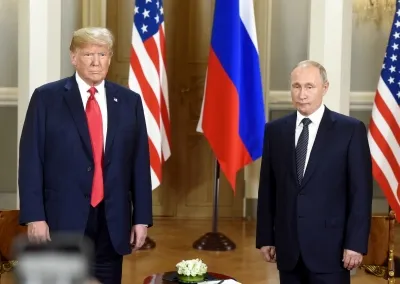
During his election campaign last year, Trump frequently claimed he could resolve the Ukraine War within 24 hours of taking office. However, 11 months later, despite a summit with Putin and numerous meetings with Zelensky, the war continues.
After criticizing Zelensky and seemingly leaning towards Russia, Trump hardened his approach on Moscow, imposing sanctions on Russian oil companies, which serve as Kremlin financial lifelines, following the unsuccessful summit with Putin in Anchorage in August.
Apart from security guarantees for Ukraine that stop short of NATO membership, the future of Ukraine’s Donbas region, partially occupied by Russia, poses a significant hurdle to reaching an agreement.
Russia seeks total control over the region, including areas it has yet to capture.
While Trump had once suggested conceding all of it to Russia, Zelensky countered with a proposal to establish it as a demilitarized zone.
Putin appears resolute in acquiring all of Donbas through military means.
Ushakov cautioned, “Given the evolving situation on the front lines, it would be in the Ukrainian regime’s interest to make such a decision regarding Donbass without further delay.”
Point of View
We observe the evolving dynamics between Zelensky and Trump. The ongoing discussions signify a potential shift towards peace, yet the complexities of international relations and military engagements necessitate cautious optimism.
NationPress
26 Sept 2026
Frequently Asked Questions
What is the current status of the peace plan between Ukraine and the US?
The peace plan is reportedly '90 per cent' ready, with further negotiations scheduled to finalize details.
What role does the US play in the Ukraine conflict?
The US, under President Trump, is facilitating discussions and proposing security guarantees to support Ukraine.
How has the international community reacted to the peace talks?
European leaders have expressed cautious optimism and emphasized the importance of security guarantees for a successful agreement.
What challenges remain in reaching a peace agreement?
Key challenges include military actions by Russia, the status of the Donbas region, and ensuring robust security guarantees.
What are the implications of these talks for global stability?
Successful negotiations could lead to a significant reduction in military tensions, positively impacting global stability.