Agriculture NPA ratio may hit 5.6% by FY28 on weak monsoon: CareEdge
Synopsis
India's farm loan stress is set to worsen significantly by FY28, with agriculture GNPAs potentially hitting ₹2 lakh crore — driven by the worst monsoon in over a decade. With 68% of bank farm credit concentrated in rainfall-deficient states, the CareEdge report signals that the real damage to bank books is still ahead, not behind.
Key Takeaways
Agriculture GNPA ratio at SCBs stood at 5.11 per cent in June 2026 and could rise to 5.3–5.6 per cent by March 2028 , per CareEdge Ratings .
Agriculture bad loans in absolute terms may reach ₹1.9 lakh crore to ₹2 lakh crore by March 2028 , up from ₹1.41 lakh crore in June 2026.
The 2026 southwest monsoon ended at 87 per cent of the long-period average — the weakest since 2015 .
Around 68 per cent of SCB farm credit is in states with rainfall 20 per cent or more below normal , up from 48 per cent in 2015.
Public sector banks (PSBs) are expected to bear the bulk of agriculture NPA stress.
Including restructured loans, total stressed agriculture advances could reach 6–6.3 per cent of agriculture advances by FY28.
India's agriculture gross non-performing assets (GNPAs) at scheduled commercial banks (SCBs) could rise to between 5.3 per cent and 5.6 per cent by March 2028, driven by the impact of a weak 2026 southwest monsoon on farm loan repayments, according to a report released on Thursday, 22 October 2026 by CareEdge Ratings. Public sector banks (PSBs) are likely to absorb the bulk of this stress, the report warned.
Where Agriculture Credit Stress Stands Today
The agriculture GNPA ratio stood at 5.11 per cent as of June 2026, according to CareEdge. Despite constituting just 12.9 per cent of total SCB advances, agriculture accounts for a disproportionate 37.5 per cent of all SCB GNPAs — a structural mismatch that underscores the sector's persistent vulnerability to weather shocks.
In absolute terms, agriculture GNPAs were at ₹1.41 lakh crore in June 2026. CareEdge projects this could climb to ₹1.47 lakh crore to ₹1.53 lakh crore by March 2027, and further to ₹1.9 lakh crore to ₹2 lakh crore by March 2028.
The Monsoon Factor: 2026's Rainfall Deficit
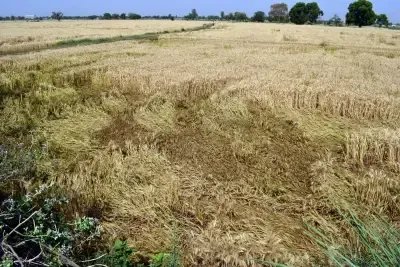
The 2026 southwest monsoon ended at just 87 per cent of the long-period average — the weakest monsoon season since 2015. Critically, the rainfall shortfall was concentrated in states that account for the largest share of banks' farm credit. According to CareEdge, approximately 68 per cent of SCB agriculture credit is extended in states where rainfall was 20 per cent or more below normal, up sharply from 48 per cent during the 2015 drought.
This geographic concentration means the stress is not evenly distributed — it is hitting precisely where farm loan exposure is heaviest, amplifying the potential impact on bank books.
Projected Trajectory: Ease First, Then Rise
Saurabh Bhalerao, Director at CareEdge Ratings, said the GNPA ratio is expected to ease in the near term before worsening. 'We expect the agriculture GNPA ratio to keep easing until early 2027, helped by strong credit growth and write-offs, and then to rise through FY28 as some kharif crop loans affected by the weak monsoon fall overdue,' he said.
The ratio is forecast to ease to 4.6 per cent to 4.8 per cent by March 2027, before rebounding above 5.3 per cent in FY28 as monsoon-hit kharif crop loans are classified as non-performing assets. The weak monsoon alone could add 70 to 80 basis points to the agriculture GNPA ratio by March 2028.
Stressed Assets Could Be Even Higher
Beyond the headline GNPA number, CareEdge flagged a broader stress metric. When farm loans restructured in drought-affected areas — which retain a 'standard asset' classification under current norms — are included, total stressed agriculture advances could reach 6 per cent to 6.3 per cent of total agriculture advances by FY28. This hidden stress in restructured loans represents a risk that official NPA figures alone may not capture.
PSBs Likely to Bear the Brunt
Public sector banks are expected to bear the majority of the emerging agriculture NPA stress, given their higher share of priority-sector farm lending relative to private banks. The CareEdge report did not specify individual bank exposures but noted that PSBs' disproportionate weight in rural and agricultural credit makes them the primary channel through which monsoon-related loan delinquencies flow into the banking system.
With the full impact of the 2026 monsoon shortfall expected to materialise in bank books primarily during FY28, the sector's credit health will be closely watched in the next two annual reporting cycles.
Point of View
Not better. What is particularly alarming is the geographic concentration — 68% of farm credit sitting in states with severe rainfall deficits, versus 48% in 2015, means the system is more exposed to weather shocks now than it was the last time a comparable drought hit. The temporary easing forecast for early 2027 could create false comfort in quarterly results, masking the FY28 reckoning that is already baked in.
NationPress
22 Oct 2026
Frequently Asked Questions
What is the agriculture GNPA ratio and where does it stand now?
The agriculture gross non-performing assets (GNPA) ratio measures the share of farm loans at scheduled commercial banks that have turned bad. It stood at 5.11 per cent as of June 2026, with agriculture accounting for 37.5 per cent of all SCB bad loans despite being just 12.9 per cent of total advances, according to CareEdge Ratings.
Why is the agriculture NPA ratio expected to rise by FY28?
The 2026 southwest monsoon ended at 87 per cent of the long-period average — the weakest since 2015 — leaving kharif crop loans in drought-affected areas at risk of default. CareEdge expects these loans to be classified as non-performing assets through FY28, adding 70 to 80 basis points to the GNPA ratio.
Which banks are most at risk from rising agriculture NPAs?
Public sector banks (PSBs) are expected to bear the majority of the stress, given their higher share of priority-sector farm lending relative to private banks. The CareEdge report noted PSBs are the primary channel through which monsoon-related farm loan delinquencies enter the banking system.
What will total stressed agriculture advances look like by FY28?
Beyond headline GNPAs, stressed agriculture advances — including restructured farm loans in drought-hit areas classified as standard assets — could reach 6 per cent to 6.3 per cent of total agriculture advances by March 2028, according to CareEdge Ratings.
Will agriculture NPAs ease before rising again?
Yes, CareEdge forecasts the agriculture GNPA ratio will ease to 4.6–4.8 per cent by March 2027, supported by strong credit growth and write-offs. The ratio is then projected to rise to 5.3–5.6 per cent by March 2028 as monsoon-hit kharif loans fall overdue.