Gujarat CM Bhupendra Patel Pushes Renewable Energy Self-Reliance
Synopsis
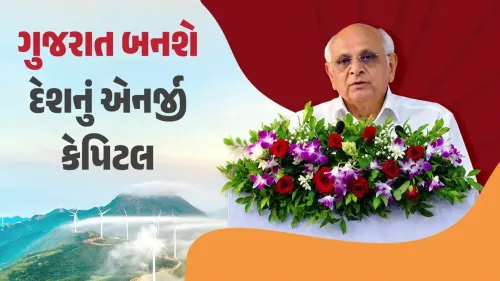
The Chief Minister's Office of Gujarat on October 22, 2026 spotlighted CM Bhupendra Patel's drive for energy self-reliance through renewable initiatives, reinforcing the state's long-standing leadership in India's clean-power transition under the 'Sada Agraesar Gujarat' banner.
Key Takeaways
The Chief Minister's Office of Gujarat posted on October 22, 2026 under the theme Sada Agraesar Gujarat , highlighting CM Bhupendra Patel's renewable energy drive.
The post promotes Akshai Urja (renewable energy) and frames clean power as central to Gujarat's goal of energy self-reliance .
Gujarat's renewable policy lineage dates to the Gujarat Solar Power Policy 2009 and Gujarat Wind Power Policy 2013 , among India's earliest such state frameworks.
The state consistently ranks among India's top renewable-capacity states , aligned with the national 500 GW non-fossil fuel target by 2030 .
Central schemes like PM-KUSUM for solar agricultural pumps have seen strong adoption in Gujarat, linking farm welfare with clean energy.
The CMO's video-backed communication series positions Gujarat's governance as transparent and citizen-facing, reinforcing the state's identity as a policy frontrunner.
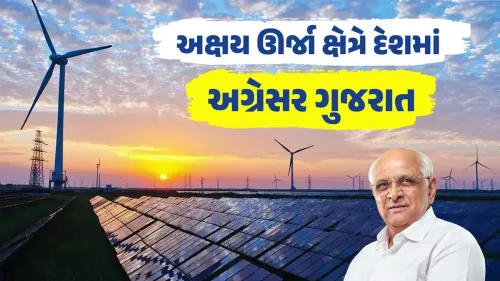
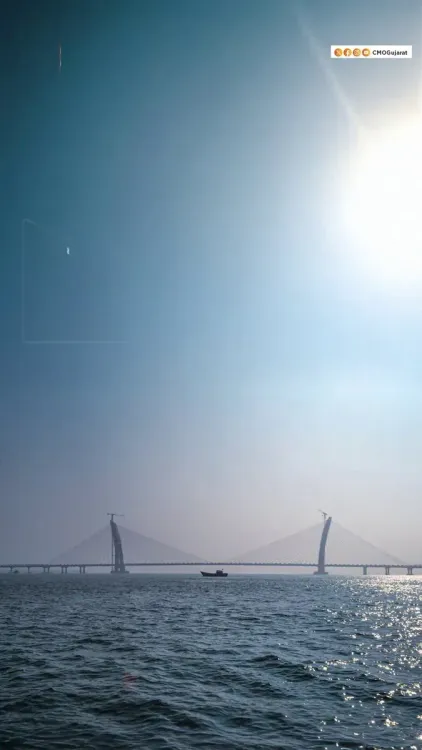
A state that once lit the way for India's solar ambitions is doubling down. On Thursday, October 22, 2026, the Chief Minister's Office of Gujarat posted a Gujarati-language update under the banner Sada Agraesar Gujarat ('Gujarat, always ahead'), spotlighting Chief Minister Bhupendra Patel's push for energy self-reliance through renewable initiatives — framing the state's clean-power drive as both a mission and a movement.
A slogan with deep policy roots
The post, hashtagged #અગ્રેસર_ગુજરાત ('Agressor Gujarat', meaning 'Gujarat the frontrunner'), invites citizens to learn about the state's efforts promoting Akshai Urja — renewable energy — under CM Patel's leadership. The framing of 'energy self-reliance' echoes the national Aatmanirbhar Bharat vocabulary but roots it specifically in Gujarat's own policy heritage.
That heritage is substantial. Gujarat's Solar Power Policy of 2009 was among India's earliest state-level frameworks designed to attract solar investment at scale. Four years later, the Gujarat Wind Power Policy of 2013 broadened the state's clean-energy footprint by drawing in private-sector wind developers. Together, these two pillars gave Gujarat a head start that few other states could match.
Why Gujarat's renewable lead still matters in 2026
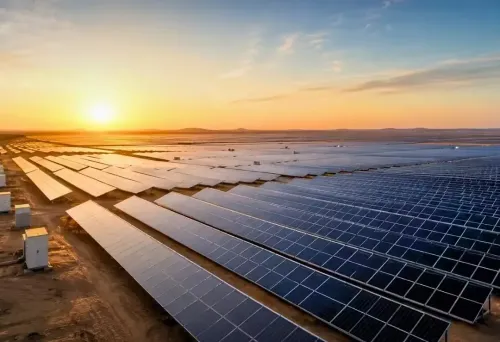
India has set a target of 500 GW of non-fossil fuel power capacity by 2030 — an ambition that demands every large state pull hard. Gujarat, with its sun-soaked Rann of Kutch flatlands and long Arabian Sea coastline channelling strong winds, holds natural geography as an ally. The state has consistently ranked among India's top renewable-capacity states, and programmes like PM-KUSUM — the central scheme for solar-powered agricultural pumps — have found strong uptake here, directly reducing the power burden on the grid while benefiting farmers.
CM Bhupendra Patel, who took charge in September 2021, has continued and expanded this trajectory, positioning energy self-sufficiency as a signature governance theme. The state's combination of policy incentives, dedicated land allocation for solar and wind parks, and integration with central schemes has created a replicable model that other states frequently benchmark.
The communication push behind the policy
The CMO's use of a dedicated video alongside the post signals a deliberate public-information drive — making policy progress visible and accessible to ordinary Gujaratis, not just investors or officials. The recurring 'Sada Agraesar Gujarat' series serves as a narrative thread connecting individual initiatives into a broader story of state-led progress. It is governance as storytelling: keep the citizen informed, keep the momentum public.
Specifics of the newest initiatives flagged in the video were not itemised in the post text itself, but the pattern is clear: Gujarat is not coasting on a decade-old reputation. It is actively renewing the argument for why it belongs at the front of India's energy transition.
For a state that helped write India's renewable rulebook, the question now is not whether Gujarat can lead — it is how far ahead it intends to stay.
Point of View
The CMO is threading a national ambition through a local pride narrative. This kind of governance-as-storytelling serves a dual purpose: it builds public legitimacy for capital-intensive infrastructure projects, and it signals to renewable energy investors that policy continuity is reliable. The broader pattern suggests Gujarat sees clean-energy leadership not just as an environmental commitment but as a competitive economic advantage in attracting industrial and clean-tech investment.
NationPress
22 Oct 2026
Frequently Asked Questions
What is Gujarat's renewable energy policy in 2026?
Gujarat continues to pursue energy self-reliance through a combination of solar and wind policies, land allocation for clean-power parks, and integration with central schemes like PM-KUSUM. The state's framework builds on the Gujarat Solar Power Policy of 2009 and the Wind Power Policy of 2013.
Who is CM Bhupendra Patel and what is his role in Gujarat's energy plans?
Bhupendra Patel has been Chief Minister of Gujarat since September 2021. Under his leadership, the state has continued and expanded its renewable energy push, positioning energy self-reliance as a core governance priority.
What does 'Sada Agraesar Gujarat' mean?
'Sada Agraesar Gujarat' is a Gujarati phrase meaning 'Gujarat, always ahead.' The Chief Minister's Office uses it as a recurring communication series to highlight the state's progress across various policy areas, including renewable energy.
How does Gujarat rank among Indian states in renewable energy?
Gujarat consistently ranks among India's top states in installed renewable energy capacity, leveraging its solar irradiance in the Rann of Kutch region and strong coastal winds, supported by policy incentives dating back to 2009.
What is India's renewable energy target by 2030 and how does Gujarat contribute?
India aims to achieve 500 GW of non-fossil fuel power capacity by 2030. Gujarat is one of the key contributing states, with significant solar and wind installations, and active uptake of central programmes like PM-KUSUM for agricultural solar pumps.