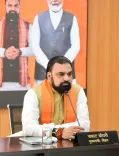
Pralhad Joshi launches Kashi Tamil Sangamam 5.0 portal
Synopsis
Union Minister Pralhad Joshi launched the portal for Kashi Tamil Sangamam 5.0 on 22 October 2026, inviting over 1,400 delegates and 1,000 students from 1,000 institutions to a Tamil–Kashi cultural exchange in Varanasi from 28 November to 12 December, themed around learning the Thirukkural.
Key Takeaways
Kashi Tamil Sangamam 5.0 will be held in Varanasi from 28 November to 12 December 2026 .
Union Minister Pralhad Joshi launched the registration portal on 22 October 2026 .
The edition's theme is 'Thirukkural Payilvom – Let Us Learn the Thirukkural' , centring the classical Tamil text.
More than 1,400 delegates across seven categories are expected to participate.
A special initiative will engage 1,000 students from 1,000 higher educational institutions across India.
The event is part of the Ek Bharat Shreshtha Bharat framework, launched by PM Modi in 2015 to foster inter-state cultural ties.
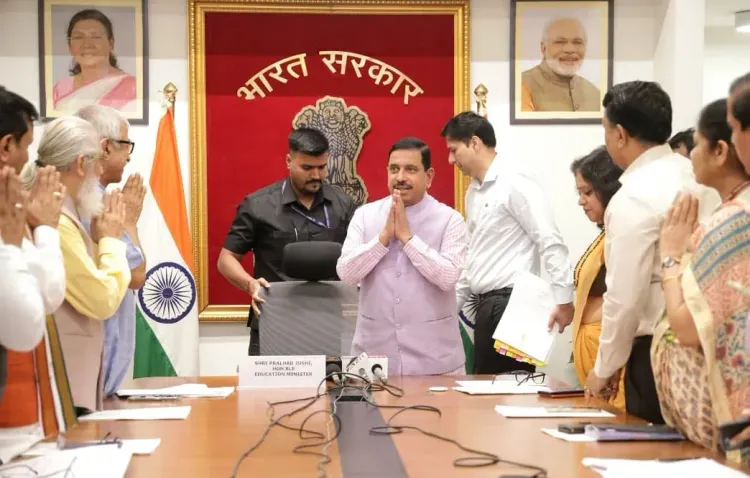
A cultural bridge more than two millennia in the making is getting a fresh chapter. Union Minister Pralhad Joshi on Thursday, 22 October 2026, launched the registration portal for Kashi Tamil Sangamam 5.0, the fifth edition of the government's flagship Tamil–Kashi cultural exchange, set to unfold in Varanasi from 28 November to 12 December 2026.
The minister announced the event's theme — 'Thirukkural Payilvom' ('Let Us Learn the Thirukkural') — signalling that this edition will centre India's most revered classical Tamil text as the vehicle for cross-regional understanding. The programme will bring together more than 1,400 delegates across seven categories, and a dedicated student initiative aims to engage 1,000 students from 1,000 higher educational institutions across the country.
Thirukkural at the heart of a national conversation
The Thirukkural — a classical Tamil verse collection attributed to the poet Thiruvalluvar, covering virtue, wealth and love — has long been considered one of the great works of world literature. Making it the centrepiece of Kashi Tamil Sangamam 5.0 is a deliberate move: it grounds a cultural-exchange programme in a text that resonates with students and scholars alike, giving the exchange intellectual weight beyond ceremonial visits and folk performances.
For younger participants especially, the 1,000-institutions initiative is designed to move the Thirukkural out of textbooks and into lived dialogue — pairing students from Tamil Nadu's classical tradition with peers from across India in the sacred geography of Varanasi, which itself carries millennia of Sanskrit learning and Shaivite devotion. The two traditions share deep theological and philosophical roots; the Sangamam is built on precisely that overlap.
From a 2022 debut to a maturing annual institution
The first Kashi Tamil Sangamam was held in November 2022, born out of the Ek Bharat Shreshtha Bharat initiative that Prime Minister Narendra Modi launched in 2015 to systematically pair states and union territories for cultural, educational and tourism exchanges. The idea was simple but ambitious: use structured encounters — not just official handshakes — to stitch together India's plural civilisational fabric.
Four editions in, the Kashi–Tamil pairing has emerged as the programme's most prominent showcase. Successive editions have expanded participation, adding delegate categories and deepening the academic dimension. The portal launch on 22 October opens institutional registrations well ahead of the event, reflecting a more organised logistical approach as the programme matures.
Varanasi as the stage, unity as the script
Varanasi's choice as the permanent host is not incidental. The ancient city carries equal weight in both the Sanskrit–Hindi north and, through its Shaiva connections, in Tamil devotional tradition — the Tamil saint-poets, the Nayanmars and Alvars, drew deeply on Kashi's spiritual symbolism. Holding the Sangamam there year after year is itself an argument: that India's civilisational threads, though woven in different languages and geographies, run to the same loom.
With the portal now live and registrations open, the countdown to the most academically ambitious Kashi Tamil Sangamam yet has officially begun — and a two-thousand-year-old text about the art of living well is about to find a new classroom.
Point of View
And the fifth edition's Thirukkural focus signals a deliberate deepening of its academic ambition. By anchoring the exchange in a specific classical text rather than diffuse 'cultural heritage', the government is attempting to give the programme intellectual gravitas that outlasts the event itself. The 1,000-institutions student initiative is politically significant too: it brings the exchange into campuses rather than keeping it confined to curated delegate groups, widening its social footprint ahead of what will be a full election cycle. For the BJP, Varanasi as the permanent stage reinforces a north–south civilisational narrative that Prime Minister Modi has consistently cultivated since 2014.
NationPress
22 Oct 2026
Frequently Asked Questions
What is Kashi Tamil Sangamam 5.0?
Kashi Tamil Sangamam 5.0 is the fifth edition of a recurring cultural-exchange programme that brings together delegates and students from Tamil Nadu and across India in Varanasi to celebrate the shared civilisational heritage of Kashi and Tamil culture, under the government's Ek Bharat Shreshtha Bharat initiative.
When and where is Kashi Tamil Sangamam 5.0 taking place?
The event is scheduled to be held in Varanasi, Uttar Pradesh, from 28 November to 12 December 2026.
What is the theme of Kashi Tamil Sangamam 5.0?
'Thirukkural Payilvom – Let Us Learn the Thirukkural' is the theme, focusing on the classical Tamil text Thirukkural as the central subject of exchange and learning during the programme.
Who launched the Kashi Tamil Sangamam 5.0 portal?
Union Minister Pralhad Joshi, who holds the portfolios of Consumer Affairs, Food and Public Distribution, and New and Renewable Energy, launched the portal on 22 October 2026.
What is Ek Bharat Shreshtha Bharat?
Ek Bharat Shreshtha Bharat is a Central government programme launched by Prime Minister Narendra Modi in 2015 that pairs Indian states and union territories to organise cultural, educational and tourism exchanges aimed at strengthening national unity.