Giriraj Singh: India-NZ FTA to Boost Punjab Textile Exports
Synopsis
Union Textiles Minister Giriraj Singh says the India-New Zealand FTA will accelerate exports from Punjab's apparel industry by reducing import duties and unlocking new Pacific market access, urging exporters to align with international quality standards to maximise the opportunity.
Key Takeaways
Union Textiles Minister Giriraj Singh highlighted the India-New Zealand FTA as a catalyst for Punjab's textile and apparel export growth.
Import-duty concessions under the agreement are expected to improve the competitiveness of Indian products in New Zealand 's market.
India and New Zealand first began FTA negotiations in 2010 ; the deal follows the model of the India-Australia Economic Cooperation and Trade Agreement signed in 2022 .
The minister stressed the need for exporters to prioritise product quality, international standards, and strong trade networks to fully benefit from the deal.
Final tariff schedules and rules of origin remain key details pending publication as negotiations progress.
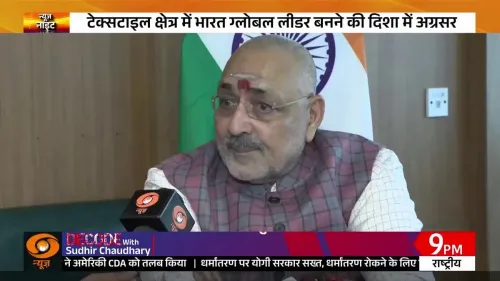
A trade deal with the Pacific could be the next big unlock for India's textile belt. Union Textiles Minister Giriraj Singh on Thursday, 22 October 2026, said the India-New Zealand Free Trade Agreement would give fresh momentum to exports from Punjab's textiles and apparel industry, alongside several other sectors.
Posting in Hindi, the minister said: 'भारत-न्यूजीलैंड मुक्त व्यापार समझौते से पंजाब के वस्त्र एवं परिधान उद्योग सहित कई क्षेत्रों के निर्यात को नई गति मिलेगी' — 'The India-New Zealand free trade agreement will give new momentum to exports from Punjab's textiles and apparel industry, along with several other sectors.' He added that duty concessions would sharpen the competitiveness of Indian products and open new markets, and called on industry to focus on product quality, international standards, and robust trade networks to fully capitalise on the opportunity.
Punjab's Textile Belt and What Duty Relief Means
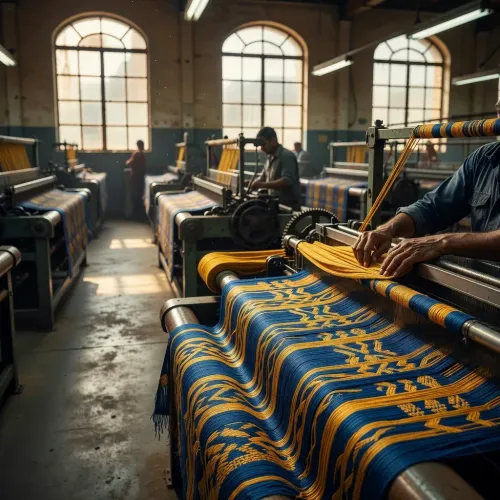
Punjab anchors a significant share of India's apparel and hosiery manufacturing, with clusters in cities such as Ludhiana known for knitwear and woollen goods. Tariff barriers in destination markets have long eaten into price competitiveness for these exporters. Import-duty relief under a bilateral FTA directly widens the margin between Indian goods and competing suppliers — a structural advantage that kicks in from day one of implementation.
The minister's call to prioritise quality and international standards is pointed: duty cuts open the door, but it is compliance with buyer-country regulations that determines whether exporters can walk through it at scale.
A Long Road to the Negotiating Table — and Where It Stands
India and New Zealand first launched FTA negotiations in 2010, making this one of the longer-gestating trade talks in India's bilateral calendar. The pace picked up as India broadened its strategy of diversifying export destinations beyond saturated traditional markets. The India-Australia Economic Cooperation and Trade Agreement, signed in 2022, offered a template: early tariff concessions on textiles helped Indian apparel exporters gain ground in the Australian market relatively quickly.
A similar structure with New Zealand would benefit manufacturers across Punjab and other textile-producing states. The final tariff schedules and rules of origin — the technical architecture that determines which products qualify for concessions — remain the key details to watch as negotiations advance.
Textiles at the Centre of India's FTA Push
India's expanding network of bilateral agreements in recent years has consistently spotlighted textiles and apparel, and for good reason. The sector is among the country's most employment-intensive industries, making market access gains politically and economically significant far beyond export statistics. Giriraj Singh's ministry has framed trade deals as a complement to domestic schemes aimed at upgrading manufacturing capacity.
For Punjab's exporters, the minister's public signal is an early prompt: get quality systems and international certifications in order before the tariff windows open. When they do, the prepared will move fastest.
Point of View
Not just diplomatic events. India's textiles sector has been the consistent centrepiece of its bilateral trade deals, reflecting the ministry's strategy of using market-access agreements as an industrial-policy lever. The emphasis on quality and standards is a telling signal that the ministry is aware of the gap between tariff gains on paper and realised export growth on the ground. Watch for follow-up outreach programmes targeting Punjab's manufacturing clusters as a measure of how seriously the ministry intends to convert this political announcement into supply-side readiness.
NationPress
22 Oct 2026
Frequently Asked Questions
What is the India-New Zealand Free Trade Agreement?
The India-New Zealand FTA is a proposed bilateral trade agreement focused on reducing tariffs on goods — including textiles — to boost exports and market access between the two countries. Negotiations between India and New Zealand began in 2010.
How will the India-NZ FTA benefit Punjab's textile industry?
By reducing import duties on Indian textile and apparel products entering New Zealand, the FTA is expected to make Punjab's exports more price-competitive, helping manufacturers in hosiery and knitwear clusters capture greater market share.
What did Giriraj Singh say about the India-New Zealand FTA?
Union Textiles Minister Giriraj Singh said the FTA would give new momentum to exports from Punjab's textiles and apparel industry, add competitive edge through duty relief, and urged industry to focus on quality and international standards to maximise the opportunity.
Which other FTA has India used to boost textile exports?
India signed the India-Australia Economic Cooperation and Trade Agreement in 2022, which included tariff concessions on textiles and served as a recent precedent for the kind of market-access gains being anticipated from the India-New Zealand deal.
What should Indian textile exporters do to benefit from the India-NZ FTA?
Giriraj Singh specifically called on exporters to prioritise product quality, compliance with international standards, and building strong trade networks so they are positioned to fully capitalise when the tariff concessions come into effect.