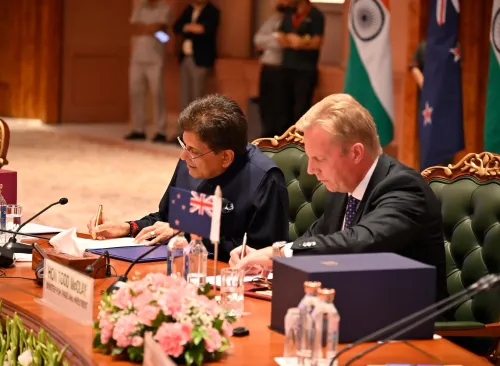
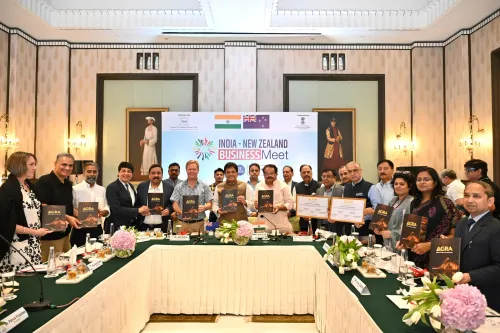
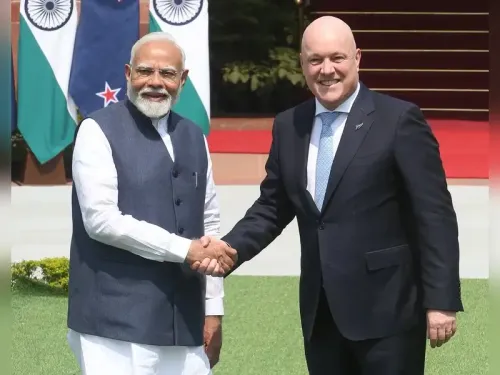
Giriraj Singh Backs India-New Zealand FTA, Flags Textile Gains
Synopsis
Union Textiles Minister Giriraj Singh welcomed a prospective India-New Zealand free trade agreement on 21 October 2026, saying it will strengthen bilateral economic ties and boost exports in textiles, leather, and footwear — sectors critical to India's MSME and labour-intensive manufacturing base.
Key Takeaways
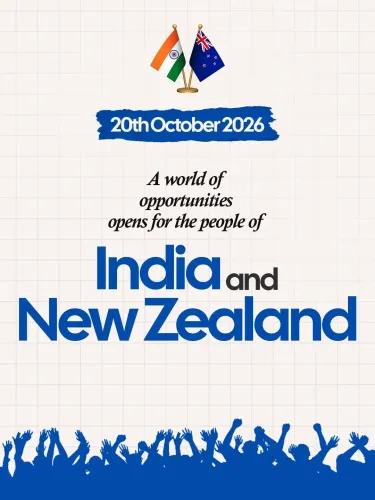
Giriraj Singh endorsed an India-New Zealand FTA on 21 October 2026 , calling it a new pillar for bilateral economic ties.
The minister specifically highlighted textiles, leather, and footwear as sectors set to gain improved export access.
He framed the deal as advancing Atmanirbhar Bharat by giving Indian industry a new identity in global markets.
India-New Zealand FTA negotiations have been ongoing since 2010 , making a potential conclusion a long-sought milestone.
The pact mirrors earlier agreements with Australia (2022) and the UAE , reflecting India's strategy of diversifying export destinations through bilateral deals.
Key sectors benefiting employ millions of workers in states including Uttar Pradesh, Tamil Nadu, and Gujarat .
A free trade agreement between India and New Zealand could open a significant new front for Indian exporters — and Union Textiles Minister Giriraj Singh is making the case loudly. On Wednesday, 21 October 2026, the minister took to X to argue that such a pact would directly benefit labour-intensive sectors — textiles, leather, and footwear — while unlocking fresh markets for Indian MSMEs.
In his post, the minister wrote: 'Bharat aur New Zealand ke beech mukta vyapar samjhauta dono deshon ke aarthik sambandhon ko nayi mazbooti dega' — 'A free trade agreement between India and New Zealand will give new strength to the economic ties of both countries.' He added that the deal would advance the vision of Atmanirbhar Bharat by giving it a 'new identity in the global market.'
Why Textiles, Leather and Footwear Are Front and Centre
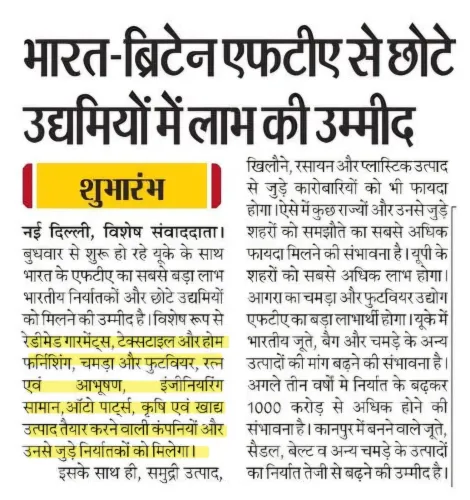
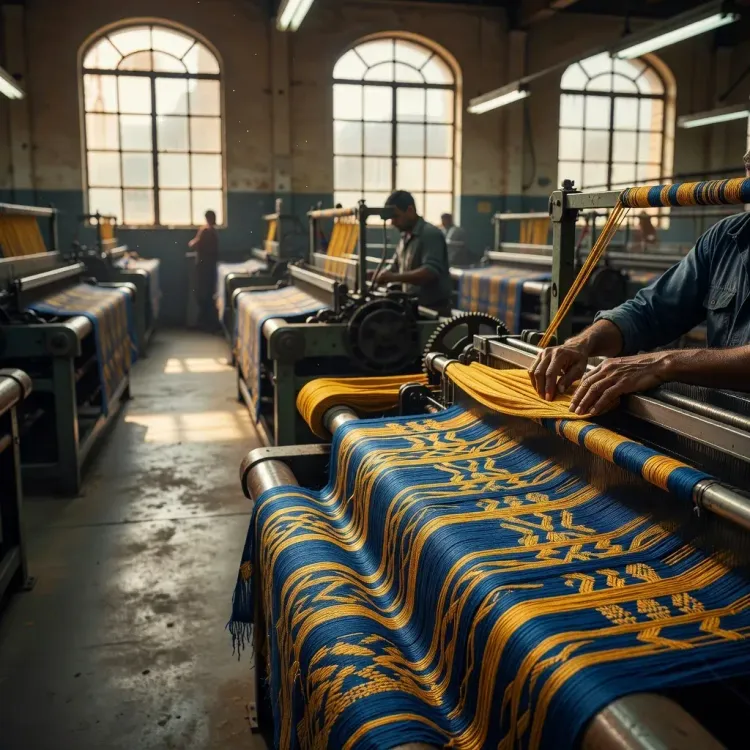
The minister's focus on these three sectors is not incidental. Textiles and apparel alone employ tens of millions of workers across states such as Uttar Pradesh, Tamil Nadu, and Gujarat. Leather and footwear clusters — concentrated in Agra, Kanpur, and Chennai — are similarly dependent on export demand to sustain livelihoods at scale. Any preferential tariff access to a new market, even a mid-sized one like New Zealand, can shift the competitive equation meaningfully for small and medium manufacturers operating on thin margins.
Singh's ministry has a direct stake in the outcome: a concluded FTA with binding tariff cuts on Indian garments and fabrics would constitute a concrete policy win for a minister who oversees one of India's largest employment-generating industries.
India's FTA Push: The Pattern Behind the Post
This enthusiasm fits a recognisable playbook. India has been aggressively expanding its bilateral trade architecture — signing an Economic Cooperation and Trade Agreement with Australia in 2022, concluding a comprehensive pact with the UAE, and maintaining an older agreement with ASEAN. The India–New Zealand trade negotiation track dates back to 2010, making it one of the longer-running bilateral discussions on India's books. A conclusion, if achieved, would finally close a chapter that has stretched across four governments.
The strategic logic is consistent: diversify India's export destinations beyond traditional blocs, reduce dependence on any single large market, and use labour-intensive sectors as the commercial vanguard — precisely because those sectors generate the most jobs per dollar of export revenue.
Atmanirbhar Bharat Meets the Global Marketplace
There is a deliberate framing in Singh's invocation of Atmanirbhar Bharat — the self-reliance initiative launched in 2020. Critics sometimes read 'self-reliance' as protectionism. The minister's message pushes back against that reading directly: domestic strength, he is arguing, is the launchpad for export competitiveness, not a retreat from it. An FTA, on this view, is not a contradiction of Atmanirbhar Bharat but its validation — proof that Indian industry is confident enough to compete in open markets on preferential terms.
What comes next will matter as much as the announcement. Specific tariff schedules for textiles and leather, rules of origin, and a parliamentary ratification timeline will determine whether the gains Singh describes materialise for weavers in Surat or shoemakers in Agra. The deal's real weight will be measured in those details — not in the headline.
Point of View
He is threading a needle the BJP has long attempted: reconciling economic nationalism with export-led growth. The emphasis on labour-intensive sectors signals awareness that trade agreements need a visible human dividend to survive domestic scrutiny. Whether a concluded deal actually lands those tariff schedules on textiles and leather will be the real test of this framing.
NationPress
21 Oct 2026
Frequently Asked Questions
What is the India-New Zealand free trade agreement about?
The India-New Zealand FTA is a proposed bilateral trade deal, under negotiation since 2010, aimed at reducing tariffs and expanding market access for goods and services between the two countries. India expects gains particularly in textiles, leather, and footwear exports.
How will an India-New Zealand FTA benefit Indian textile exporters?
Preferential tariff access to the New Zealand market would lower the cost of Indian garments and fabrics for New Zealand buyers, making Indian exports more competitive and opening a new destination for manufacturers currently concentrated in states like Gujarat, Tamil Nadu, and Uttar Pradesh.
What is Atmanirbhar Bharat and how does it relate to trade agreements?
Atmanirbhar Bharat, launched in 2020, is India's self-reliance initiative focused on strengthening domestic manufacturing. Ministers like Giriraj Singh argue that FTAs complement this goal by using a stronger domestic base as a launchpad for competitive exports rather than retreating from global markets.
Has India signed FTAs with other countries recently?
Yes. India signed an Economic Cooperation and Trade Agreement with Australia in 2022 and a comprehensive pact with the UAE, both covering labour-intensive sectors. The India-New Zealand deal, if concluded, would extend this pattern of bilateral trade diversification.
What sectors in India stand to gain most from the India-New Zealand FTA?
Textiles, leather goods, and footwear are the sectors Minister Giriraj Singh specifically highlighted. Small and medium enterprises (MSMEs) in these industries are seen as primary beneficiaries of new preferential market access.