India Leather Sector Targets $50 Bn by 2030 Amid NZ FTA Deal

Synopsis
India's leather sector is targeting a historic $50 billion milestone by 2030, supercharged by the just-signed India-New Zealand FTA that eliminates all tariffs on Indian leather and footwear exports. With Agra — producing 75% of India's leather footwear — positioned as a global sourcing hub, this deal could reshape India's role in the world's leather supply chain.
Key Takeaways
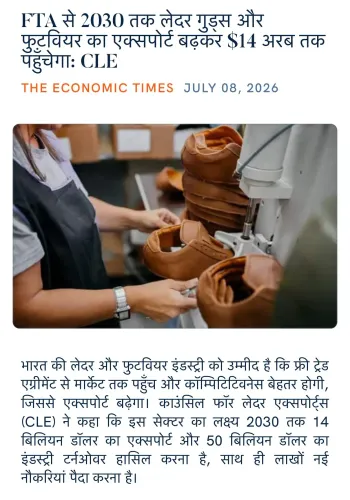
India's leather industry targets $50 billion by 2030 , pivoting from mass production to high-value-added manufacturing.
The India-New Zealand FTA eliminates duties on 100% of Indian exports from Entry into Force, reducing leather and footwear tariffs from 5% to zero .
Agra , producing 75% of India's leather footwear and holding a GI tag, is being positioned as a global sourcing and export hub.
The FTA was concluded in a record nine months since its launch on March 16, 2025 .
The agreement includes a first-ever dedicated chapter on Health and Traditional Medicine , formally recognising AYUSH in a bilateral trade framework.
Pharma and medical device sectors gain faster regulatory access through acceptance of GMP and GCP inspection reports from comparable international regulators.
New Delhi, April 26: India's leather industry has set an ambitious target of reaching $50 billion by 2030, with the newly concluded India-New Zealand Free Trade Agreement (FTA) expected to serve as a major catalyst. The Ministry of Commerce and Industry confirmed on Sunday, April 27 that the sector's growth strategy hinges on a decisive pivot from mass production toward high-value-added manufacturing, a shift that could redefine India's position in global leather trade.
Historic FTA Signed, Agra at the Centre
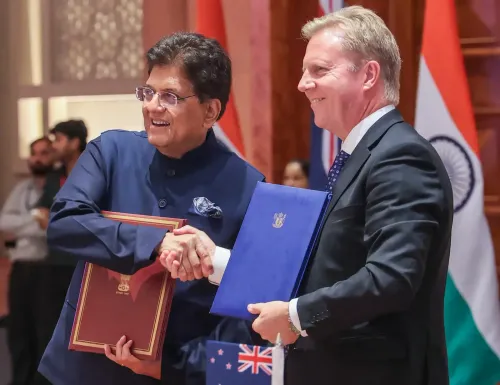
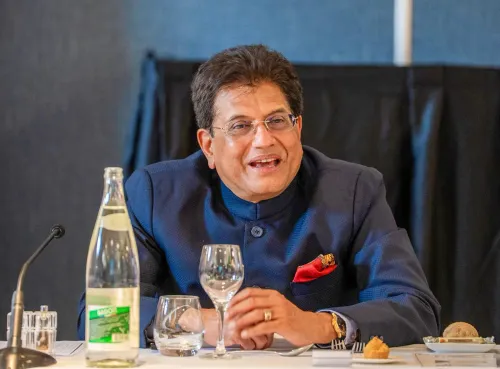
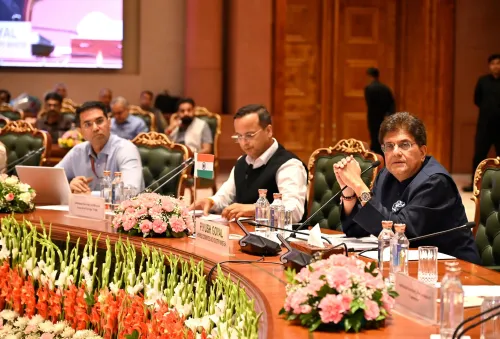
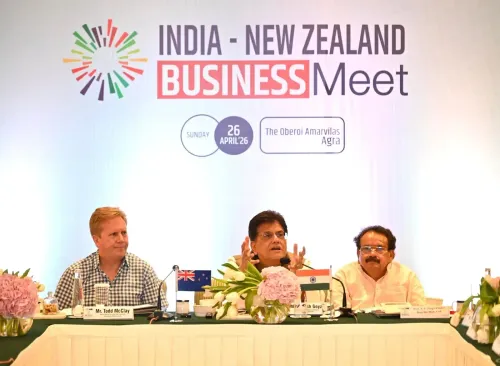
On the eve of the FTA's formal signing in New Delhi, Union Minister for Commerce and Industry Piyush Goyal and his New Zealand counterpart Trade Minister Todd McClay participated in an Industry Engagement Programme in Agra. The event brought together stakeholders from leather and footwear, AYUSH, medical devices, light engineering, and sports goods sectors, along with representatives from Laghu Udyog Bharati, Uttar Pradesh.
The agreement was concluded in a record nine months since its launch on March 16, 2025, making it one of the fastest-negotiated FTAs in India's recent trade history. Minister of State for Fisheries, Animal Husbandry and Dairying S.P. Baghel also participated in the Agra interaction.
Zero Tariffs on Leather and Footwear: What It Means
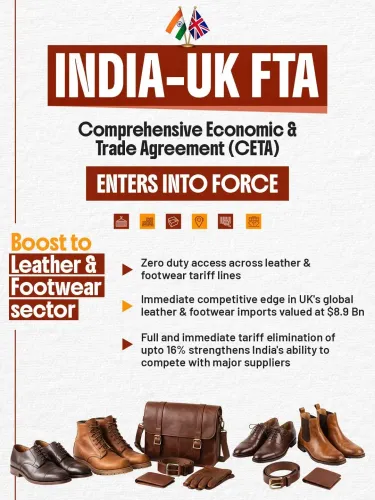
Under the FTA, 100 per cent of Indian exports will face zero duties from the date of Entry into Force. Specifically, tariffs on leather and footwear will be reduced from 5 per cent to zero, giving Indian exporters a significant competitive edge over rivals from Vietnam, Bangladesh, and China in the New Zealand market.
Agra, which accounts for approximately 75 per cent of India's leather footwear production, holds a Geographical Indication (GI) tag for its leather footwear and is a flagship product under the One District One Product (ODOP) scheme. Both ministers expressed a shared intent to position Agra as a global sourcing destination, an employment engine, and an export powerhouse.
The Commerce Ministry statement noted that New Zealand's rich raw leather resources, when combined with India's manufacturing capabilities, offer strong complementarity — a supply-chain synergy that both nations are keen to harness at scale.
Beyond Tariffs: A Comprehensive Economic Partnership
Both ministers emphasised that the India-New Zealand FTA transcends conventional tariff reduction. The agreement encompasses market access, agricultural productivity, investment flows, talent mobility, sports collaboration, tourism, and people-to-people ties. It is designed to benefit a wide spectrum — from manufacturers, farmers, and MSMEs to women entrepreneurs, students, and skilled professionals in both nations.
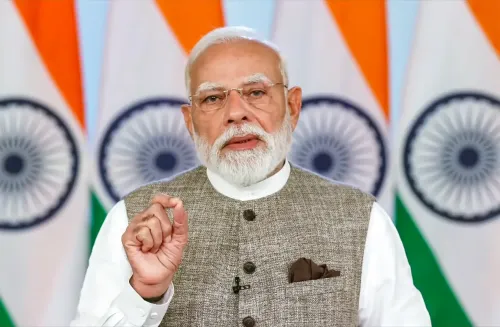
In alignment with Prime Minister Narendra Modi's vision of building inclusive and forward-looking trade partnerships rooted in India's national priorities, Minister Goyal highlighted the significant education and talent mobility provisions within the FTA, urging Indian students and professionals to actively explore the new pathways it opens.
Pharma, Medical Devices, and AYUSH Get a Boost
The industry interaction also covered the pharmaceutical and medical devices sectors. Representatives welcomed FTA provisions for faster regulatory access, including acceptance of GMP (Good Manufacturing Practice) and GCP (Good Clinical Practice) inspection reports from comparable international regulators. This is expected to significantly reduce compliance burdens and expedite product approvals for Indian manufacturers.
In a historic first for both countries, the FTA includes a dedicated chapter on Health and Traditional Medicine, formally recognising AYUSH — India's traditional medicine system — within a bilateral trade framework. Industry stakeholders called this a landmark step toward internationalising India's wellness and traditional healthcare sector.
Strategic Significance and What Comes Next
This agreement arrives at a time when India is aggressively pursuing bilateral trade deals to diversify export markets amid global supply chain realignments. Notably, India's leather exports have faced headwinds from rising raw material costs, competition from Southeast Asian manufacturers, and evolving sustainability standards in Western markets. The zero-duty access to New Zealand, combined with a raw material sourcing partnership, addresses several of these structural challenges simultaneously.
Critics and trade analysts will watch closely whether the $50 billion target by 2030 — which requires the sector to more than double its current scale — is backed by adequate investments in skill development, infrastructure, and compliance with international environmental standards, particularly as global buyers increasingly demand sustainable leather sourcing.
With the FTA now signed, implementation timelines, sector-specific rules of origin, and investment facilitation mechanisms will be the next critical milestones. Industry bodies and exporters in Agra, Chennai, Kanpur, and Kolkata — India's major leather hubs — are expected to begin recalibrating their export strategies in the coming weeks.
Point of View
Locking in zero-duty access to a high-income market like New Zealand for leather, pharma, and AYUSH products signals a maturing trade diplomacy. However, the $50 billion leather target demands scrutiny: the sector currently operates well below that threshold, and without parallel investments in sustainability compliance and skill upgradation, zero tariffs alone won't bridge the gap. The real test will be whether Agra's MSMEs — not just large exporters — actually benefit, or whether this becomes another headline without ground-level transformation.
NationPress
24 Sept 2026
Frequently Asked Questions
What is the India-New Zealand FTA and how does it benefit the leather industry?
The India-New Zealand Free Trade Agreement is a bilateral trade deal that eliminates duties on 100% of Indian exports from the date it comes into force. For the leather and footwear sector, tariffs drop from 5% to zero, giving Indian exporters a direct competitive advantage in the New Zealand market.
What is India's leather industry target by 2030?
India's leather industry is targeting $50 billion in output by 2030, driven by a strategic shift from mass production to high-value-added manufacturing. The India-New Zealand FTA is expected to accelerate this growth by opening zero-duty market access and enabling raw material sourcing partnerships.
Why is Agra significant in the India-New Zealand FTA discussions?
Agra produces approximately 75% of India's leather footwear and holds a Geographical Indication (GI) tag for its leather products. It is also a flagship city under the One District One Product scheme, making it the natural focal point for positioning India as a global leather sourcing destination.
What other sectors benefit from the India-New Zealand FTA besides leather?
Beyond leather, the FTA benefits India's pharmaceutical, medical devices, AYUSH, light engineering, and sports goods sectors. It also includes provisions for talent mobility, education, tourism, and a first-ever dedicated chapter on Health and Traditional Medicine recognising AYUSH.
How quickly was the India-New Zealand FTA negotiated?
The India-New Zealand FTA was concluded in a record nine months after its launch on March 16, 2025. This makes it one of the fastest-negotiated free trade agreements in India's recent diplomatic and trade history.