Ahmedabad airport joins hub-and-spoke network, links to 15 global destinations

Synopsis
Ahmedabad has become only the third Indian airport to join the hub-and-spoke international network, allowing Gujarat passengers to clear immigration and baggage at home before connecting through Delhi to 15 global destinations — a structural shift that could redefine outbound travel for one of India's busiest business corridors.
Key Takeaways
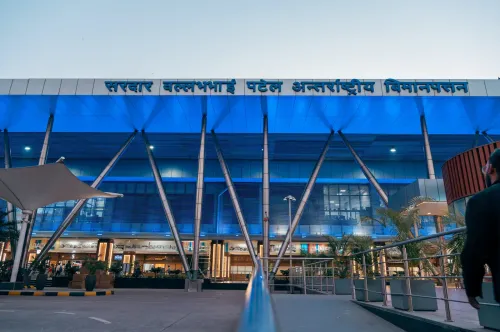
Sardar Vallabhbhai Patel International Airport, Ahmedabad was formally integrated into India's hub-and-spoke network on 1 September .
Ahmedabad is the third airport in the country to join, after Amritsar and Varanasi .
Passengers can now access around 15 international destinations via Delhi , with baggage check-in and immigration completed at Ahmedabad .
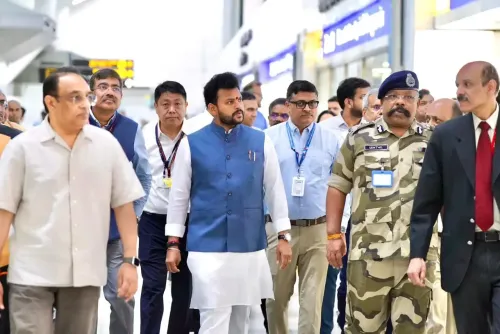
Union Civil Aviation Minister K.
Ram Mohan Naidu launched the service, citing Gujarat's large NRI community and business sectors as key drivers.
India's airport count has grown from 74 in 2014 to more than 160 , with plans to add 100 more over the next decade.
Passenger amenities including the 'UDAN Yatri Cafe' , an airport library, and digital boarding passes are being introduced alongside the launch.
Sardar Vallabhbhai Patel International Airport in Ahmedabad was formally integrated into India's hub-and-spoke international passenger network on Tuesday, 1 September, making it the third airport in the country — after Amritsar and Varanasi — to offer seamless overseas connectivity via a central hub. Union Civil Aviation Minister K. Ram Mohan Naidu said the new arrangement would give passengers from Gujarat more convenient access to around 15 international destinations through Delhi.
How the Hub-and-Spoke Model Works
Under the hub-and-spoke framework, passengers departing from smaller cities — the 'spokes' — travel to a larger central airport, the 'hub', for onward international connections. The defining advantage is that baggage check-in, customs clearance, and immigration procedures are completed at the origin airport — in this case, Ahmedabad — eliminating the need to repeat these formalities at Delhi's connecting terminal.
Automated baggage transfer is also built into the system, designed to reduce passenger wait times and lower operational costs for airlines. The arrangement is intended to make international travel, in the minister's words, 'more seamless' for those changing flights mid-route.
What the Government Said
'Under the vision of Prime Minister Narendra Modi, the hub-and-spoke model is being started from Ahmedabad with the aim of taking India's civil aviation sector to new heights globally,' Ram Mohan Naidu said at the launch event.
Minister of State for Civil Aviation Murlidhar Mohol said policy reforms in aviation infrastructure and the Maintenance, Repair and Overhaul (MRO) sector were helping India advance toward becoming a global aviation hub. Civil Aviation Secretary Sameer Sinha described the model as a framework that benefits passengers, airlines, and airports alike, and noted that Ahmedabad's inclusion marked a meaningful expansion of the seamless connectivity network.
India's Aviation Expansion in Context
Ram Mohan Naidu highlighted the scale of India's aviation growth, noting that the country had 74 airports in 2014 compared with more than 160 at present. The government plans to develop an additional 100 airports over the next decade while expanding the UDAN regional connectivity scheme.
This comes amid a broader push to position India as a global aviation hub, with the hub-and-spoke rollout seen as a structural step toward reducing transit friction for outbound international travellers — particularly those based in Tier-1 cities outside the primary gateway airports of Mumbai and Delhi.
Why Ahmedabad and What It Means for Gujarat
Ahmedabad's selection reflects its large Non-Resident Indian (NRI) community, robust international connectivity, and the travel demands of its key industries. The minister specifically cited sectors including hospitality, tourism, textiles, pharmaceuticals, diamonds and gems, engineering, semiconductors, and manufacturing as direct beneficiaries of improved air access.
Passenger-facing improvements being introduced alongside the hub-and-spoke launch include the 'UDAN Yatri Cafe', an airport library, and digital boarding passes — part of a wider effort to modernise the airport experience. With Amritsar and Varanasi already in the network, the pace of expansion suggests more spoke airports could be added in the near term.
Point of View
But the real test is execution at scale. Single-point immigration clearance sounds transformative — until you consider that Delhi's connecting infrastructure must absorb the additional spoke traffic without degrading transit times. Ahmedabad's inclusion is also a political signal: Gujarat is the third spoke city, not a hub, which tells you something about where the Centre draws the line between political optics and aviation economics. The 100-airport target over a decade is a headline that has appeared in various forms since 2016; what matters is whether greenfield capacity is matched by viable route economics under UDAN, where many routes have historically struggled with viability-gap funding sustainability.
NationPress
2 Sept 2026
Frequently Asked Questions
What is the hub-and-spoke model launched at Ahmedabad airport?
The hub-and-spoke model allows passengers from Ahmedabad to complete baggage check-in, customs, and immigration at Ahmedabad itself before boarding a connecting flight to Delhi, from where they can reach around 15 international destinations. This eliminates the need to repeat these procedures at the connecting hub, making international travel faster and more convenient.
Which airports are part of India's hub-and-spoke international network?
As of 1 September, three airports are part of the network: Amritsar, Varanasi, and now Ahmedabad. Ahmedabad is the most recent addition, formally launched by Union Civil Aviation Minister K. Ram Mohan Naidu.
Why was Ahmedabad chosen for the hub-and-spoke network?
Ahmedabad was selected due to its large Non-Resident Indian (NRI) community, existing international connectivity, and the travel needs of Gujarat's key industries including textiles, pharmaceuticals, diamonds and gems, and manufacturing. The city's business and industrial profile made it a natural candidate for expanded international access.
How many international destinations can Ahmedabad passengers reach under the new system?
Passengers from Ahmedabad can connect to around 15 international destinations via Delhi under the new hub-and-spoke arrangement, according to Union Civil Aviation Minister K. Ram Mohan Naidu.
What is India's broader airport expansion plan?
India currently has more than 160 operational airports, up from 74 in 2014. The government plans to develop an additional 100 airports over the next decade, alongside expansion of the UDAN regional connectivity scheme, as part of its push to become a global aviation hub.