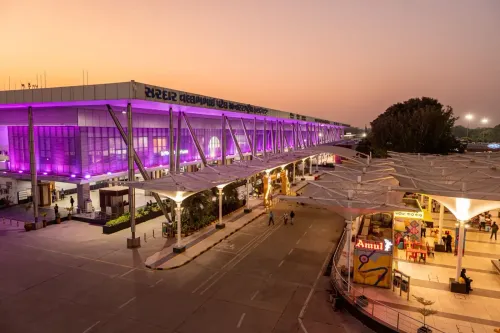
Ahmedabad airport launches hub-and-spoke international ops, 22 spokes planned

Synopsis
India has quietly begun rewiring its international aviation architecture. With Ahmedabad becoming the first spoke airport where passengers clear immigration at home before connecting through Delhi, the government is making a direct play to pull back the 35% of Indian international travellers who currently transit through Dubai, London, and Singapore — and it has 22 more airports lined up to follow.
Key Takeaways
Civil Aviation Minister Ram Mohan Naidu launched hub-and-spoke international operations at Ahmedabad's SVPIA on 1 September .
Passengers will clear immigration and customs at Ahmedabad , skipping repeat checks at the Delhi hub.
22 airports — including Cochin, Pune, Guwahati, and Jaipur — are identified for phased inclusion as spokes.
Mumbai and Bengaluru are being added as hub airports, with the expanded ecosystem targeted by 15 October .
Nearly 35% of India-origin international passengers currently transit through foreign hubs like Dubai, London , and Singapore .
India aims to become a preferred aviation hub for Indian travellers by 2030 and a leading global hub by 2047 .
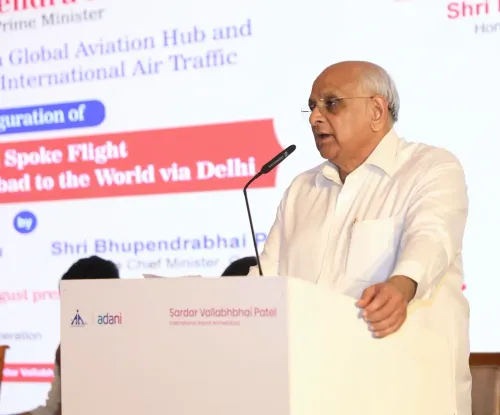
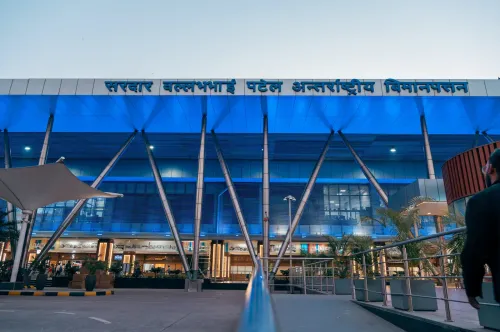
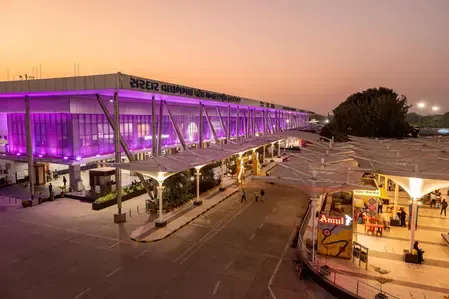
Union Civil Aviation Minister Kinjarapu Ram Mohan Naidu on Tuesday, 1 September inaugurated hub-and-spoke international aviation operations at Ahmedabad's Sardar Vallabhbhai Patel International Airport (SVPIA), making it the first spoke airport under a new framework that allows passengers to clear immigration and customs at their home city before connecting through Delhi to overseas destinations. The launch marks a structural shift in how India routes its international air traffic.
How the System Works
Under the hub-and-spoke model, passengers departing internationally from Ahmedabad will complete check-in, immigration, and customs formalities at SVPIA itself. Their baggage will be tagged through to the final international destination, and they will not face repeat border checks at Delhi, which serves as the designated hub airport.
Flights from the spoke airport will carry both domestic and international passengers on the same aircraft. Boarding passes will carry a 'D' indicator for domestic travellers and an 'I' indicator for international passengers — valid for both the Ahmedabad–Delhi sector and the onward international leg.
Who Was at the Launch
Gujarat Chief Minister Bhupendra Patel, Minister of State for Civil Aviation Murlidhar Mohol, and Deputy Chief Minister Harsh Sanghvi attended the inauguration. Also present were Chief Secretary Manoj Kumar Das, Civil Aviation Secretary Samir Kumar Sinha, Adani Airports Holding Limited director Jeet Adani, and its CEO Arun Bansal.
The Broader Expansion Plan
Ahmedabad is only the first step. The Ministry of Civil Aviation has identified 22 airports for phased inclusion as spokes, including Cochin, Goa (Dabolim), Bhubaneswar, Guwahati, Chandigarh, Lucknow, Surat, Pune, Thiruvananthapuram, Coimbatore, Kannur, Nagpur, Tiruchirappalli, Bagdogra, Vijayawada, Jaipur, Madurai, Mangaluru, Patna, Bhogapuram, Bhopal, and Calicut. Ministry teams have already assessed the first 11 airports on the list for operational readiness.
Training programmes have also been conducted — a virtual session for airlines and spoke-airport operators on 7 July, followed by an in-person master-trainer programme on 16 July. The Ministry is additionally working to add Mumbai and Bengaluru as hub airports alongside Delhi, with the expanded hub ecosystem targeted by 15 October.
Why This Matters for Indian Aviation
According to Minister Ram Mohan Naidu, nearly 35% of international passengers travelling from India currently transit through foreign hubs such as Dubai, London, and Singapore. The hub-and-spoke framework is designed to recapture that traffic within India's own aviation network, improving utilisation of existing airport infrastructure and strengthening Delhi's standing as a global hub.
Officials said the model is aimed at improving international access from Tier-II and Tier-III cities, reducing transit time, and retaining more international passenger revenue within the Indian system. The initiative forms part of the government's wider strategy to position India as a preferred aviation hub for Indian travellers by 2030 and a leading global aviation hub by 2047.
The Ahmedabad operation is being implemented with the participation of airlines, the Airports Authority of India (AAI), CISF, immigration authorities, customs authorities, and Delhi Airport. Additional airports will be brought under the framework subject to operational and stakeholder readiness.
Point of View
But execution will be the real test. Shifting immigration and customs to spoke airports requires seamless coordination between AAI, CISF, airlines, and customs — agencies that have historically operated in silos. The 35% transit-leakage figure cited by the Minister is a compelling headline, but recapturing that traffic depends on Indian carriers offering competitive onward connections, which today they largely do not. Delhi's congestion and the absence of a second runway at several proposed spokes are operational constraints the Ministry has not publicly addressed. The 15 October deadline for adding Mumbai and Bengaluru as hubs is ambitious given the complexity involved; slippage there would undercut the credibility of the broader 2030 and 2047 targets.
NationPress
17 Oct 2026
Frequently Asked Questions
What is the hub-and-spoke international aviation model launched at Ahmedabad?
It is a system under which passengers departing internationally from Ahmedabad complete immigration and customs at SVPIA itself, then fly to Delhi — the designated hub — and connect to their overseas destination without repeat border checks. Ahmedabad is the first spoke airport under this framework, launched on 1 September.
Which airports are next in line to become spoke airports?
The Ministry of Civil Aviation has identified 22 airports for phased inclusion, including Cochin, Goa (Dabolim), Bhubaneswar, Guwahati, Chandigarh, Lucknow, Surat, Pune, Thiruvananthapuram, Coimbatore, Kannur, Nagpur, Tiruchirappalli, Bagdogra, Vijayawada, Jaipur, Madurai, Mangaluru, Patna, Bhogapuram, Bhopal, and Calicut. Readiness assessments for the first 11 have already been conducted.
Why is India launching the hub-and-spoke aviation model?
According to Civil Aviation Minister Ram Mohan Naidu, nearly 35% of international passengers from India currently transit through foreign hubs such as Dubai, London, and Singapore. The model aims to recapture that traffic within India's aviation network, improve utilisation of airport infrastructure, and reduce transit time for passengers from Tier-II and Tier-III cities.
When will Mumbai and Bengaluru be added as hub airports?
The Ministry is working to add Mumbai and Bengaluru as hub airports alongside Delhi, with the expanded hub ecosystem targeted by 15 October.
How will passengers know if they are on the international track at a spoke airport?
Boarding passes issued at spoke airports will carry an 'I' indicator for international passengers, valid for both the spoke-to-hub sector and the onward international flight. Domestic passengers on the same aircraft will carry a 'D' indicator.