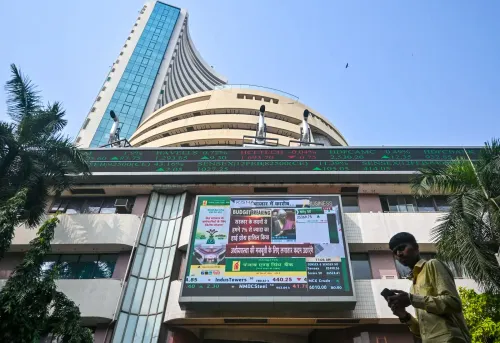
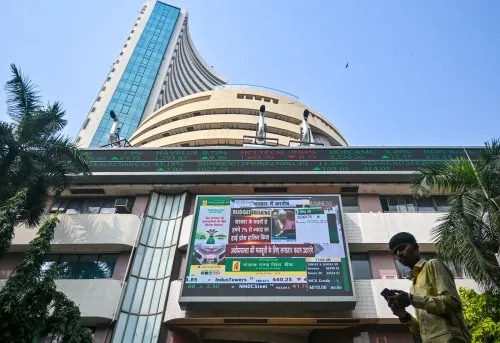
Global AI sell-off drives FPI inflows of ₹45,970 crore into India in November
Synopsis
India's status as a 'non-AI trade' has suddenly become its biggest market advantage. A US-led AI sell-off — driven by Democratic pushback on data-centre spending — has sent ₹45,970 crore flooding into Indian equities in November alone, catapulting the Nifty 8.6% higher. Whether this rotation trade has legs, or is a temporary windfall, is the question every market participant is now asking.
Key Takeaways
FPIs pumped a net ₹45,970 crore into Indian equities in November 2026 so far, driven by a global AI sell-off .
The Nifty 50 surged 8.6% over the week, closing at 25,030.35 ; Bank Nifty gained 8% .
Nifty Midcap 100 and Nifty Smallcap 100 rose 5.8% and 2.8% respectively, underperforming large caps.
The AI sell-off was triggered by fears over US data-centre spending and expected Democratic regulatory guardrails on AI.
DIIs turned net sellers throughout the week, while FPIs bought aggressively — a full institutional role reversal.
Analysts flag Brent crude prices and US-Iran tensions as key risks to the sustainability of FPI inflows.
Foreign portfolio investors (FPIs) have poured a net ₹45,970 crore into Indian equities in November 2026 so far, as a sharp global AI sell-off redirected capital toward India — widely perceived as a non-AI trade and therefore insulated from the correction rattling AI-heavy markets. The buying spree has propelled the Nifty 50 up a spectacular 8.6% across five consecutive sessions, closing the week at 25,030.35.
What triggered the AI sell-off
The global rout in AI-linked stocks originated in the United States, where fears over runaway data-centre spending began to unsettle investors. According to market participants, the Democrats — who won both chambers of Congress — are opposed to what they describe as indiscriminate data-centre expansion and are expected to push for regulatory guardrails on artificial intelligence. The sell-off then rippled through other AI-intensive markets, including South Korea, Taiwan, and Japan, prompting a rotation of capital into markets less exposed to the theme.
India benefits as a non-AI trade
India's equity market, which carries relatively modest direct exposure to global AI infrastructure spending, emerged as a primary beneficiary of that rotation. Dr VK Vijayakumar, Chief Investment Strategist at Geojit Investments Ltd, attributed the surge to a confluence of factors. 'Furthermore, the impressive earnings growth in India and the attractive large-cap valuations, made India a favoured investment destination,' he said.
FPIs concentrated their buying in index heavyweights across financials, IT, automobiles, and telecom. The aggressive inflows triggered a significant short squeeze, amplifying the market's upward move.
Market performance: Nifty, Bank Nifty and broader indices
The Nifty 50 gained 8.6% over the week, closing at a high of 25,030.35. The Bank Nifty posted an equally strong showing, rising 8%. Broader markets, however, relatively underperformed: the Nifty Midcap 100 closed 5.8% higher while the Nifty Smallcap 100 added 2.8% — suggesting the rally was primarily large-cap driven.
Notably, last week also witnessed a complete reversal of institutional roles. Domestic institutional investors (DIIs) turned net sellers on all five sessions, while FPIs turned aggressive buyers — a sharp departure from the trend that had dominated much of the year.
Risks and what to watch
Analysts caution that the sustainability of foreign inflows remains the critical variable in the weeks ahead. With heavy domestic profit-booking leaving the rally heavily reliant on continued FPI support, any reversal in sentiment could expose the market to sharp corrections. Market participants are closely monitoring Brent crude prices and developments surrounding US-Iran tensions, both of which could affect risk appetite and emerging-market flows. The underlying question — whether India's current appeal is a durable re-rating or a temporary beneficiary of a risk-rotation trade — remains open.
Point of View
But because of what it lacks in AI infrastructure exposure. That is a fragile foundation for a sustained rally. The DII sell-off alongside FPI buying suggests domestic investors are using the euphoria to exit, not add positions — a classic divergence that often precedes volatility. The Democrats' AI guardrail narrative may also be overstated as a long-term catalyst; policy intentions in Washington rarely move as fast as markets price them. If FPI flows reverse even modestly, the large-cap short-squeeze gains could unwind quickly, leaving mid and small caps — which underperformed even in the rally — in a more exposed position.
NationPress
8 Nov 2026
Frequently Asked Questions
Why are FPIs investing heavily in India amid the global AI sell-off?
India is widely regarded as a 'non-AI trade' — its equity market has limited direct exposure to global AI infrastructure spending — making it an attractive destination when AI-linked stocks correct. The combination of strong earnings growth and attractive large-cap valuations has further reinforced this appeal, according to analysts.
What triggered the global AI sell-off?
The sell-off was triggered by concerns over data-centre spending in the US, with the Democrats — who won both chambers of Congress — expected to impose guardrails on AI and curb indiscriminate infrastructure expansion. The rout spread from the US to AI-heavy markets including South Korea, Taiwan, and Japan.
How much has the Nifty 50 gained and what drove the move?
The Nifty 50 gained 8.6% over five sessions, closing the week at 25,030.35. The rally was powered by aggressive FPI buying in financial, IT, automobile, and telecom stocks, compounded by a short squeeze as bearish positions were unwound.
Will FPI inflows into India continue?
Analysts say the sustainability of foreign inflows is the key variable going forward. Heavy domestic profit-booking by DIIs leaves the rally heavily dependent on continued FPI support. Market participants are watching Brent crude prices and US-Iran tensions as the main near-term risk factors.
How did broader markets perform compared to large caps?
Broader markets underperformed large caps during the rally. The Nifty Midcap 100 rose 5.8% and the Nifty Smallcap 100 gained 2.8%, compared to the Nifty 50's 8.6% advance — indicating that FPI buying was concentrated in index heavyweights rather than spread across the market.