Anand Mahindra Hails Mumbai's World-Class Public Transport
Synopsis
Mahindra Group chairman Anand Mahindra broke from his scenic #SundayWanderer series on June 21, 2026, to celebrate Mumbai's public transport evolution, praising IAS officer Ashwini Bhide and calling the city's growing metro and rail network 'world-beating'.
Key Takeaways
Mahindra Group chairman Anand Mahindra praised Mumbai's public transport on June 21, 2026 , in a departure from his usual scenic #SundayWanderer posts.
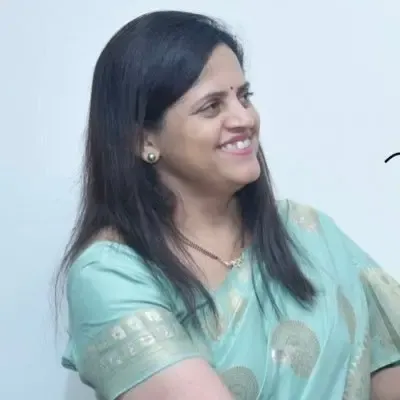
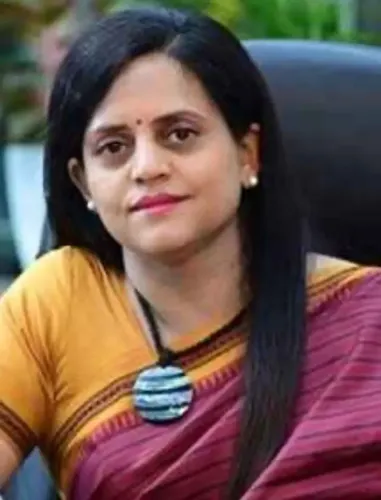
He described the city's evolving network as 'world-beating' and offered a direct 'Bravo' to IAS officer Ashwini Bhide .
Mumbai Metro Line 1 (Versova-Andheri-Ghatkopar), opened in 2014 , was the city's first modern metro corridor and triggered a phased expansion plan.
The Mumbai Metropolitan Region Development Authority (MMRDA) is the nodal agency overseeing multiple new metro corridors across the city.
India has accelerated metro construction in large cities since the mid-2000s as a strategy to reduce congestion and support economic activity.
Completion of remaining metro corridors and multimodal integration remain the key milestones to watch in Mumbai's transport story.
Mahindra Group chairman Anand Mahindra on Sunday, June 21, 2026, used his popular #SundayWanderer social media series to spotlight Mumbai's evolving public transport network, calling it 'world-beating' and praising the city's infrastructure momentum in a post that drew wide attention.
Context
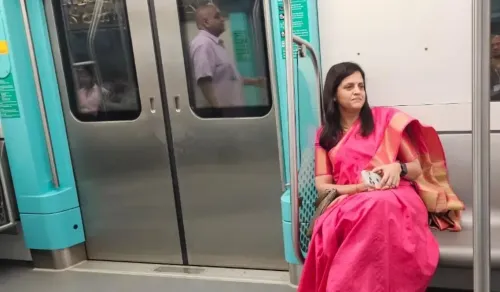
Mahindra's #SundayWanderer series typically features sweeping landscapes and travel vignettes from across India. In a deliberate departure, he turned the lens on the everyday commuter, describing the post as being about 'a commuter's journey' rather than a scenic one. He tagged senior IAS officer Ashwini Bhide, offering a direct 'Bravo' to her role in driving the city's transport transformation.
Mumbai has long been regarded as home to India's most extensive urban public transport system, anchored by its century-old suburban rail network that ferries millions of passengers daily. Mahindra acknowledged this legacy while underlining that the city is now beginning to receive infrastructure 'it deserves' at a global standard.
Policy Backdrop
Mumbai Metro Line 1, connecting Versova, Andheri, and Ghatkopar, opened in 2014 as the city's first modern metro corridor and marked a turning point in urban mobility planning. Since then, the Mumbai Metropolitan Region Development Authority (MMRDA) has overseen the phased rollout of multiple additional metro corridors, both elevated and underground, under a combination of state and central government funding.
India has sharply accelerated metro construction across its largest cities since the mid-2000s, treating mass rapid transit as a strategic tool to ease congestion, reduce pollution, and support economic productivity. Mumbai's approach — layering new metro lines atop an already dense suburban rail grid — is seen as a model for high-density urban agglomerations. Ashwini Bhide has been a key figure in the planning and execution of these metro projects within the city.
Stakeholders and Impact
Mumbai's millions of daily commuters stand as the most direct beneficiaries of the network's expansion. The suburban rail system alone handles passenger volumes comparable to some of the world's busiest transit systems, and the metro corridors are designed to absorb overflow, reduce travel times, and connect previously underserved zones of the metropolitan region.
Mahindra's public endorsement — reaching his large following on X — amplifies civic and policy conversations around urban infrastructure at a moment when completion timelines for remaining metro corridors and multimodal integration remain closely watched. His framing of Mumbai as 'a city that never stops moving' reinforces the broader narrative that investment in public transport is inseparable from economic vitality.
What's Next
Attention will remain on the completion and commissioning of pending Mumbai Metro corridors, as well as state budget commitments to multimodal hubs that integrate metro, suburban rail, and bus services. Passenger uptake figures for newer lines will be a key indicator of whether the network is achieving the modal shift planners envisage.
Mahindra's post signals growing elite and corporate endorsement of public-transport investment — a signal that could reinforce political will for sustained funding and faster execution timelines in India's most commercially significant city.
Point of View
Not just a policy technicality. His tagging of Ashwini Bhide personalises accountability and credit in a domain where bureaucratic effort is rarely publicly acknowledged. The post fits a broader arc in which corporate India is increasingly vocal about infrastructure as a competitive necessity, not merely a welfare measure. For policymakers, visible endorsement from figures of Mahindra's stature can translate into sustained public and political pressure for faster execution.
NationPress
22 Jun 2026
Frequently Asked Questions
What did Anand Mahindra say about Mumbai's public transport?
Mahindra Group chairman Anand Mahindra called Mumbai's public transport 'world-beating' in a June 21, 2026, post on X, praising the city's infrastructure progress and tagging IAS officer Ashwini Bhide with a 'Bravo' for her role in driving it.
Who is Ashwini Bhide and what is her role in Mumbai's metro?
Ashwini Bhide is a senior IAS officer who has held key positions in Mumbai's infrastructure planning and the execution of metro and public transport projects, and was specifically credited by Anand Mahindra in his post.
What is the Mumbai Metro and how many lines does it have?
The Mumbai Metro is a phased mass rapid transit system developed by MMRDA to supplement the city's historic suburban rail network; it began with Line 1 (Versova-Andheri-Ghatkopar) in 2014 and has since expanded to multiple corridors.
What is MMRDA and what does it do?
The Mumbai Metropolitan Region Development Authority (MMRDA) is the nodal state agency responsible for planning and executing metro corridors and regional transport infrastructure across the Mumbai metropolitan region.
Why is Mumbai's public transport considered the best in India?
Mumbai's transport system — combining one of the world's busiest suburban rail networks with a growing metro grid — handles passenger volumes unmatched by any other Indian city, and is being upgraded with new elevated and underground metro lines to meet rising demand.